Hot Glass training with Scott Benefield
Scott Benefield – Hot Glass Techniques
Rondel making, pick-ups, and mentoring across hot glass processes
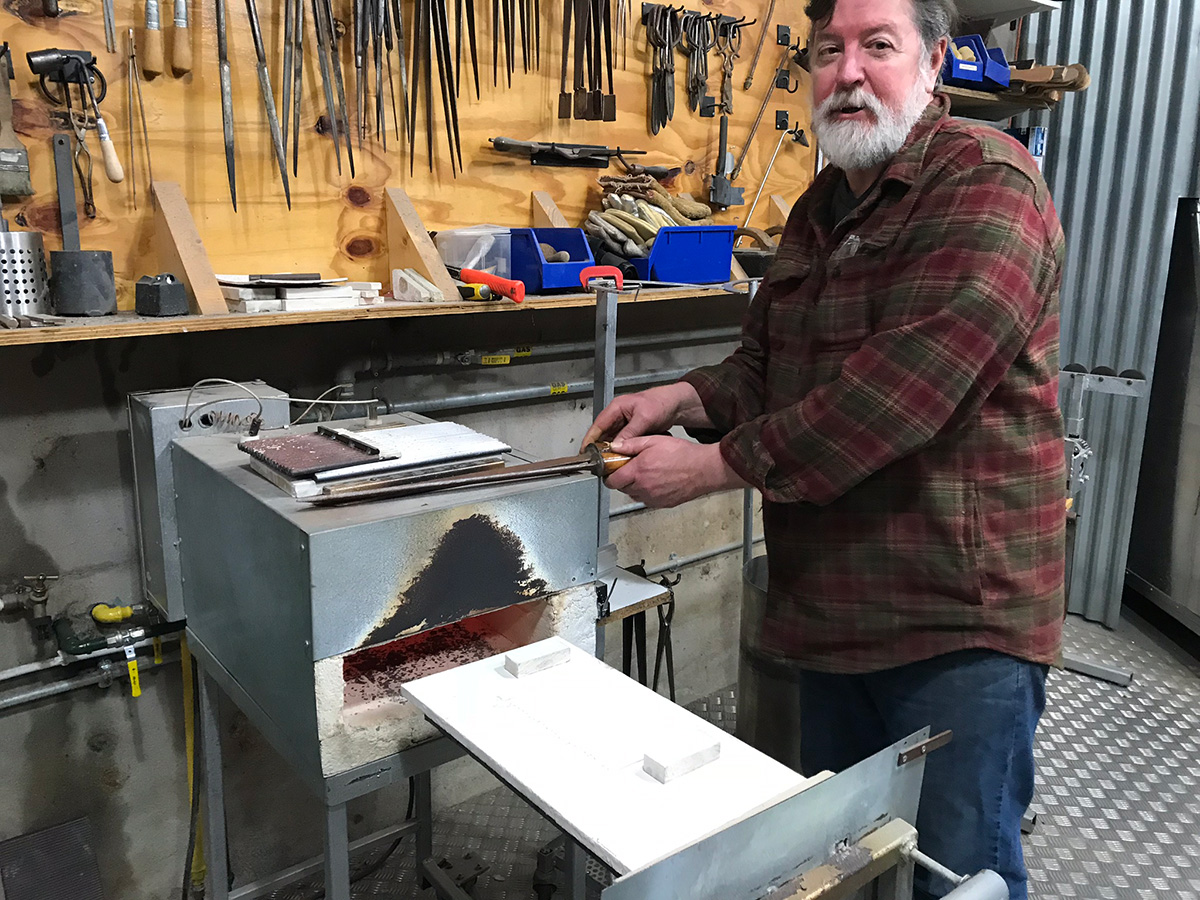
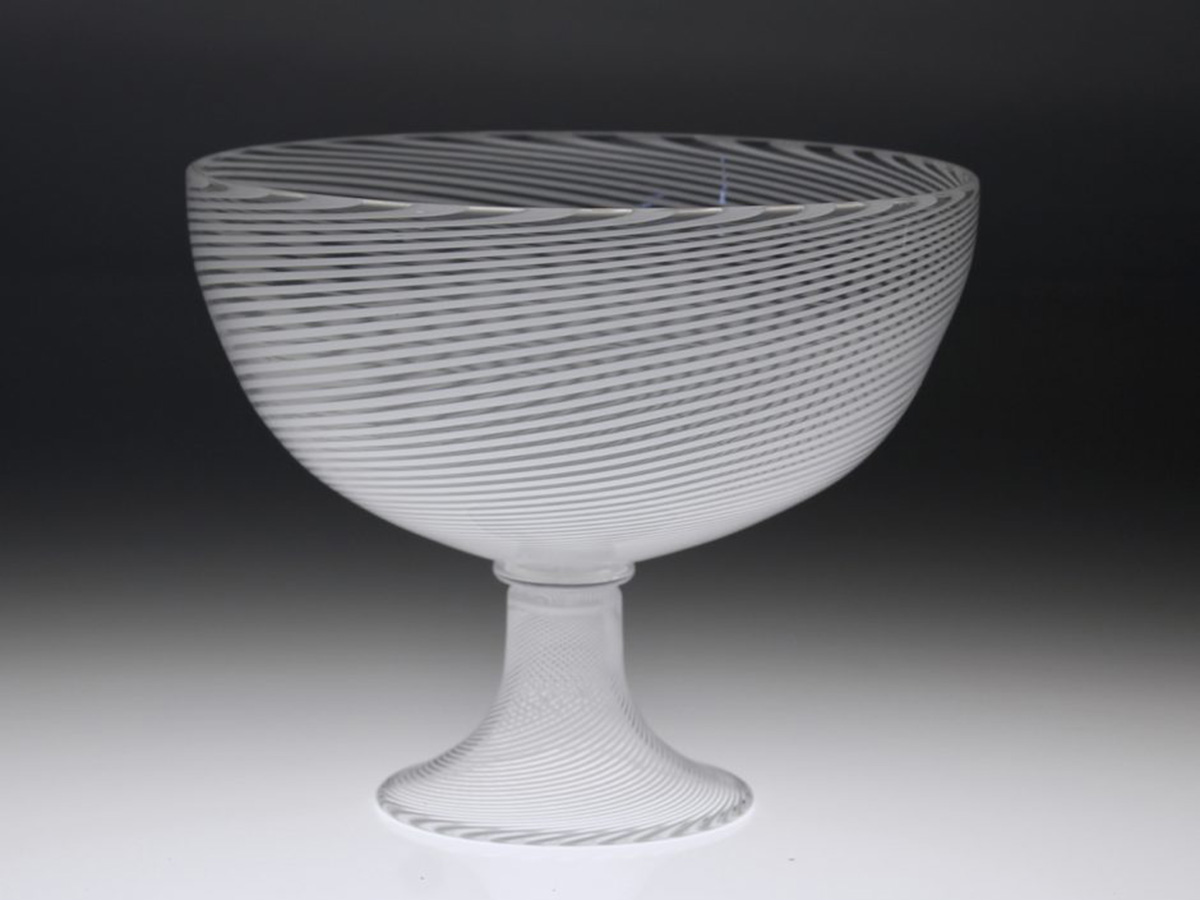
With Scott, I developed the hot glass elements of the project. Scott’s expertise in making rondels and complex pick-ups was invaluable for creating the layered, translucent forms that mimic the beetle’s exoskeleton. His mentorship encouraged precision and experimentation, bridging the technical and the artistic.
Making Rondels
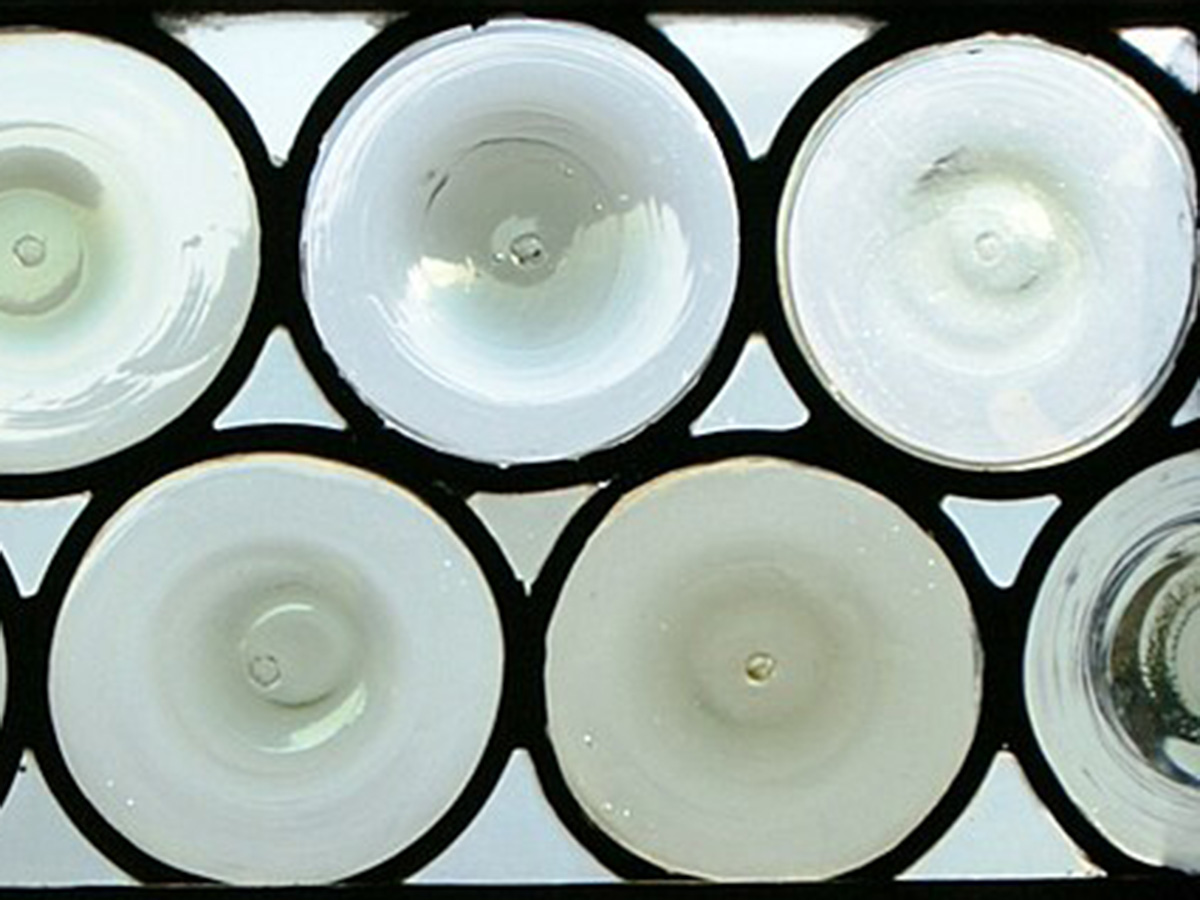
To create the black sheet glass needed for the beetle’s wing cases and “saddle,” I worked with Scott Benefield to learn and refine the process of blowing rondels. My plan was to apply the dichroic blue extract onto these rondels and then add texture, forming the shimmering, iridescent surfaces of the sculpture.
A rondel is a flat, circular disc of glass with an even thickness — the traditional form used in windows before the advent of float glass, a method known historically as Crown Glass. I first learned how to make rondels back in 1990, following the Swedish method, but I wanted to update my skills and experience Scott’s approach, which combines Venetian techniques with his own innovations.
Learning the Language of Glass
Glass, in many ways, is like a language — every country has its own dialect of techniques. Today, with travel and video, artists mix and share these dialects, forming their own hybrid vocabularies. Scott’s “accent” in glassmaking is a fascinating blend. Originally from the United States, he spent decades mastering American production methods before immersing himself in Venetian glassblowing traditions. Over the past twenty years, Scott has merged these influences to create a distinctive voice within the contemporary glass studio movement.
What I’ve always admired most about Scott is his remarkable independence in the hotshop. He often works without an assistant, relying instead on an ingenious array of custom-built tools and machines that eliminate the need for a team. Beyond his technical innovation, Scott is also an exceptional tutor — patient, articulate, and generous with his knowledge — having taught internationally for many decades.
Under his guidance, I practiced blowing rondels repeatedly, developing greater consistency, efficiency, and precision. His instruction emphasized a specific formula for blowing and spinning an even thickness of glass over the black colour layer, along with the correct use of the blow hose and parchoffis. He also taught me to understand the importance of the punty’s shape, temperature, and size in minimizing the risk of cracking.
The process of making a rondel begins by applying a layer of black colour to the blowing iron, then gathering clear molten glass from the furnace. The glass is shaped and gently inflated to about half its final diameter. A small punty is then attached to the opposite side, and the bubble is detached from the blowing iron, leaving a small hole at the front. This bowl-shaped form is then gradually opened using parchoffis (wooden jacks) while keeping the glass evenly heated throughout. Finally, through careful timing and centrifugal force, the glass is spun open into a disc, and a wooden board checks the flat. It gets put quickly into the annealer before it cracks.
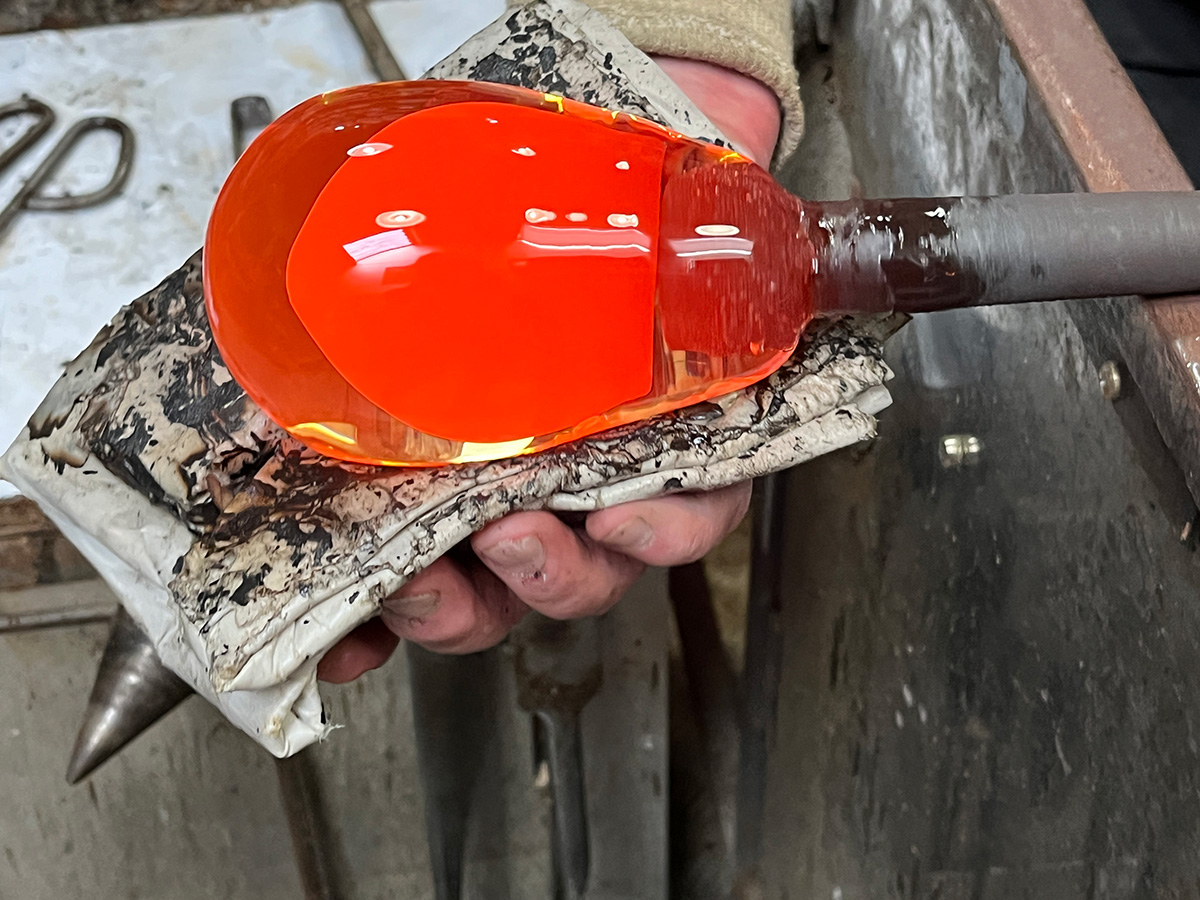
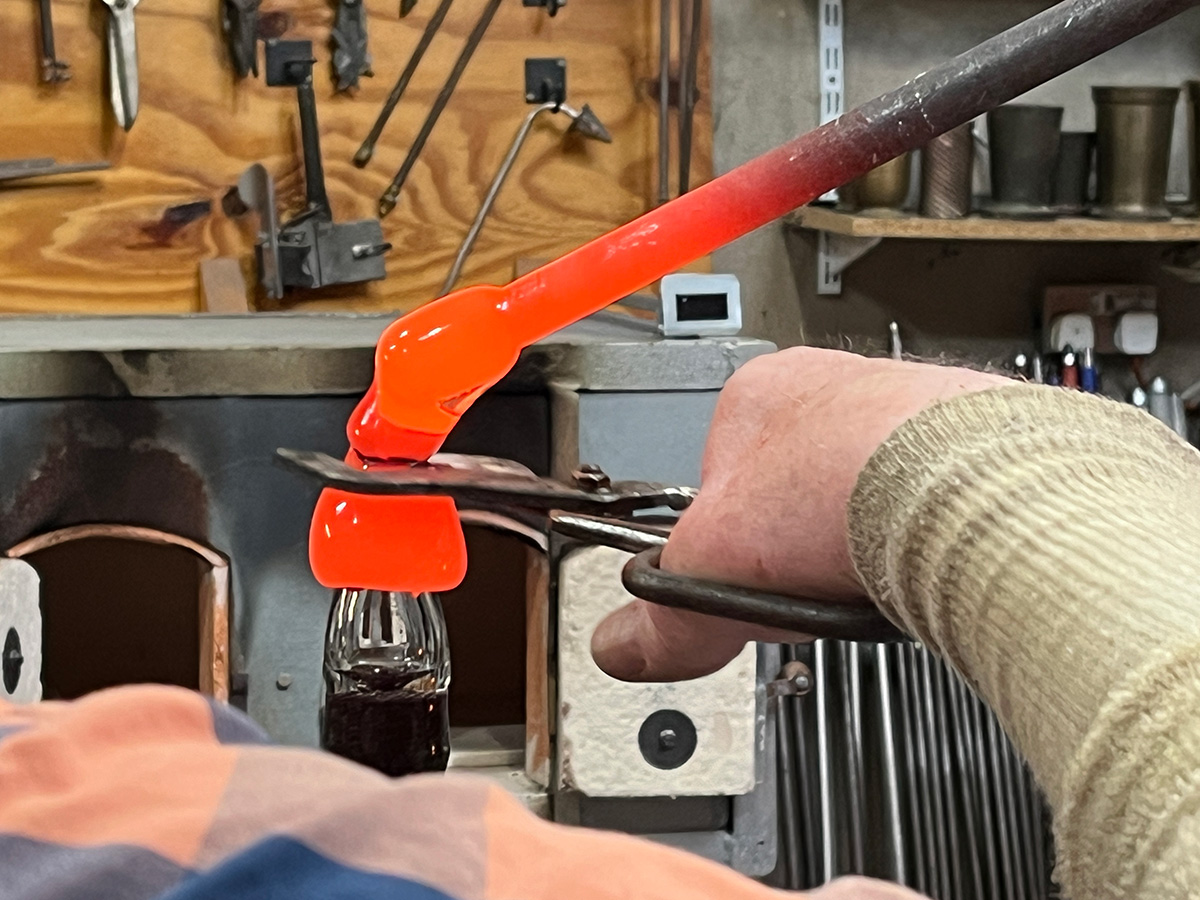
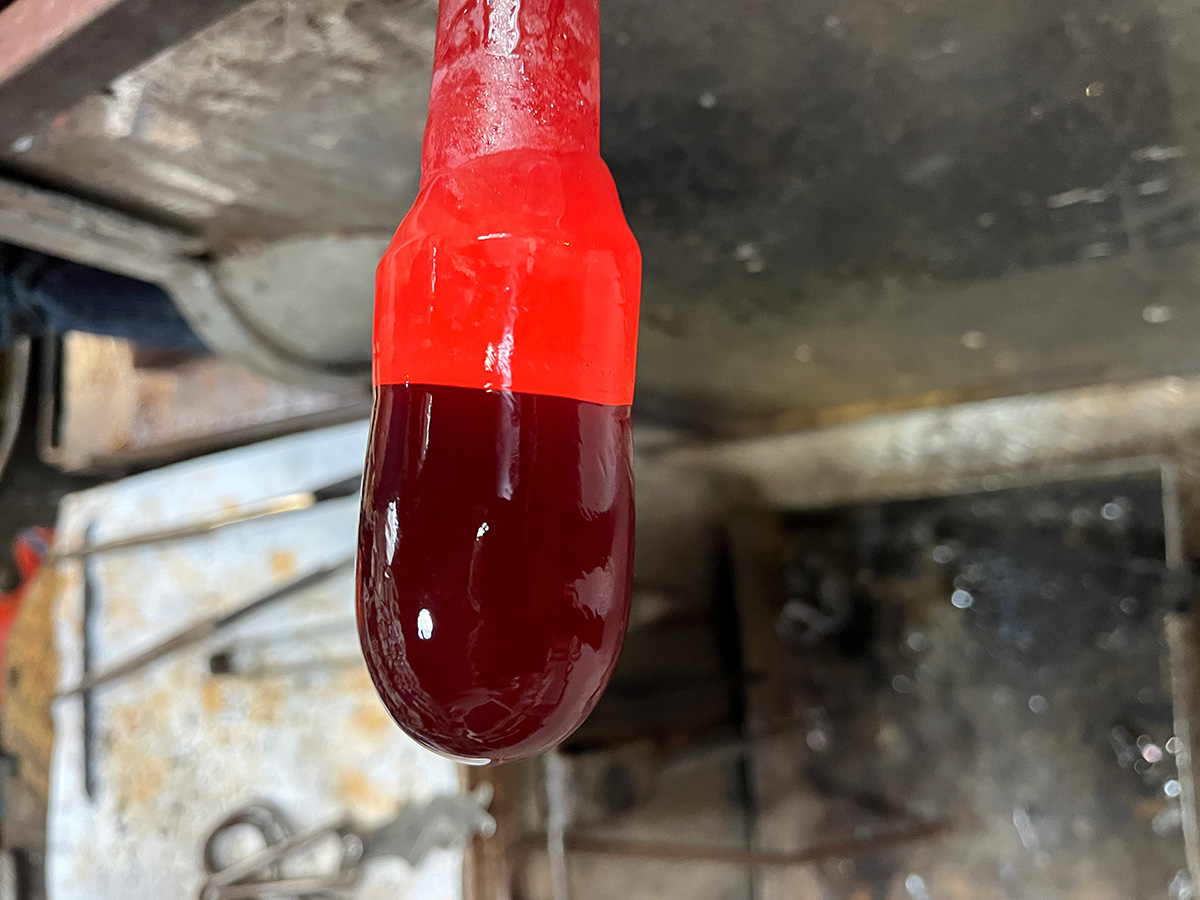
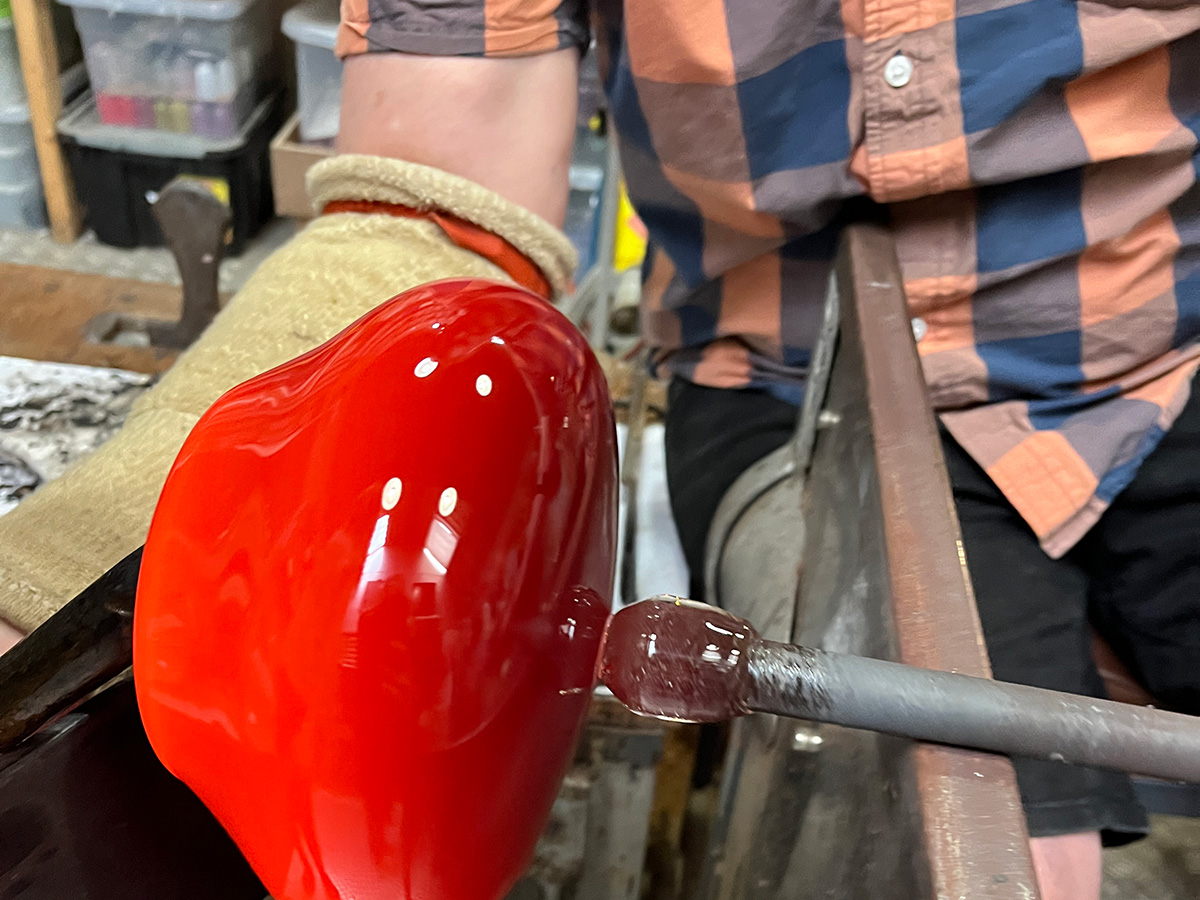
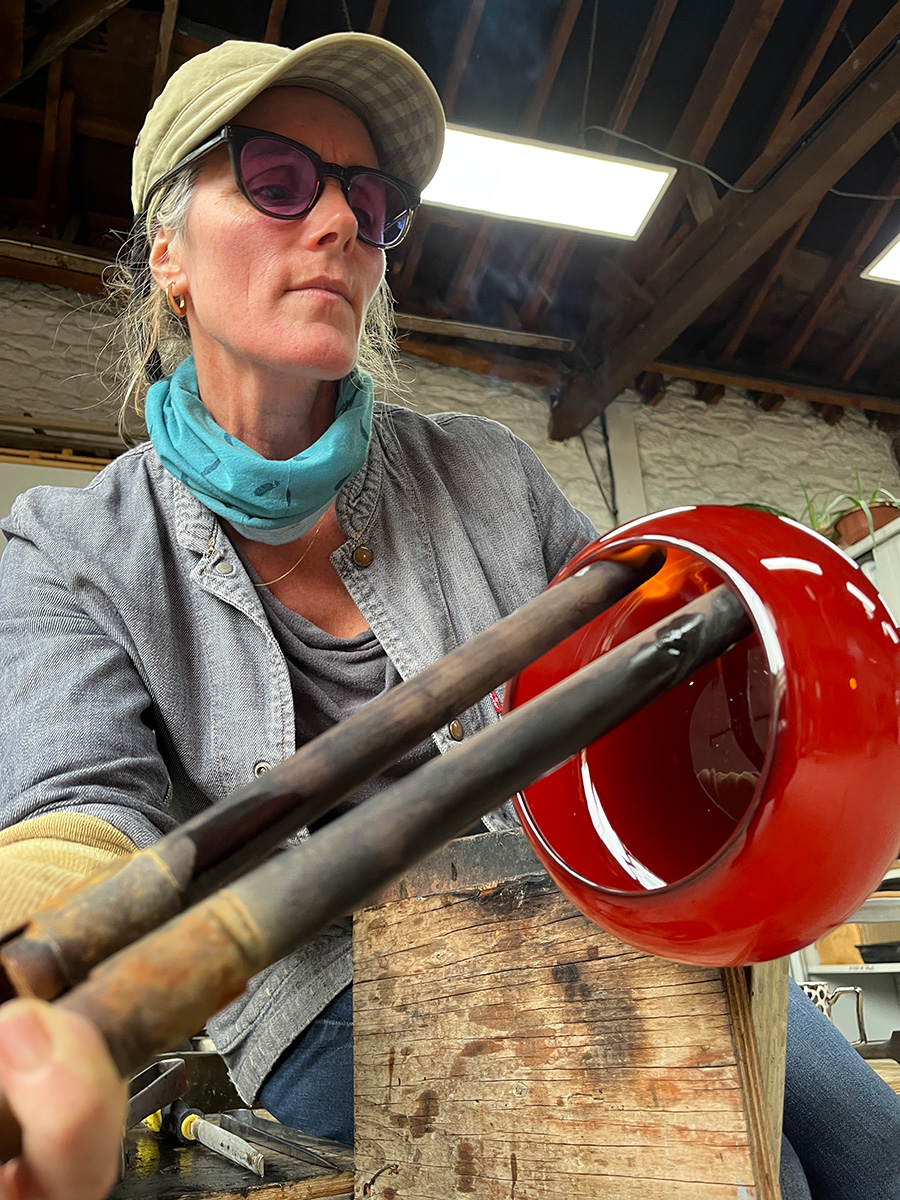
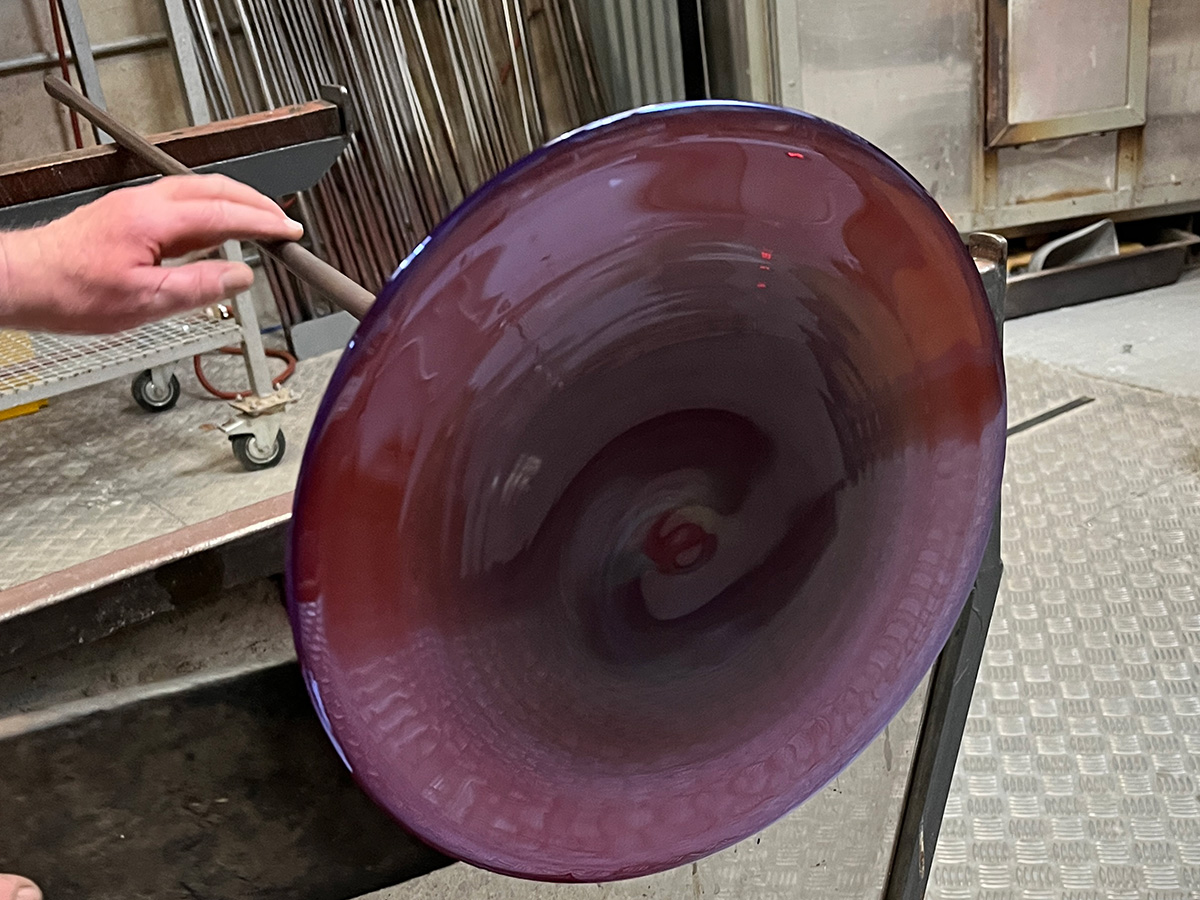
The process of making a rondel begins by applying a layer of black colour to the blowing iron, then gathering clear molten glass from the furnace. The glass is shaped and gently inflated to about half its final diameter. A small punty is then attached to the opposite side, and the bubble is detached from the blowing iron, leaving a small hole at the front. This bowl-shaped form is then gradually opened using parchoffis (wooden jacks) while keeping the glass evenly heated throughout. Finally, through careful timing and centrifugal force, the glass is spun open into a disc, and a wooden board checks the flat. It gets put quickly into the annealer before it cracks.
Working with Hot Glass
Hot glass is worked at the bench across a remarkable temperature range — from around 1100°C down to 550°C. At first, when gathered from the furnace, it has the consistency of golden syrup; as it cools, it thickens to sticky toffee, and then, quite suddenly, it becomes solid. All this happens at the end of a blowing iron or punty, as you shape the molten glass using tools that have hardly changed in over two thousand years.
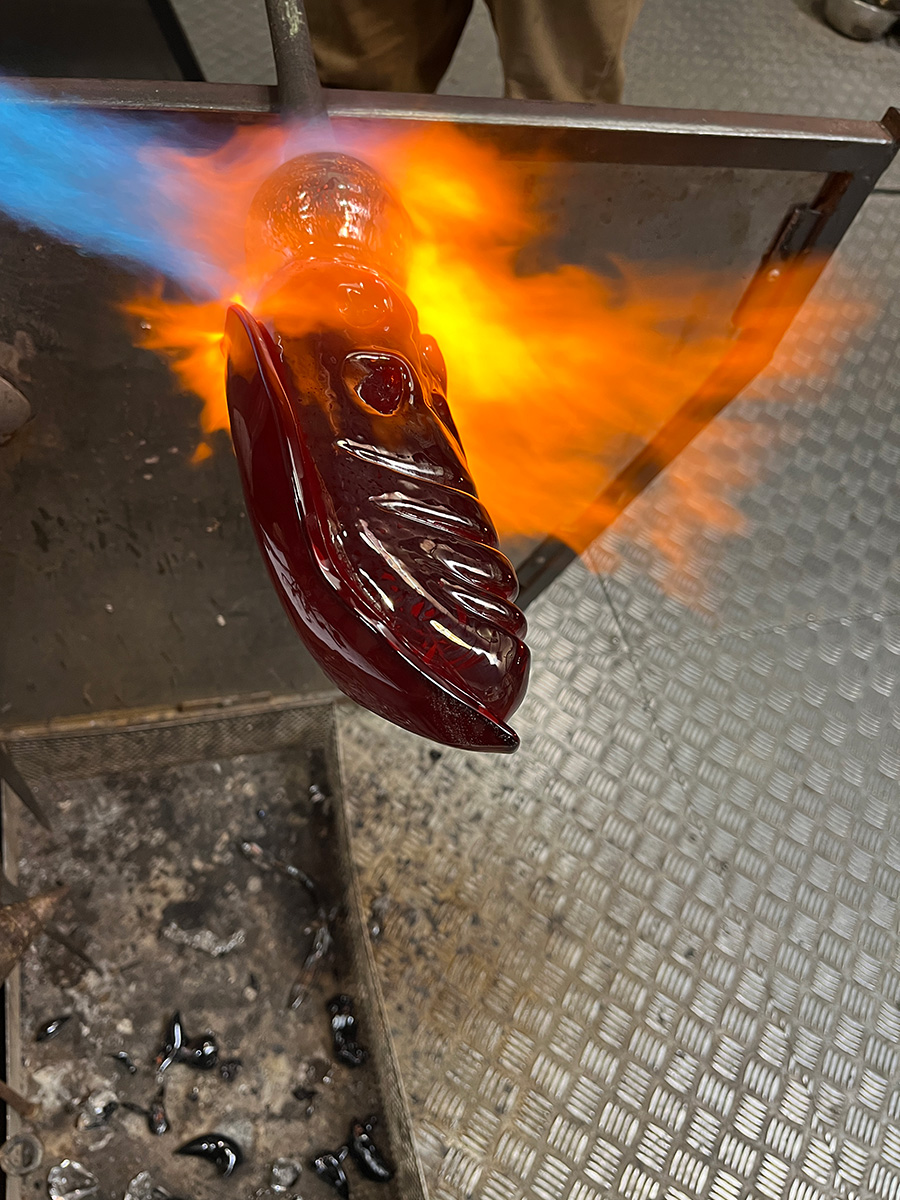
A handful of wet newspaper is often the first shaping tool, cooling and guiding the glass by touch. Jacks are used to cut in and form the neck, and sometimes the most unexpected implements — such as a butter knife — prove to be perfect sculpting tools. The entire process depends on constant motion, always keeping the glass “on centre,” using gravity, heat, and rhythm to maintain symmetry. One moment it’s molten, the next it’s frozen — a breath-taking transformation that demands precision, speed, and intuition. Sculpting defies all the rules, not more on centre, just using heat and gravity and impressions in the glass. A torch is often used to spot heat specific areas.
Working with hot glass is unlike working with any other material. With wood or stone, you’re shaping a stable, predictable substance. But hot glass feels alive — its behaviour changes second by second as its temperature drops. At 1100°C, the glass is fluid and low in viscosity, while at 700°C it becomes stiff and resistant. Every adjustment in heat changes how it moves, stretches, and cools. The process is a dialogue between you and the material — one built on rhythm, timing, and respect.
Even after decades of working with glass, I am still learning. For this project, I needed to master the specific techniques of making my own black sheet glass, which meant perfecting the art of blowing rondels. These circular plates are the same form once used in the production of Crown Glass windows in 14th-century Europe. Armed with my new-found passion for rondels, I now had the black sheet glass I needed — ready for cutting, grinding, fusing, and texturing before being “picked up” and applied to the beetle’s abdomen and thorax.
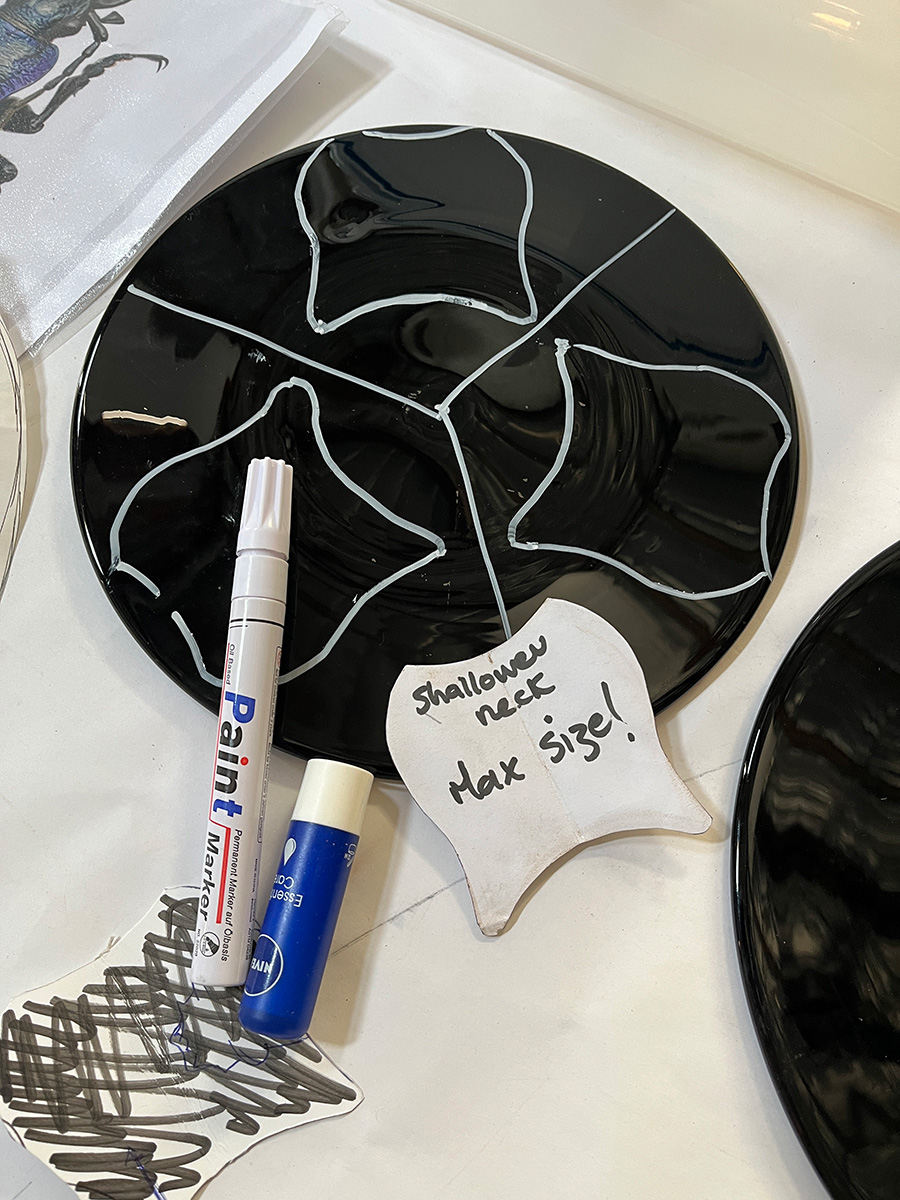
Marking out Pronotums
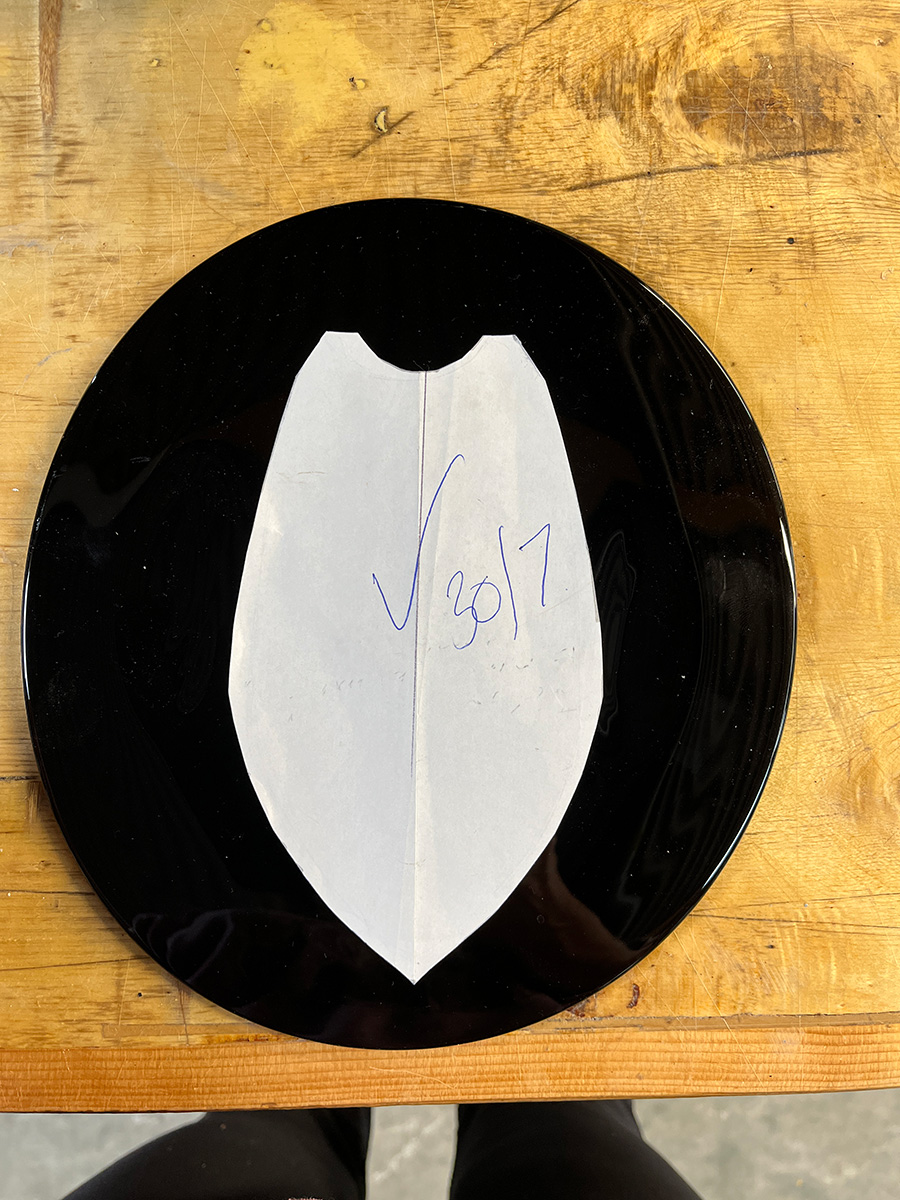
Template for elytra
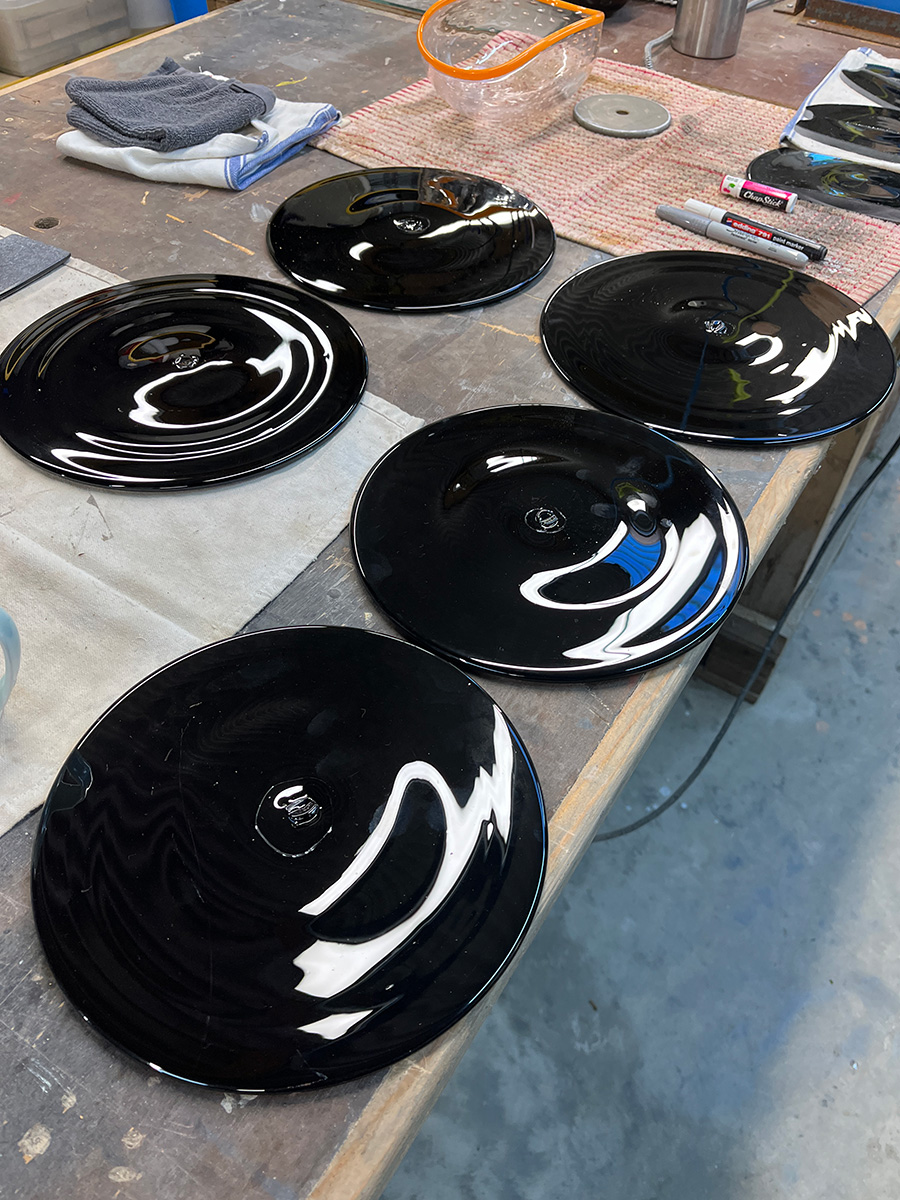
Finished black glass rondels
Sadhbh Mowlds
As part of this training, Scott Benefield kindly arranged a day for me to work with Sadhbh Mowlds, one of the leading international sculptors of hyperrealism in hot glass. Watching her at work was extraordinary — she glanced at a few photographs of beetles, picked up an iron, and immediately began sculpting, attaching pick-ups, and bringing the form to life. It was an unforgettable opportunity to work alongside such a gifted and intuitive artist, whose energy and technical brilliance were truly inspiring.
Sadhbh showed me how she coaxes the glass with tools, into crevasses, holes, and ridges from the molten glass, transforming it into a sculptural form that instantly represented underside of the beetle.
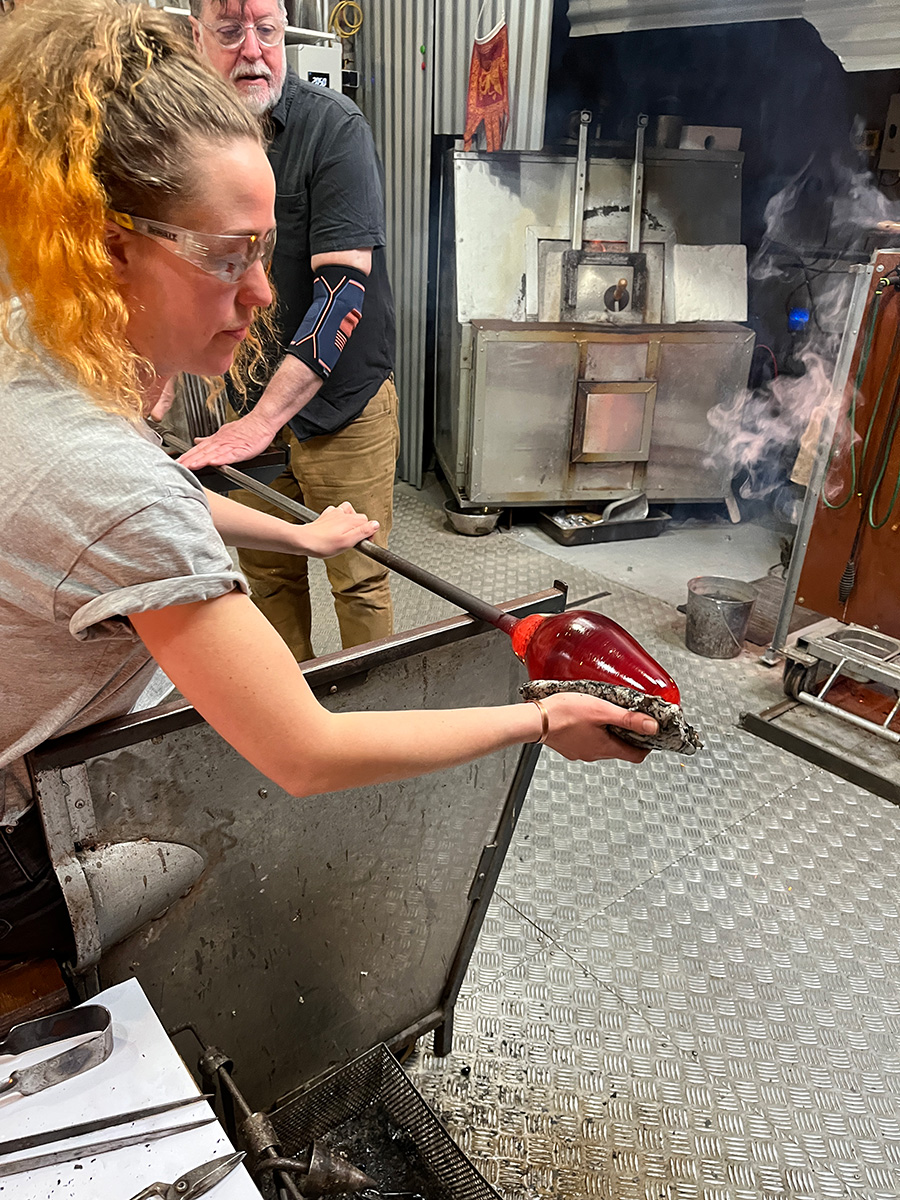
Sadhbh Mowlds
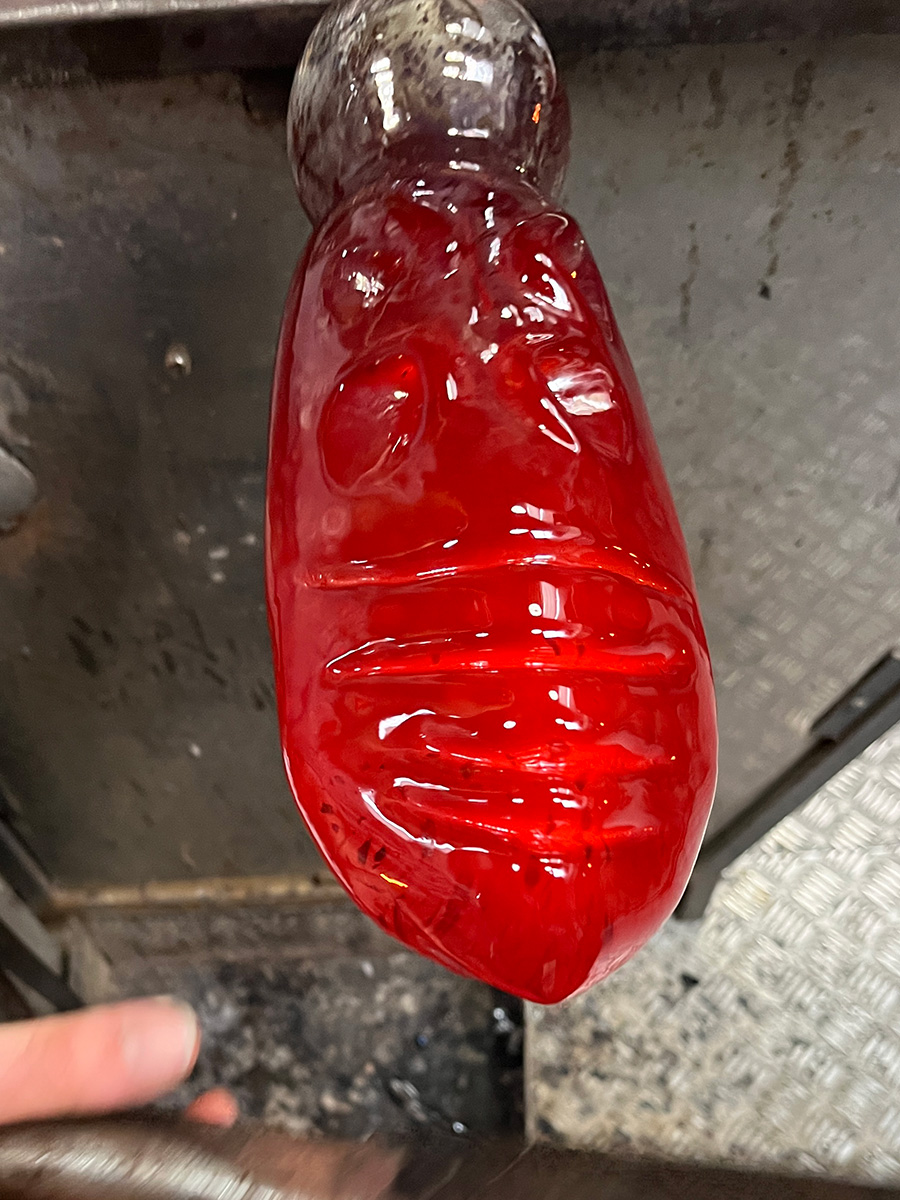
Sculpting the abdomen