Cold working with Steve Frey

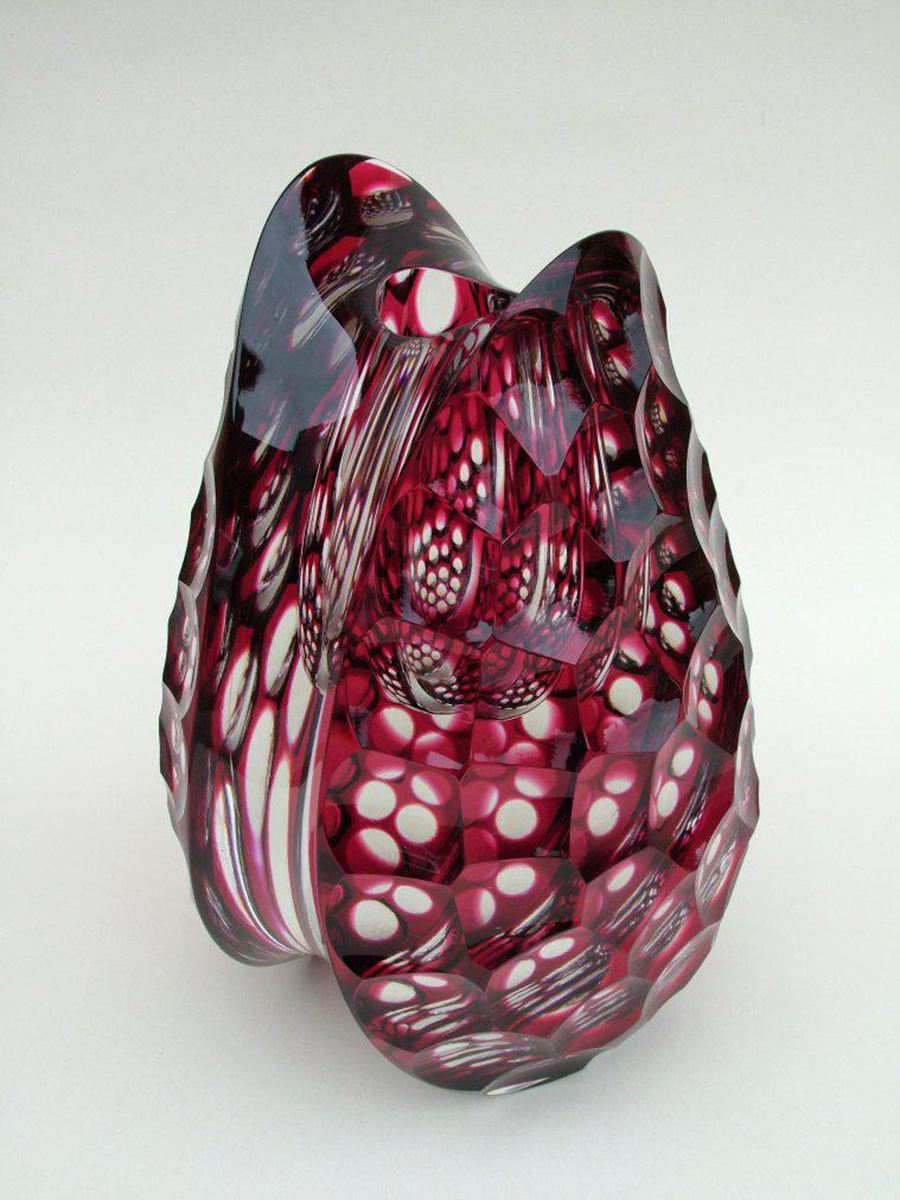
Steve Frey – Cold working techniques
Mentoring, cold working and display advice
Working with Steve (www.stevefrey.co.uk) refined my understanding of cold glass processes. Together, we focused on finishing techniques, polishing, and structural joins — essential for both the durability and presentation of the final sculpture. Steve’s mentorship also covered strategies for assembly and display, ensuring each piece could be securely constructed without compromising on delicacy or detail.
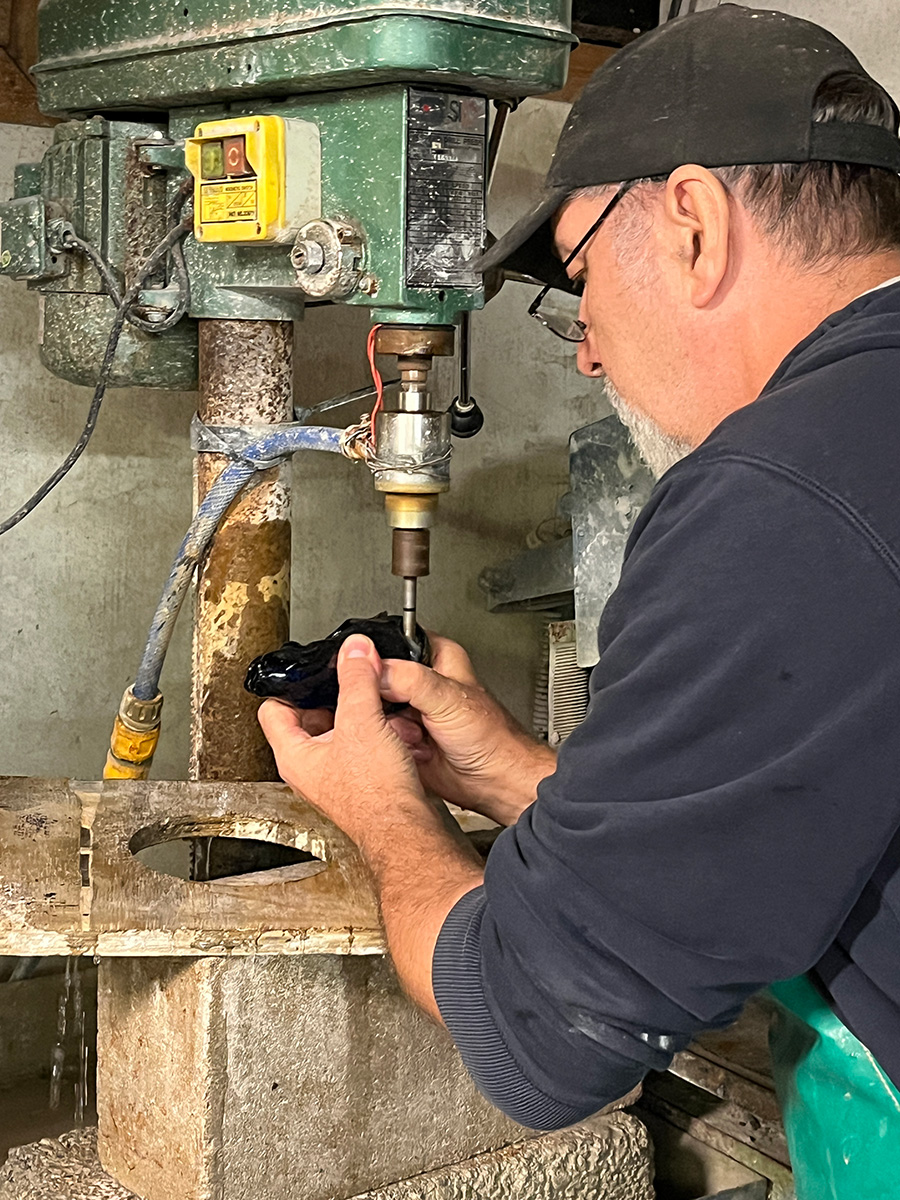
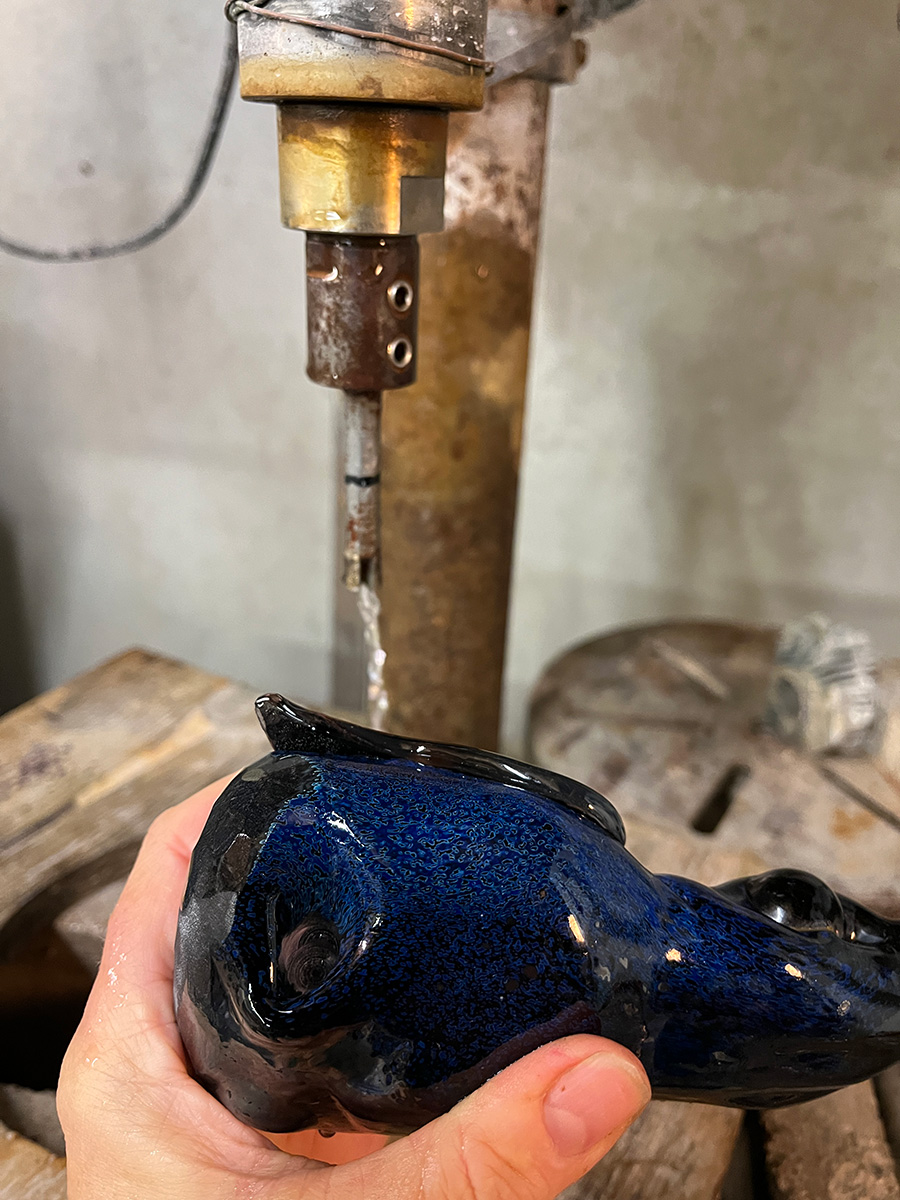
Steve Frey (coldglassworkshop.co.uk) takes glass that has been blown, sculpted, or cast and prepares it for display in galleries and collections. A master craftsman and cold glass artist, Steve is one of the unsung heroes of the UK glass scene, trusted by many of the country’s leading artists to refine and finish their work.
Having begun his career almost five decades ago as an apprentice at the Dartington Glass factory, Steve has become the foremost cold worker in Britain. His technical ability, strength, and precision are extraordinary — few would attempt to lift, carve, and polish the immense and intricate pieces he handles daily. He can “fix” almost anything (except a crack!) and has an uncanny ability to return what seems like a disaster in the hot shop to its original form.
Steve’s own artwork reveals his deep understanding of carving, polishing, and aesthetic balance, as well as his intuitive knowledge of the hot glass process. When I first brought him my project ideas, I felt overwhelmed by the complexity of what lay ahead. Steve simply said, “Just think of what you want to make — and make it.” He has that rare gift of turning the seemingly complicated into the perfectly obvious.
A Bit About Cold Working
Cold working is the collective term for all techniques used to shape, alter, or decorate glass once it has cooled and annealed. Some methods are entirely hand-based; others rely on machines. Tools range from small engraving wheels and angle grinders to large diamond saws and precision lathes. Sandblasting, grinding, cutting, drilling, and polishing are all forms of cold working.
Because glass is an exceptionally hard material, modern tools typically use diamond-embedded abrasives, and all processes are carried out with constant water flow or extraction systems
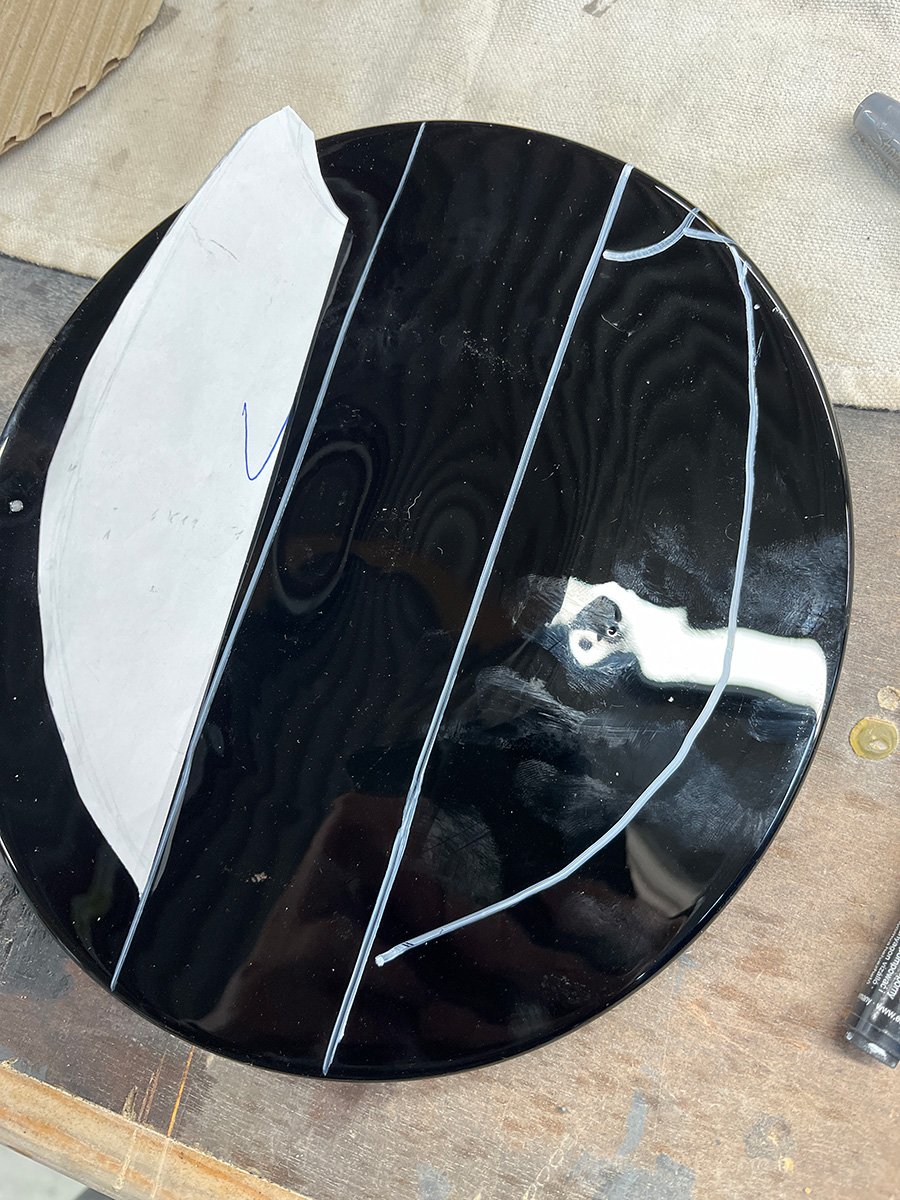
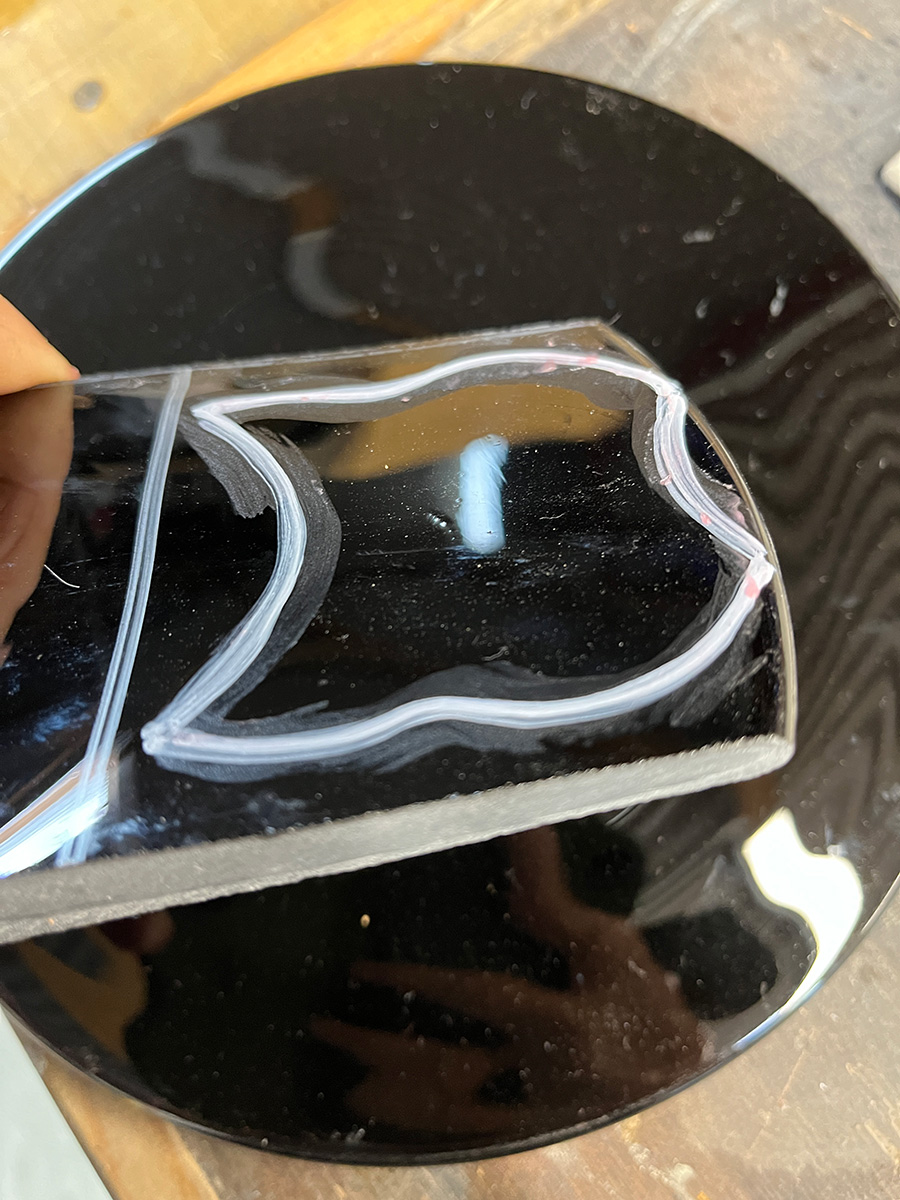
oval plate trial
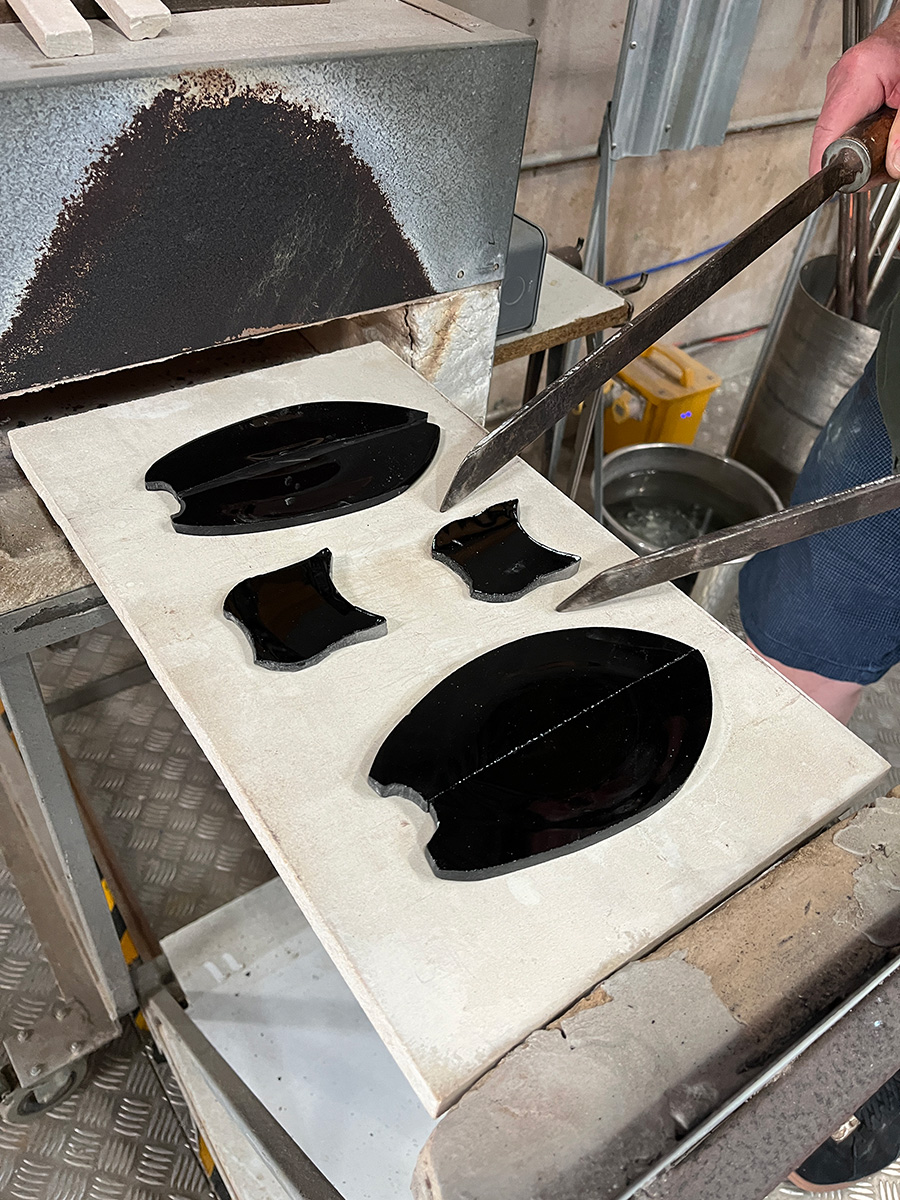
Pick-ups in the hot-shop
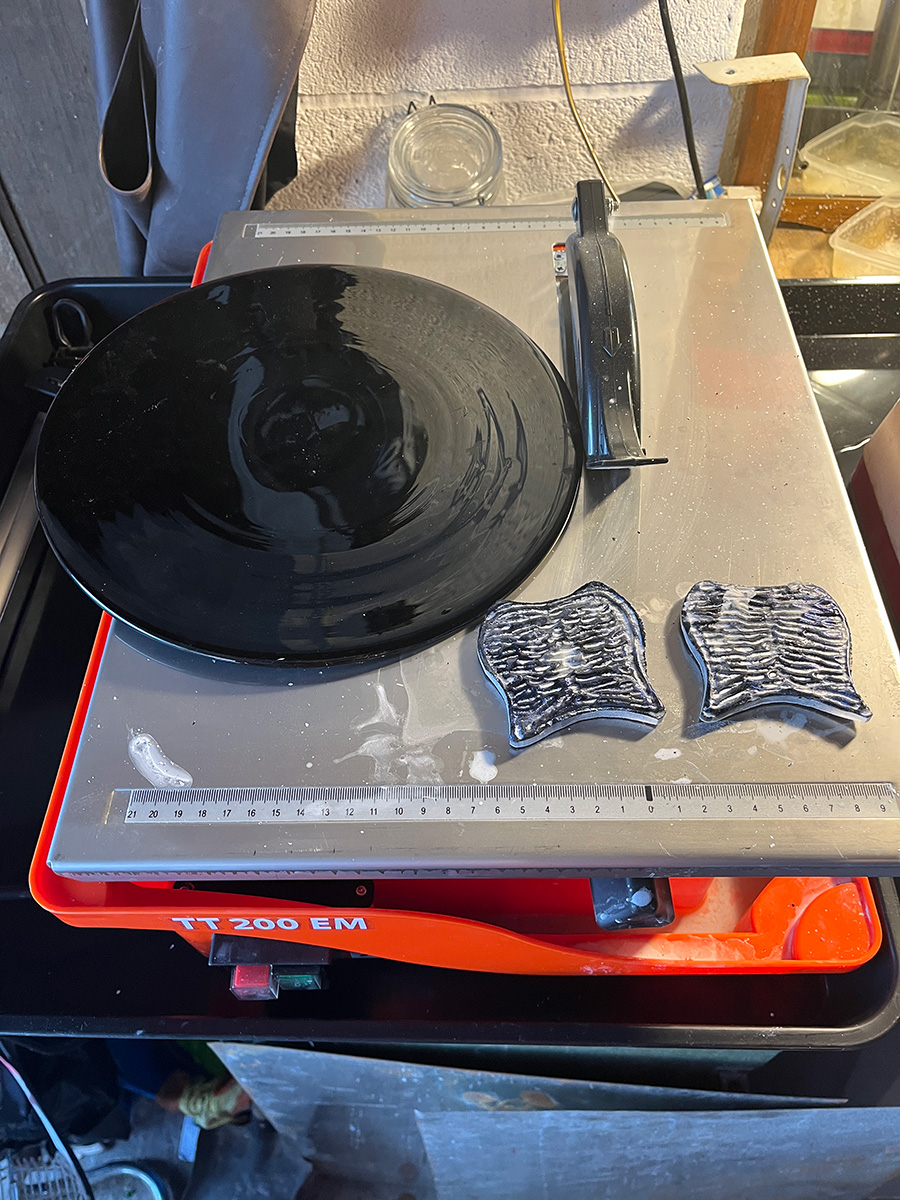
Textured pronotum
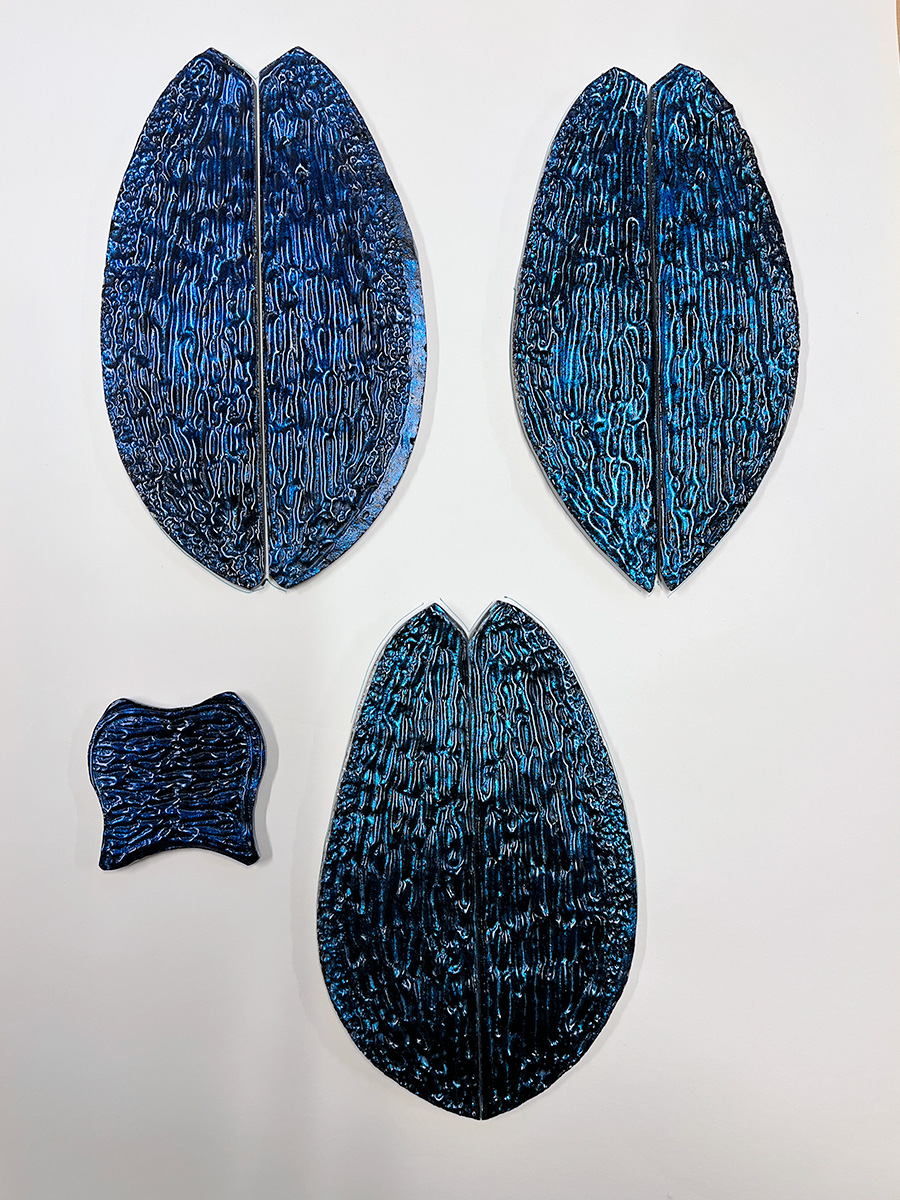
Textured Elytra
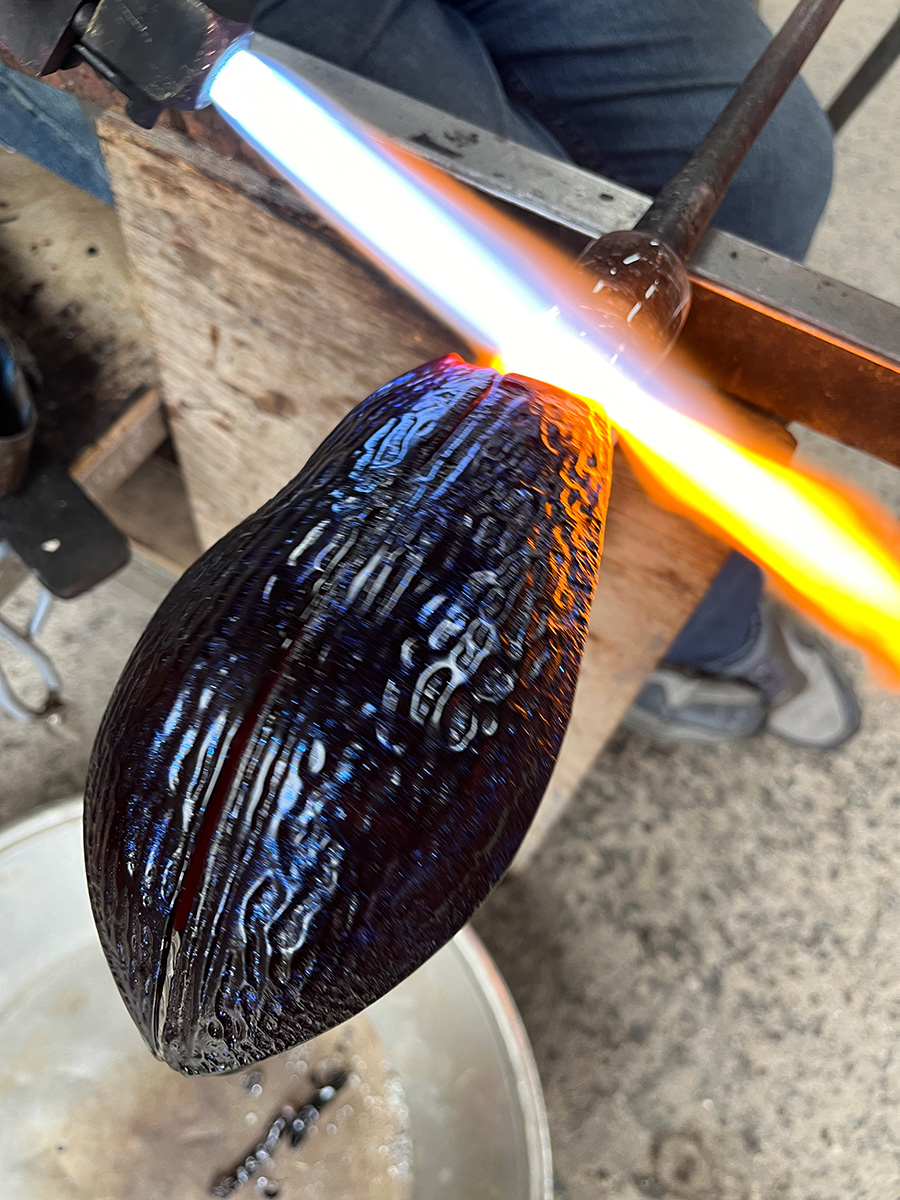
Attached Elytra
Hot Join vs Cold Join
One key decision in my project was whether to join my beetle components hot or cold. Both have advantages and drawbacks.
- Hot joining offers the thrill of the hot shop and produces a seamless, organic finish that feels “alive.” However, it carries significant risk: texture and surface details can be lost, cracking or breakage is possible, and the process requires assistants, making each session expensive.
- Cold joining, by contrast, allows for precision, control, and independence. Each section can be carved to fit perfectly — for example, the abdomen can be shaped to sit snugly beneath the thorax, using a joint system that mimics a ball-and-socket connection. Specialist glass adhesives have advanced enormously, making this method both practical and durable while retaining delicate surface details.
Assembly and Display
Regardless of whether the beetle was joined hot or cold, it required extensive drilling, carving, gluing, and finishing. Seven large, deep holes were created to accommodate the central pin and the attachment points for the legs.
The display system was designed so that a support pin, inserted from beneath the abdomen (between the middle pair of legs), would bear the weight of the sculpture. This pin connects to a counterbalanced stand, allowing the beetle to “float” above its base, the legs arranged dynamically to give the illusion of movement.
Initial trials with Steve focused on how to pre-form holes during the hot stage to reduce stress later during drilling. He also encouraged me to experiment with melting black glass directly, avoiding the need for surface coatings and simplifying the cold-working process.
At first, I had dismissed glue as an inferior option, but Steve made me reconsider. Today’s optically clear UV-curing adhesives are astonishingly strong and have transformed the way glass artists and conservators assemble complex forms.
Steve Frey’s Philosophy
Steve’s own words, from his website, encapsulate the spirit of cold working perfectly:
“Glass is a magical material, lending itself perfectly to self-expression. The fluidity of hot glass allows for dynamic creation, where timing is everything — a relatively swift process by necessity. By contrast, the resistant and unyielding nature of cold glass makes it a different material in its own right. The meticulous and patient carving and sculpting process is a much slower business altogether, at times becoming a love–hate affair of dynamic proportions.”
Steve Frey