Flameworking with Andrea Spencer
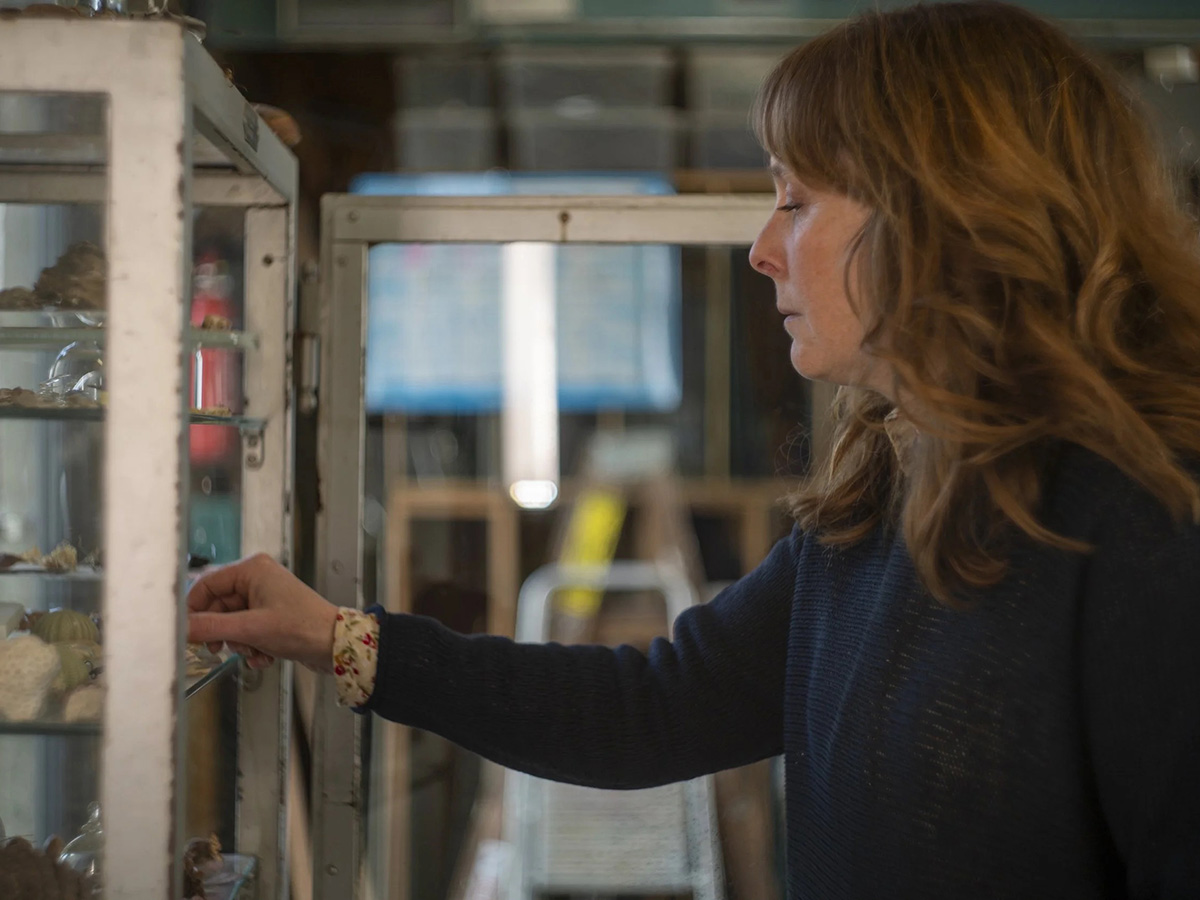
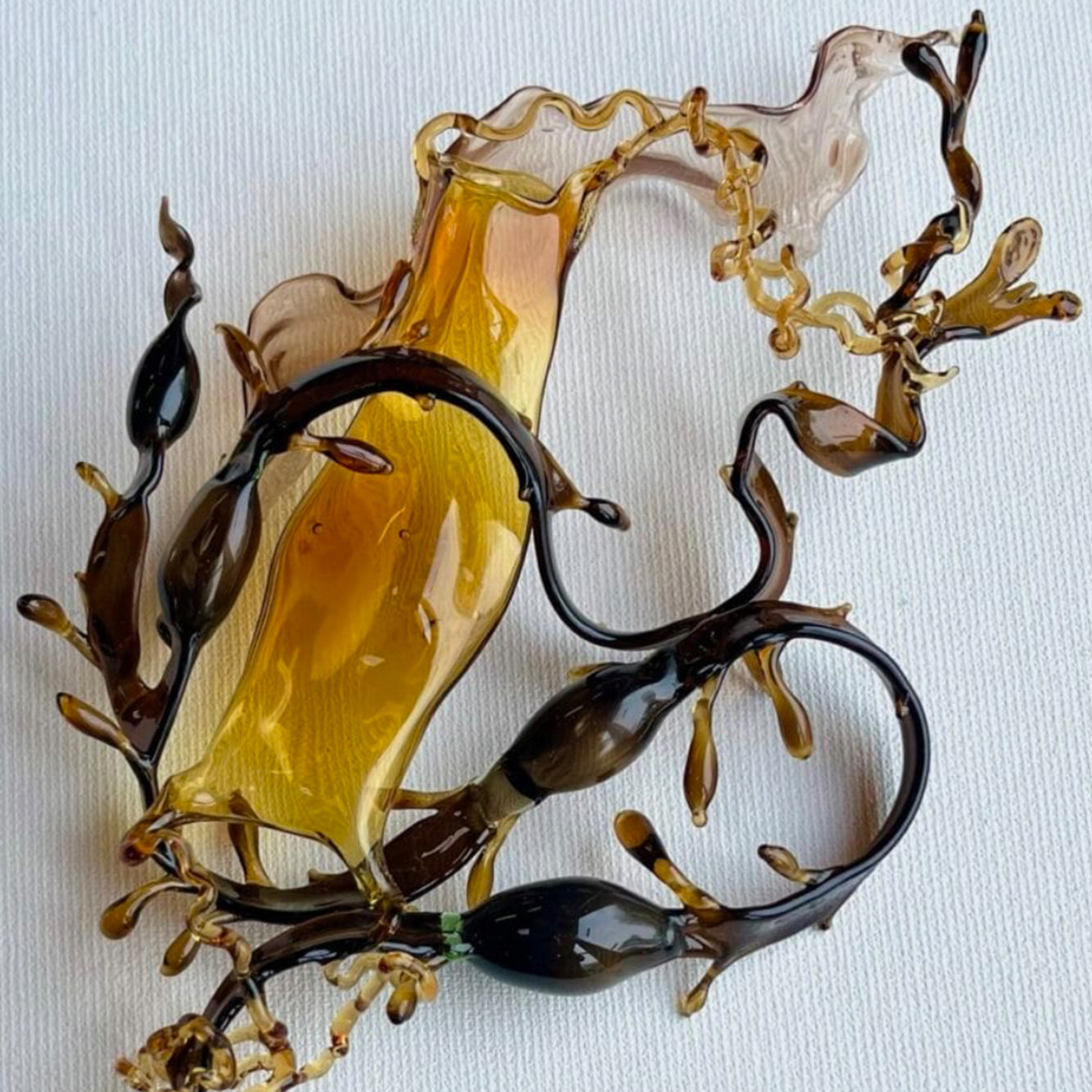
Andrea Spencer – Flame Techniques
Creating delicate components – legs, antennae, mandibles, palps
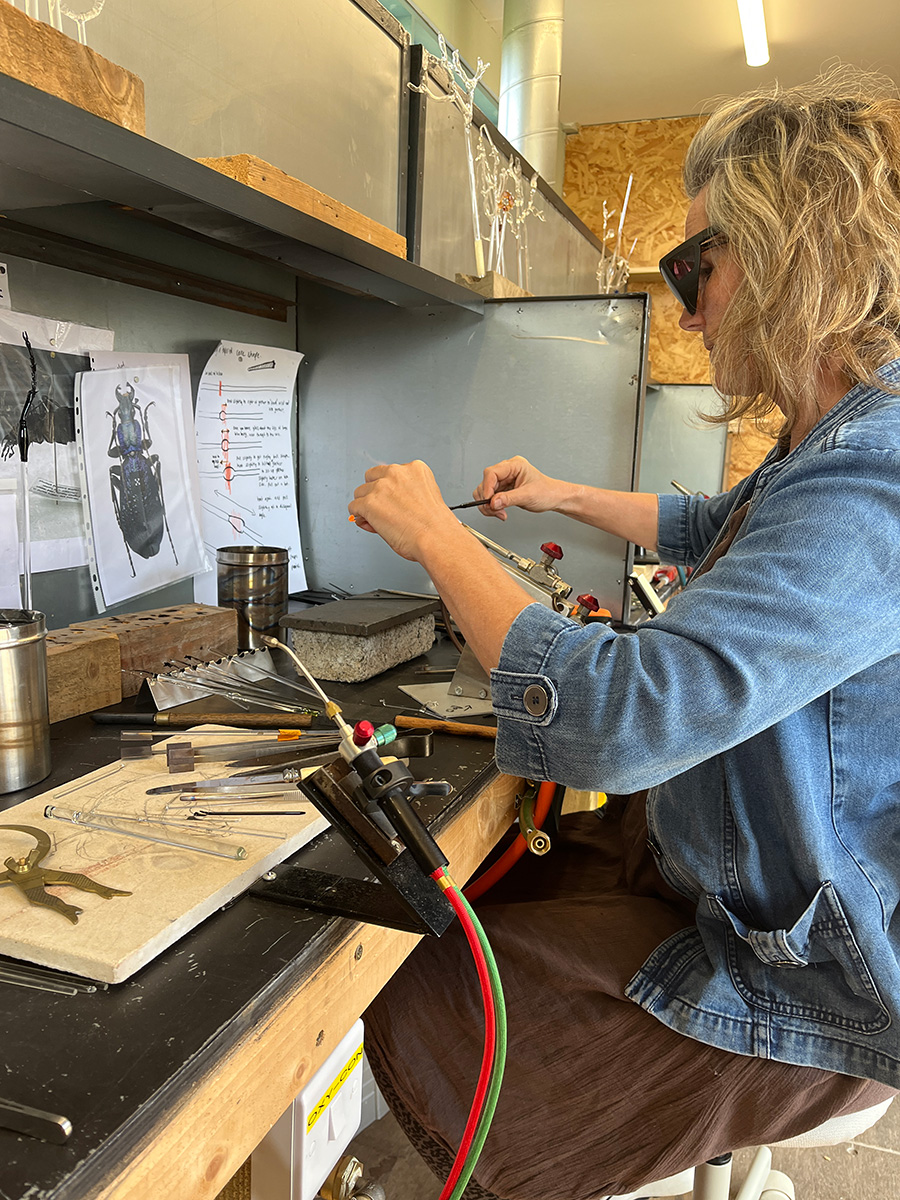
With Andrea, I learned the art of flame working — a discipline requiring immense control and finely tuned dexterity. Essentially, similar to hot glass, but on a miniscule scale, this technique is older than glassblowing (some 3,000 yrs old) and thankfully published in the book (“The |Glassmaker” by Tracey Chevalier. Taken to a new level of sculpture by Andrea, she taught me how to shape the beetle’s finer features, from its delicate legs to its intricately detailed antennae and mouthparts. This training allowed me to bring an anatomical realism to the sculpture, combining strength with fragility.
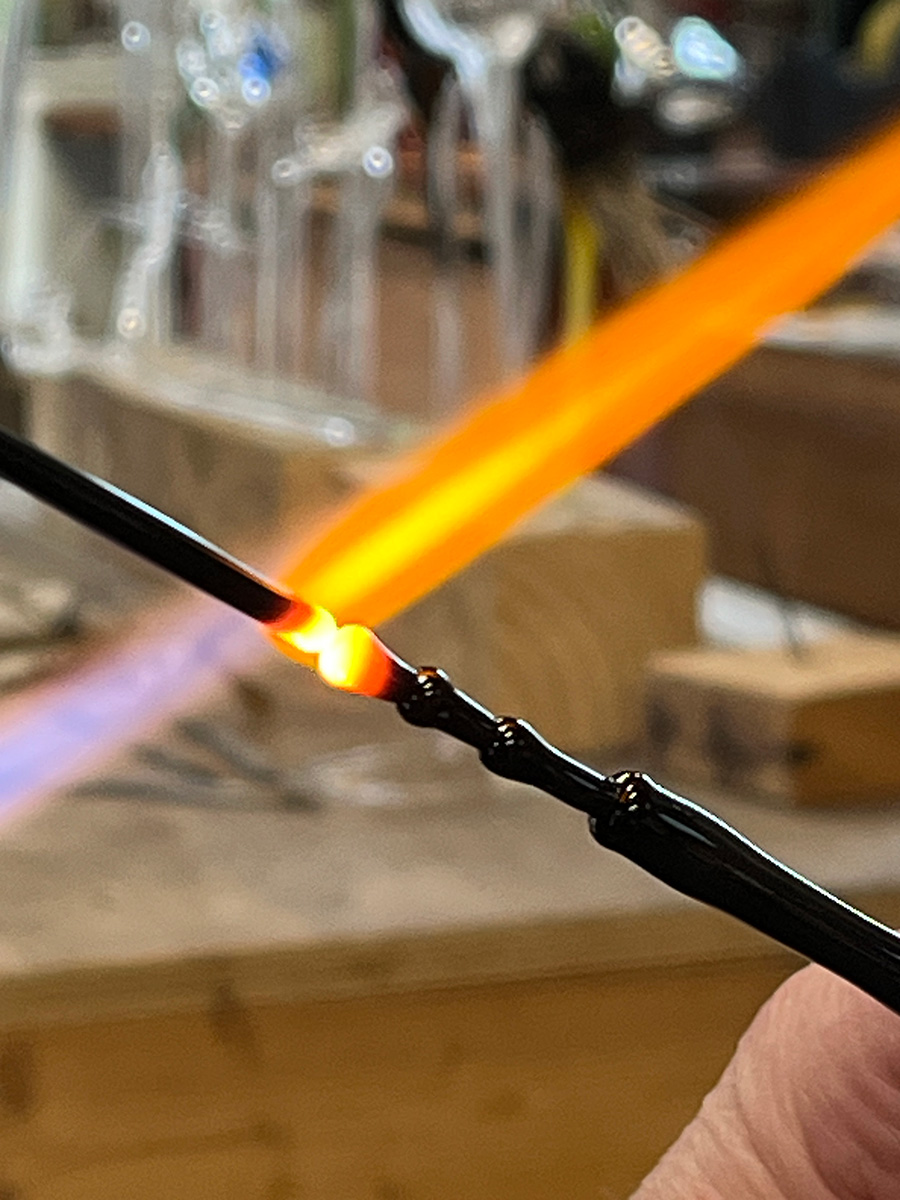
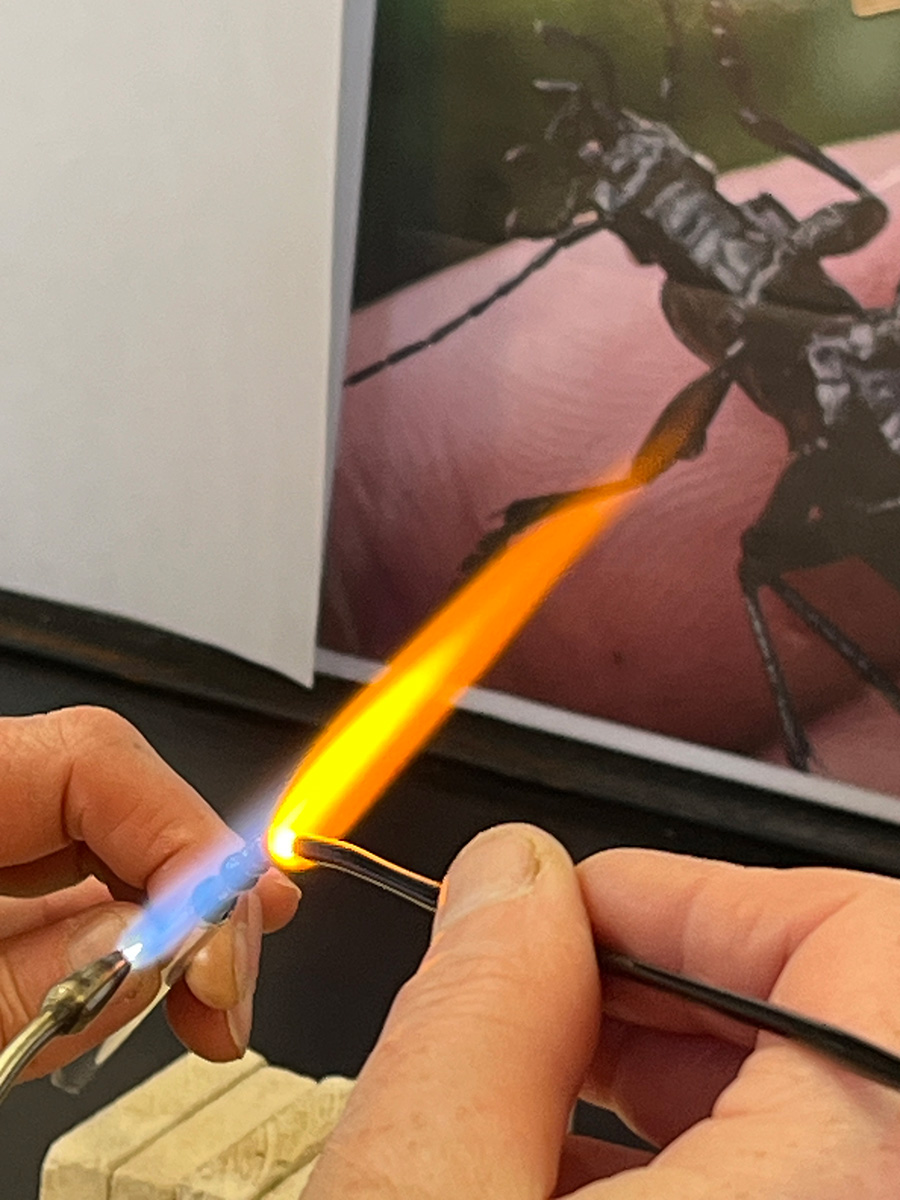
Flame work – Appendages
Working alongside Andrea Spencer was the perfect match — her flamework skills were exactly what was needed to bring the insect’s intricate appendages to life. Andrea is one of the foremost flame-work artists on the international glass scene, teaching and demonstrating around the world from her studio in Northern Ireland. Her sculptural practice focuses on delicate seaweed forms inspired by finds from the shoreline — intricate compositions that reveal both her artistic sensitivity and her deep understanding of sculpting nature from glass.
Andrea’s expertise in creating precise forms to a design made her the perfect mentor for this stage of my project. I hadn’t touched borosilicate glass since my summer job in 1988, making Loch Ness monsters for tourists — so this was both a nostalgic return and an exciting technical challenge. One of my key motivations for including flame work in this project was to capture the intricate delicacy of the beetle’s appendages, features that are far too fine to be formed in hot glass.
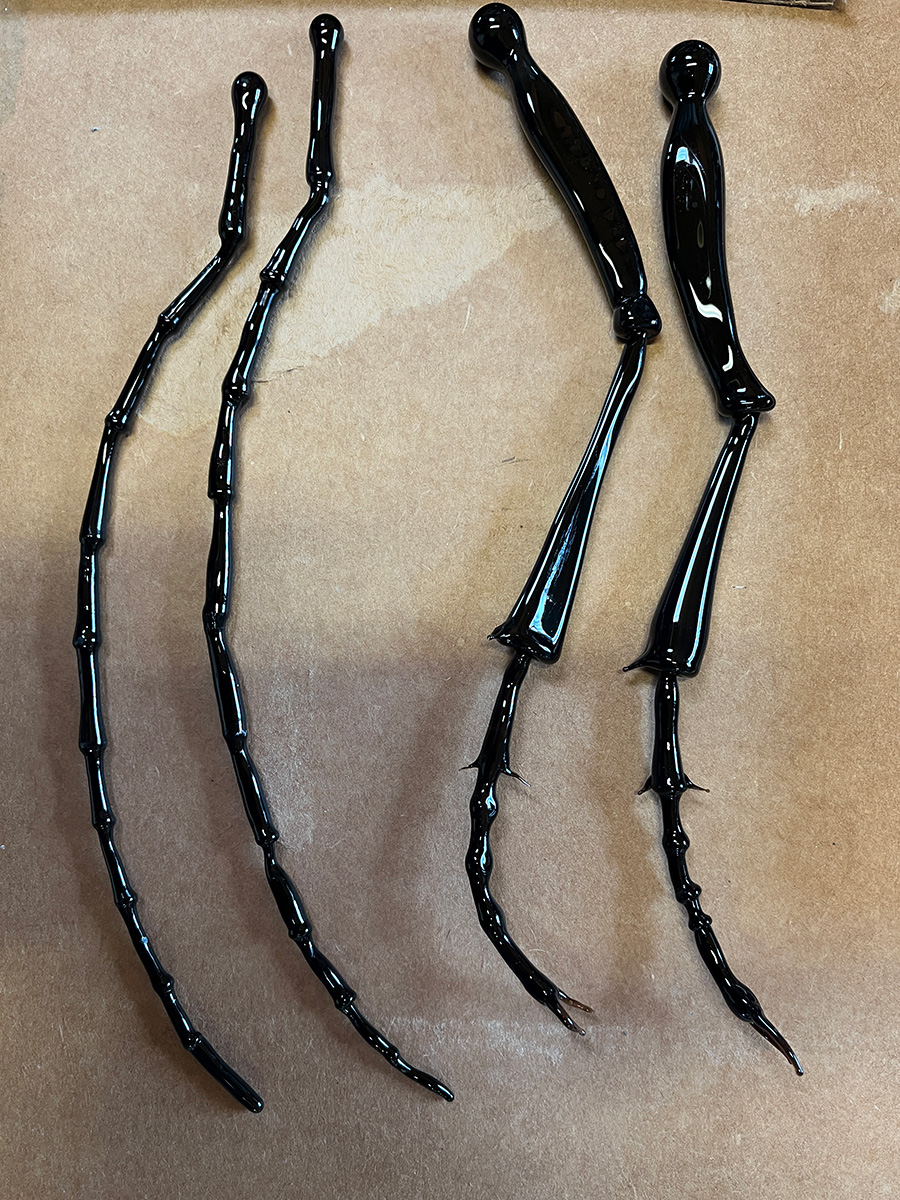
The head of the Blue Ground Beetle supports two long antennae, four palps, and two mandibles, along with several smaller components. The thorax carries the two front legs, which are shorter and more sculptural than the others, while the abdomen supports two pairs of legs — the middle pair shorter than the tremendously long back legs.
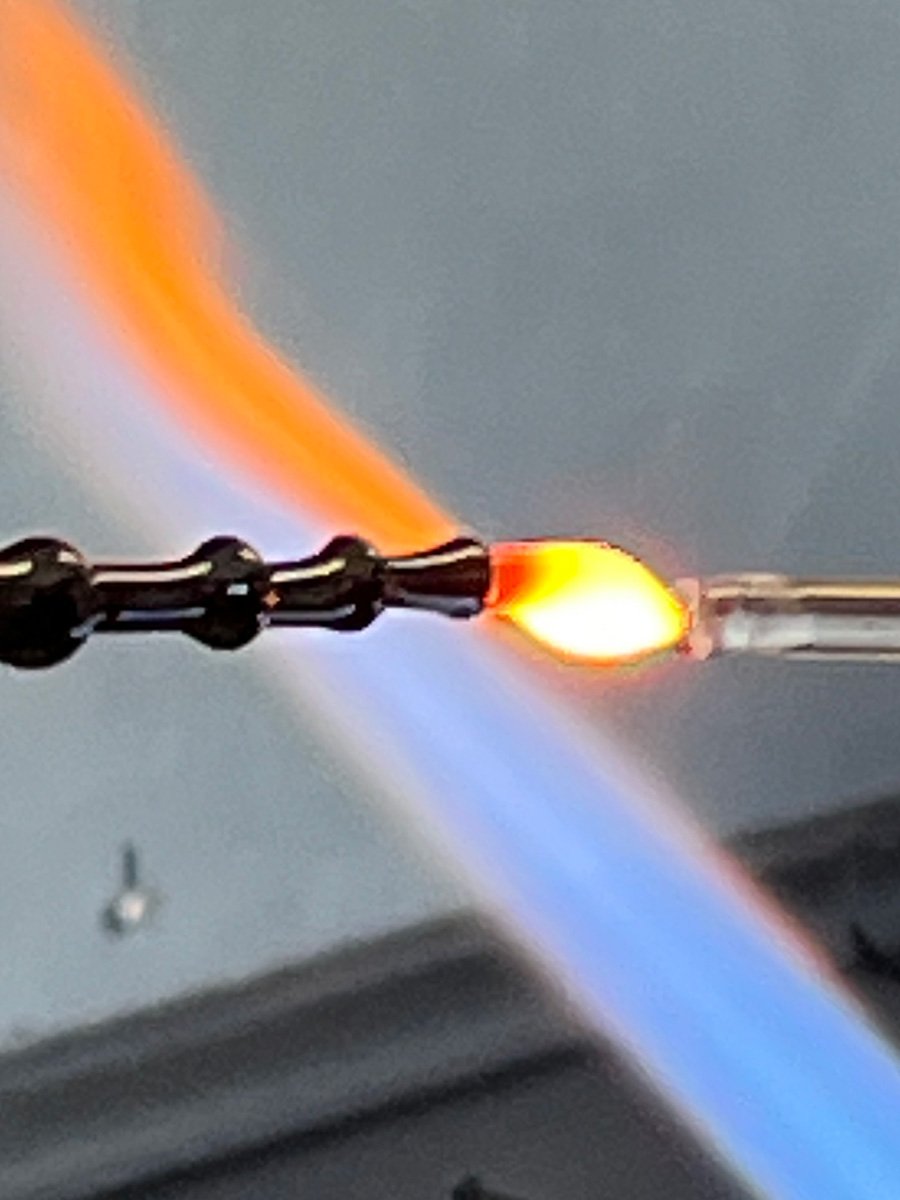
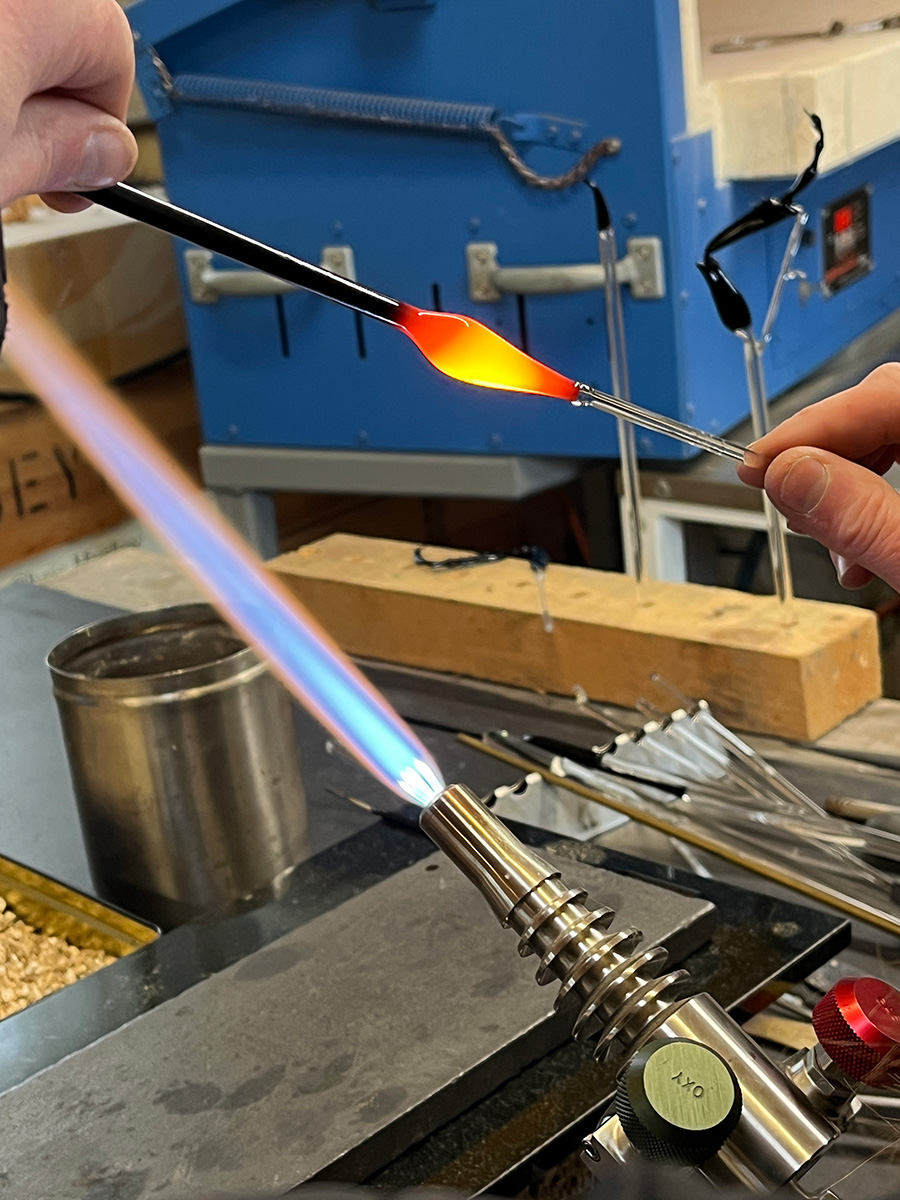
After revisiting the basics, Andrea and I moved quickly into sculpting, using a range of torches and black borosilicate rods around 6mm in diameter. For the thighs, I created larger gathers of glass, pressing contours into the molten surface before stretching them out in one motion. Working directly from my drawings, we developed a repeatable process I could continue at home, allowing me to refine the curves, gestures, and proportions of each leg.
Each leg consists of more than ten separate parts, many of which are too small to be seen by the naked eye. This level of anatomical complexity is part of what compels me to enlarge the beetle’s scale — only then can the extraordinary beauty of these structures be fully appreciated. Unless viewed through a microscope, one would never notice a beetle’s toes: the metatarsus, divided into five tiny segments, ending in sharp, lethal claws. These claws required the finest torch and a steady hand to form their delicate spikes.
Through Andrea’s guidance, I learned how to join borosilicate glass effectively, discovering how stress accumulates at unsmoothed joints, and how even the most fragile-looking waist between connections can remain remarkably strong if the temperature balance is right.
We studied the antennae in particular, replicating their eleven segments and assessing their proportions relative to the head and body. These features alone are extraordinary sculptural forms. Beneath them sit the mandibles — strong, pincer-like jaws used for grasping and slicing prey. Hollow and hooked, they deliver venom to the beetle’s unfortunate victims. Below these are the palps, exquisitely detailed, arm-like sensory organs used to touch, taste, and evaluate textures and odours.
This new skill demanded practice and patience, but the process was deeply rewarding. I have since invested in a torch setup for my home studio, where I continue refining these techniques — studying, sculpting, and gradually perfecting each intricate appendage.
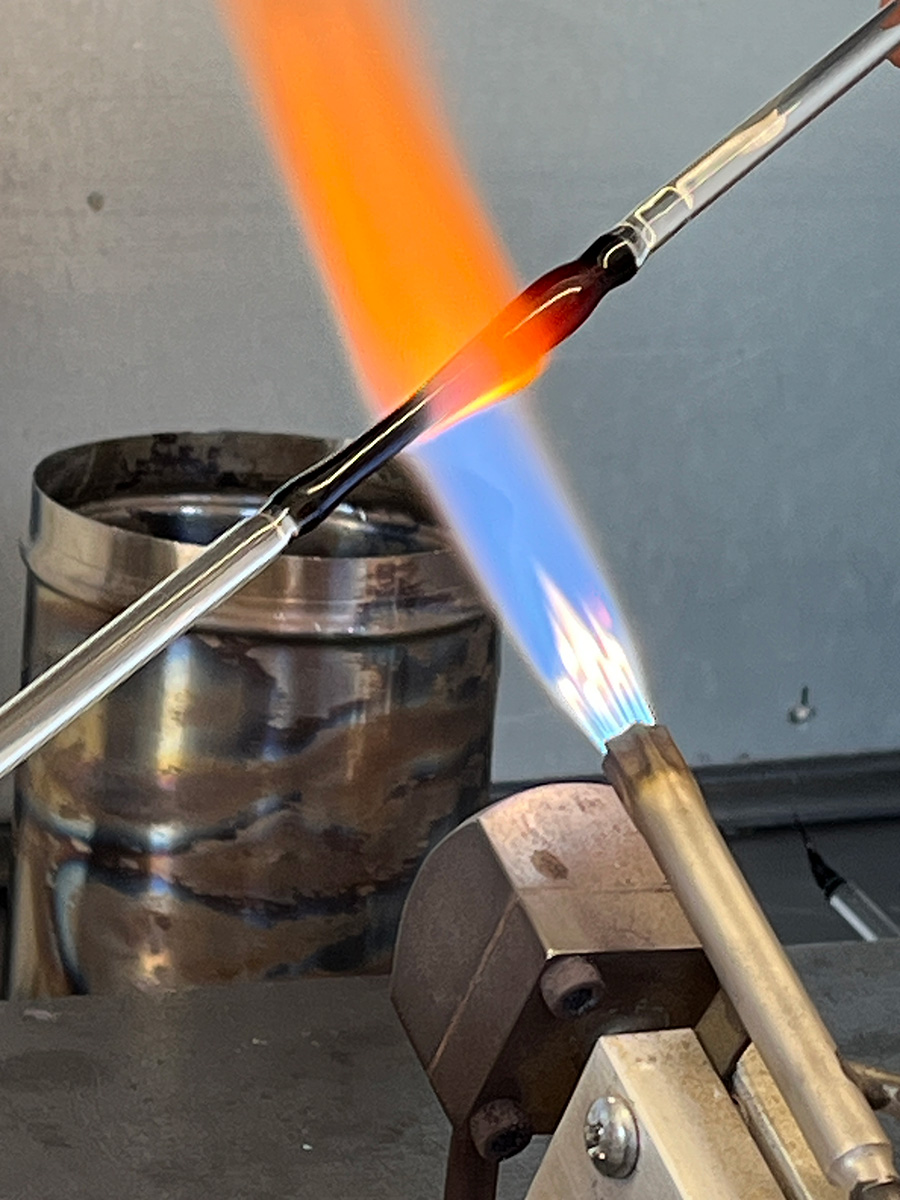
Stretching glass
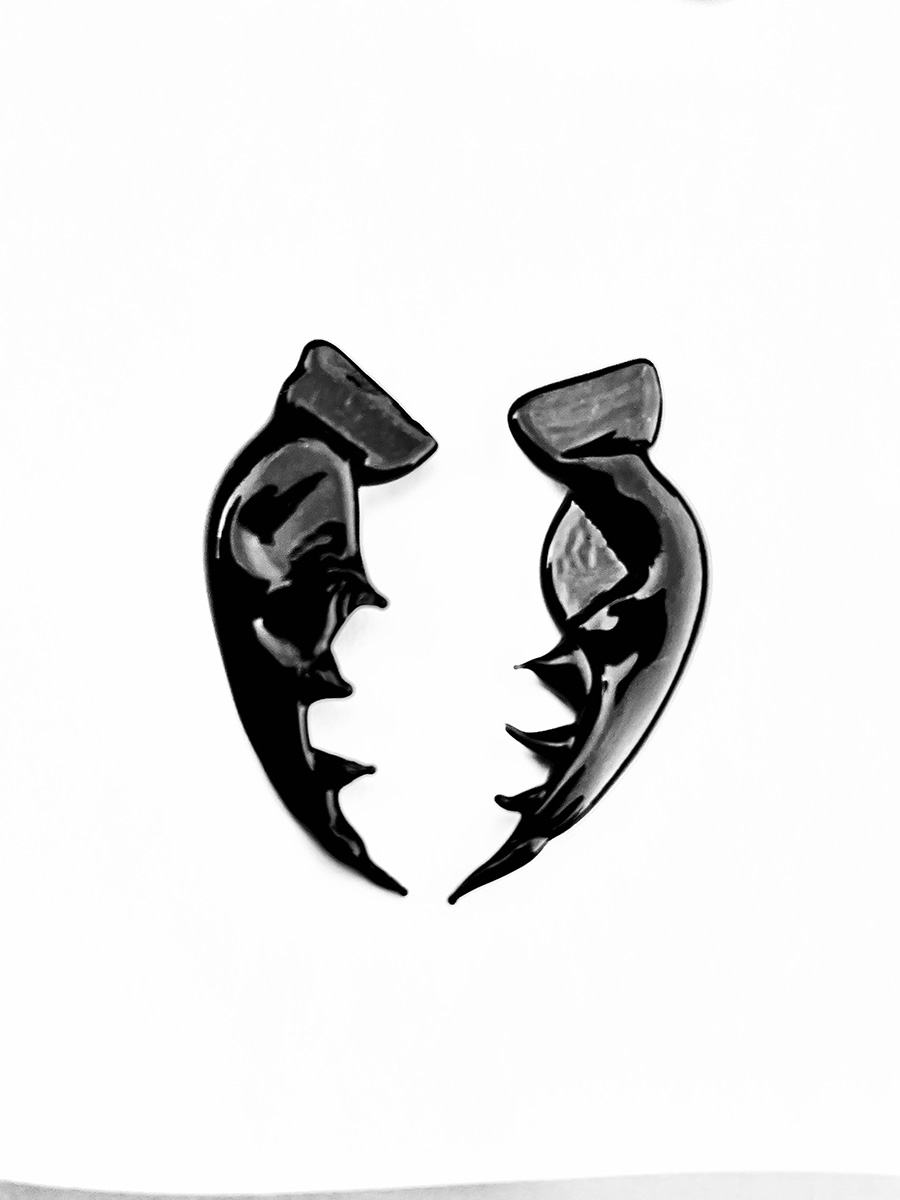
Mandibles
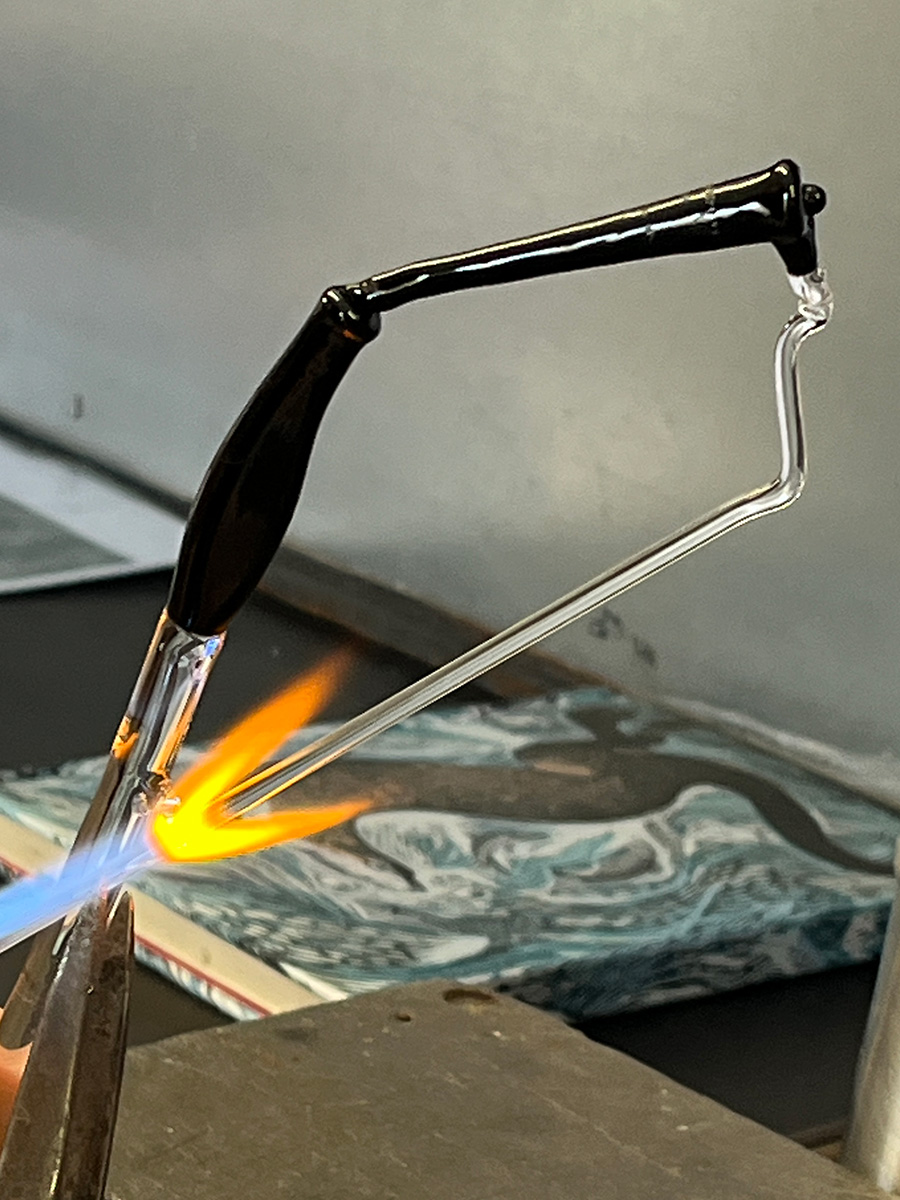
Bracing
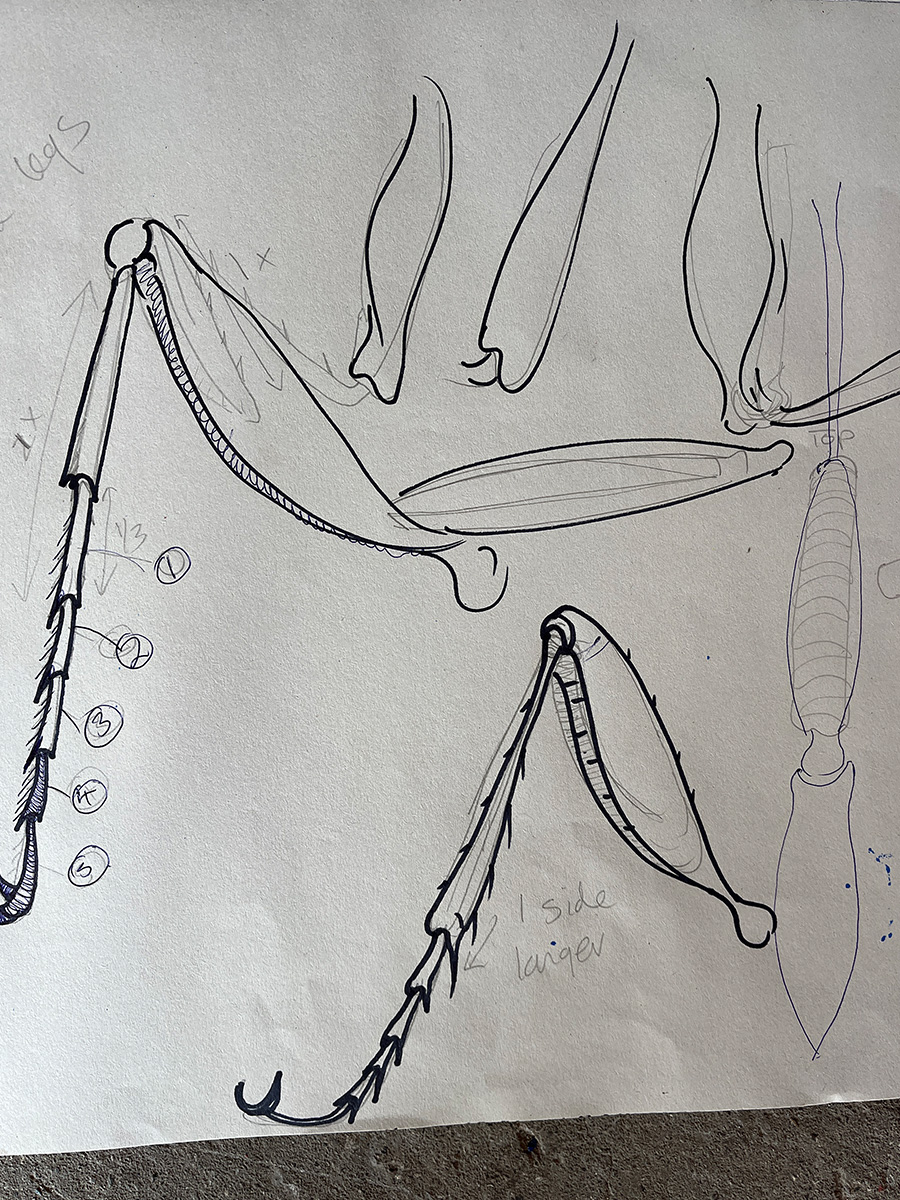
Drawing of legs
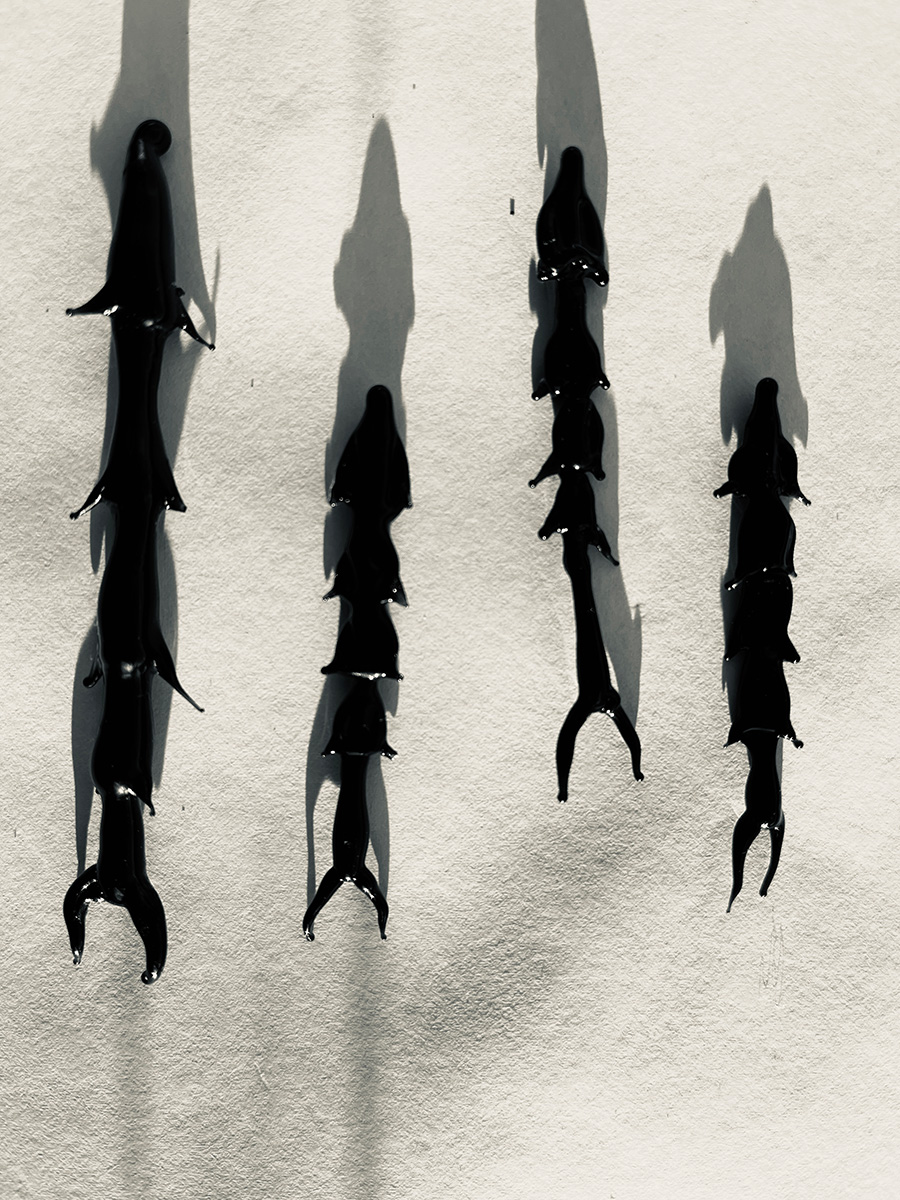
Tarsus – first attempt
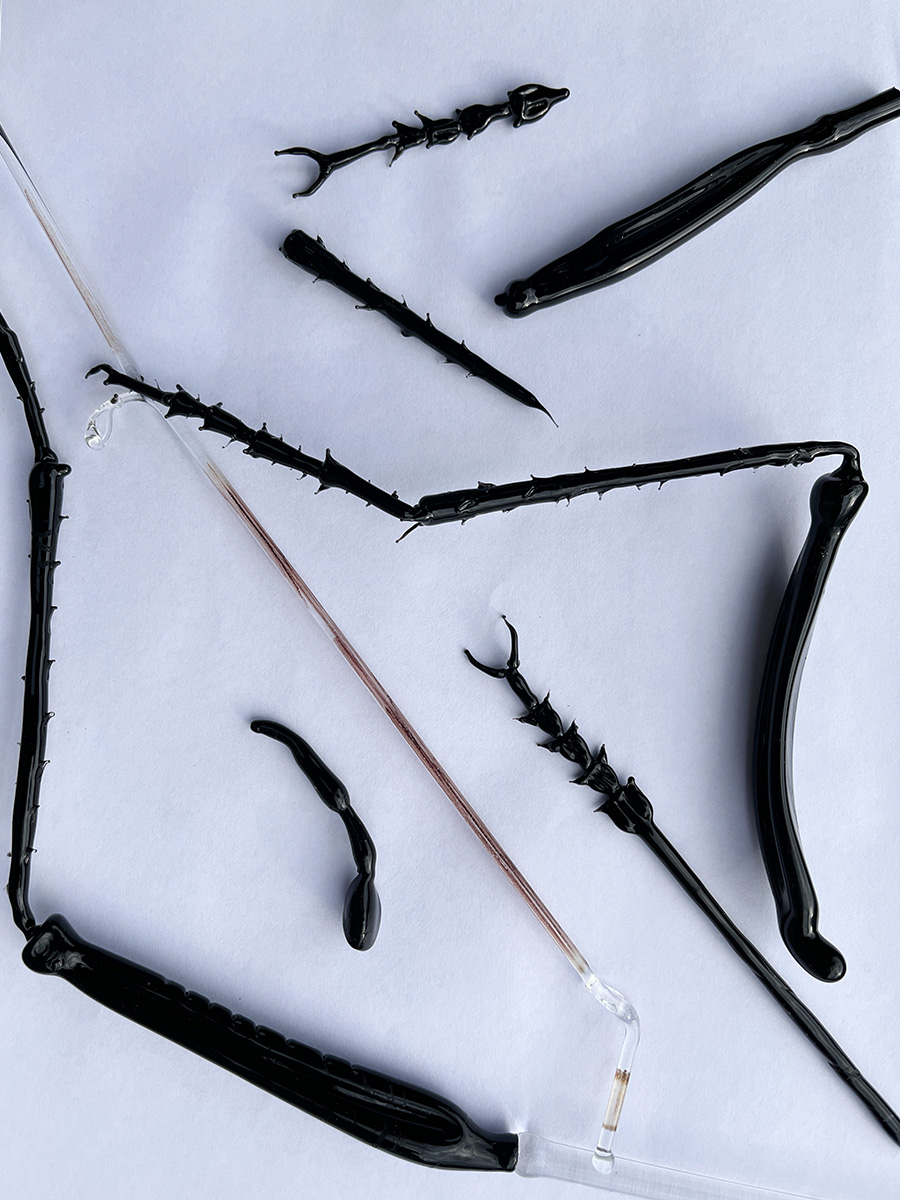
leg sections
A Bit about Borosilicate Glass
Flame workers use two main types of glass: soft glass (COE 104) and borosilicate glass (COE 33). The addition of boron to the glass composition changes its physical properties. The lower Coefficient of Expansion (COE) means that borosilicate glass expands less when heated, making it far more resistant to thermal shock and breakage than softer glasses.
Although borosilicate requires higher working temperatures to soften and melt, its strength and durability make it ideal for flame-worked sculpture. It can withstand the repeated heating and cooling that comes with intricate joining and stretching — essential qualities when sculpting the long, spindly, and delicate legs of the Blue Ground Beetle.
- Borosilicate glass contains silica (SiO?) and boron trioxide (B?O?), giving it a low coefficient of thermal expansion (COE 33).
- This low COE means it expands and contracts less when heated and cooled, making it highly resistant to thermal shock. Its durability makes it ideal for scientific glassware, lighting, and sculpture.
- It is much harder and stronger than soda-lime or soft glass and is less prone to cracking during rapid temperature changes.
- Joints between pieces must be carefully heated until fully fused, ensuring no cold seals that could crack later.
- Even though it is more stable than other glasses, borosilicate sculptures still need annealing — a controlled cooling process (usually around 560°C–580°C) to relieve internal stress.