QEST and Beginnings
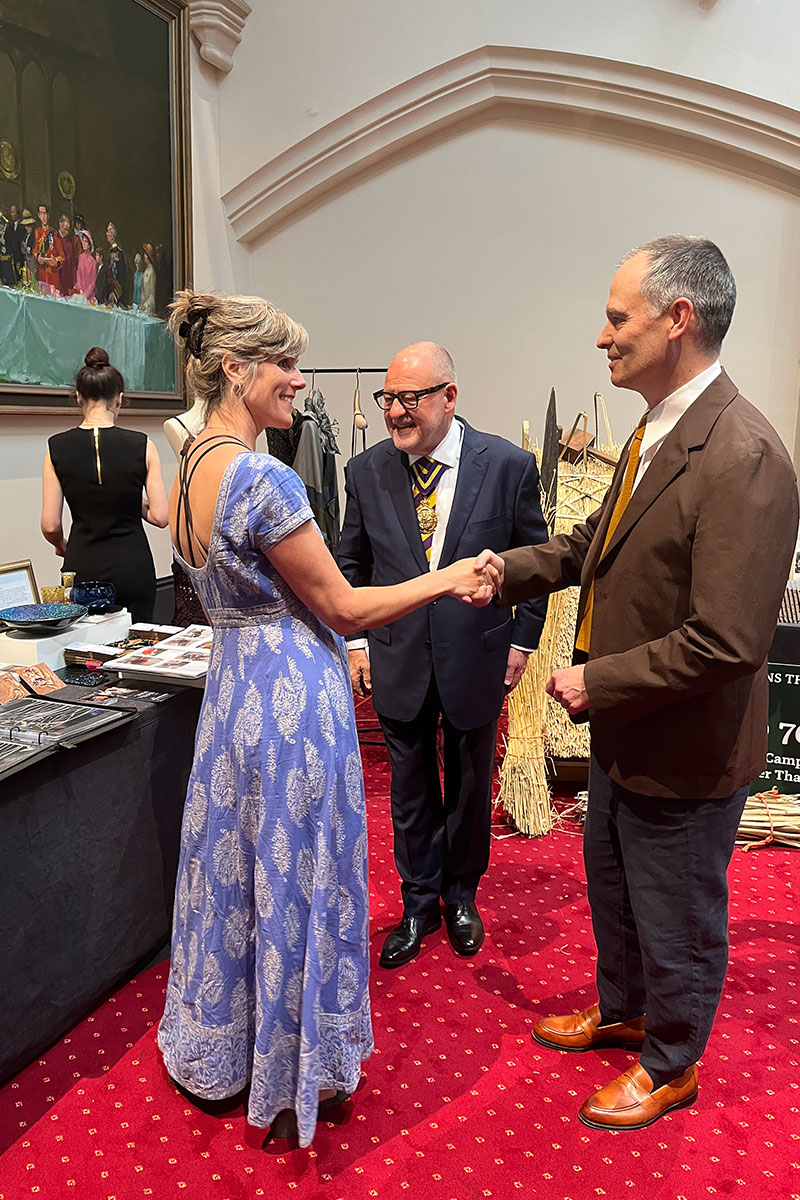
In 2024, I was awarded a QEST Scholarship, which enabled me to train with four glass masters, each teaching specific techniques essential to creating a glass insect. The funding supported a total of 20 days of intensive learning, which kick-started a year of dedicated study in my spare time. I focused on observing, analysing, and understanding the structure and anatomy of the Blue Ground Beetle, laying the foundation for the subsequent creation of the sculpture.
What is QEST
The Queen Elizabeth Scholarship Trust (QEST) is a UK-based charity dedicated to transforming the careers of talented and aspiring makers. By funding training and education, QEST creates pathways to excellence, ensures the transfer of specialist skills, and strengthens the future of the UK’s craft sector.
Who did I train with?
The Glass Blue Ground Beetle Project was divided into four specialist training phases, each guided by an expert mentor who shared their knowledge and techniques to help me realise this complex glass sculpture.
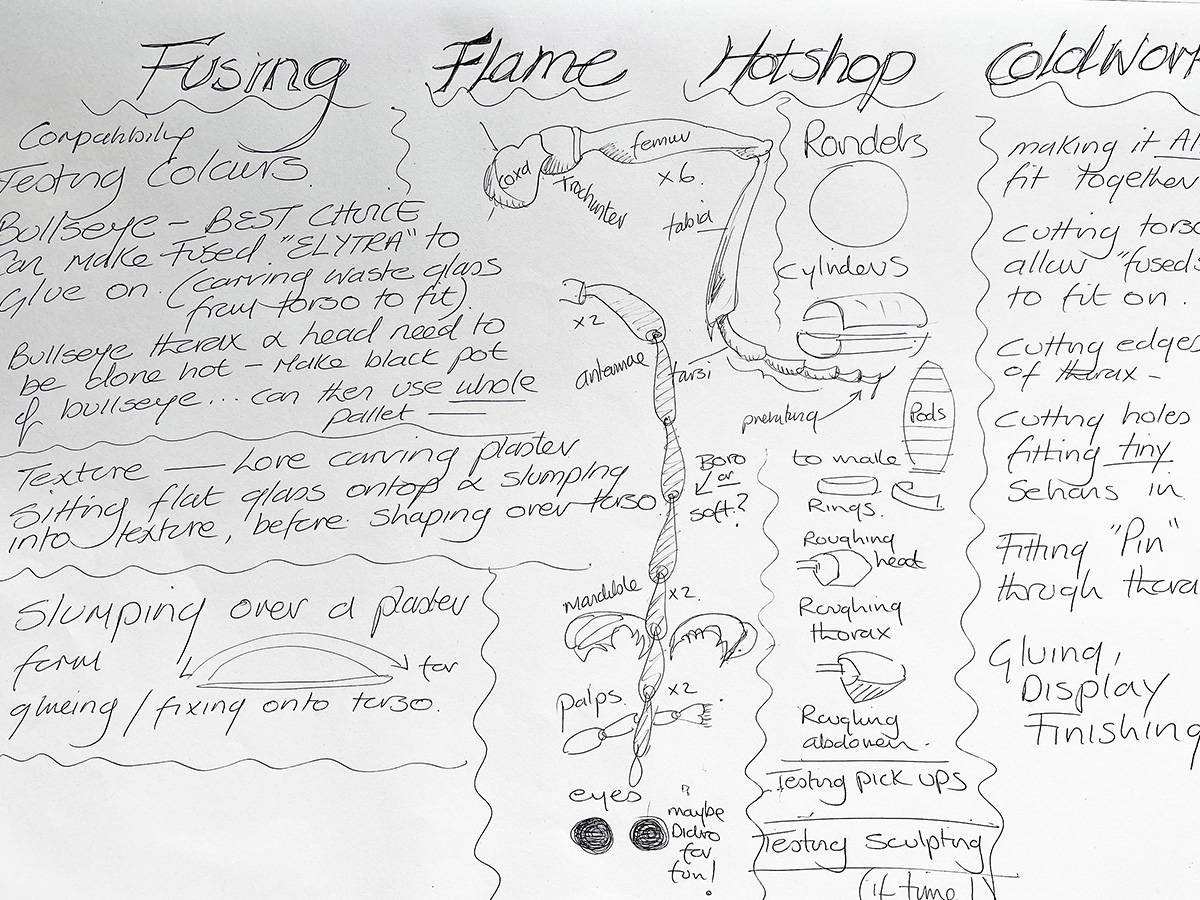
- Helga Watkins-Baker – Warm Glass (Fusing, slumping, casting, mould making, texturing, and colour work)
- Scott Benefield – Hot Glass Techniques (Rondel making, pick-ups, and mentoring across hot glass processes)
- Andrea Spencer – Flameworking (Creating delicate components – legs, antennae, mandibles, palps)
- Steve Frey – Cold Glass Finishing (Mentoring, cold working and display advice)
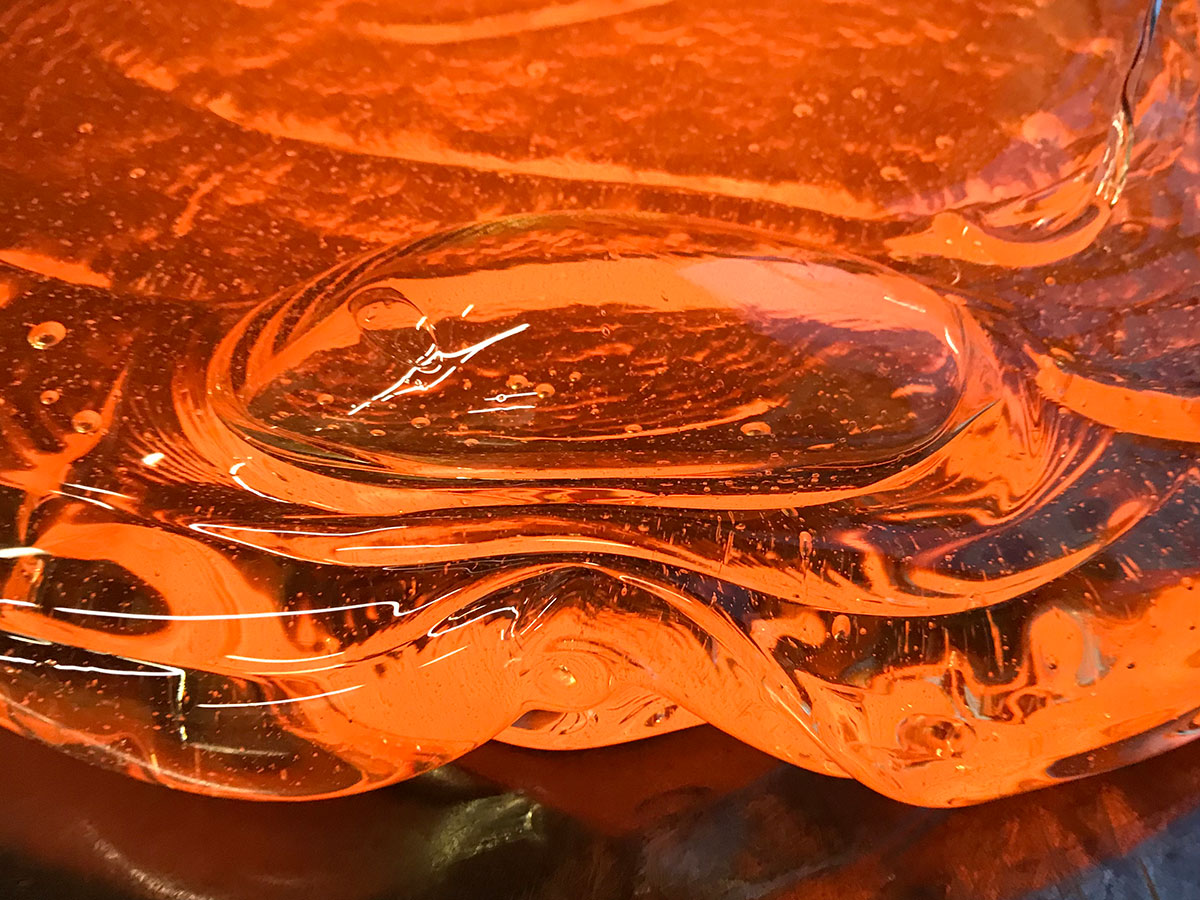
Why Glass?
I’m enchanted by glass — it never fails to fascinate me. I first encountered hot glass at eighteen and have never looked back. From that moment on, I’ve been burned with a lasting passion for this extraordinary material.
For those of us who work with glass, we develop a true relationship with it, exploring its many forms and techniques:
For this project, I have trained in and employed a variety of glassmaking techniques, including:
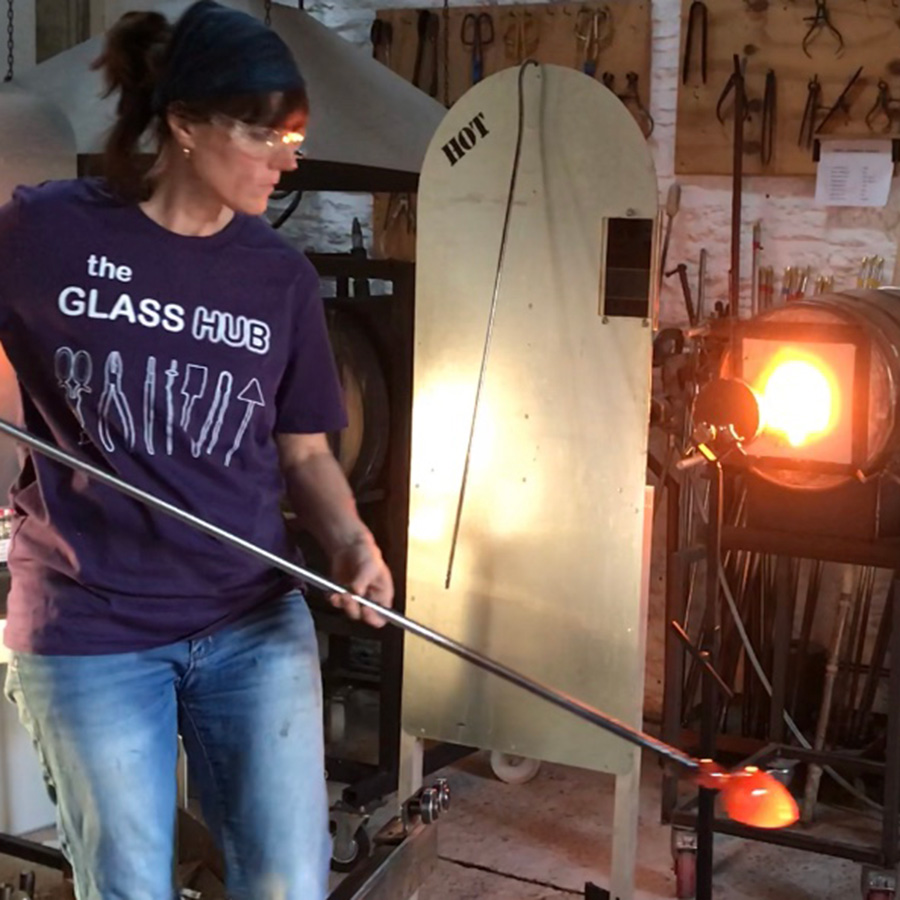
- Hot glass (molten) – Molten glass is gathered from the furnace and then blown, sculpted, or cast.
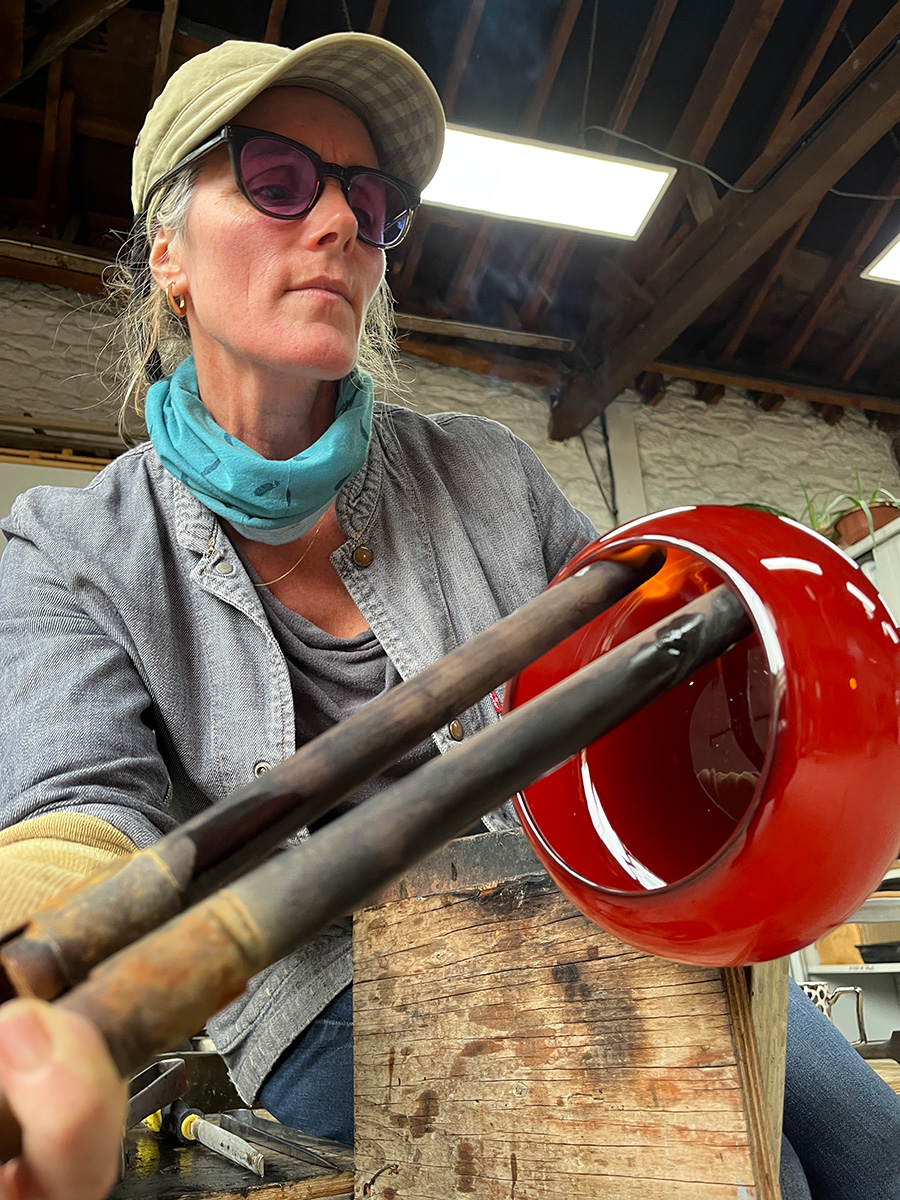
- Warm glass – glass is kiln-formed, cast, fused, layered, pasted, or slumped.
- Flameworking – glass is shaped on mandrels, sculpted, or blown.
- Coldworking – glass is cut, ground, drilled, polished, or blasted.
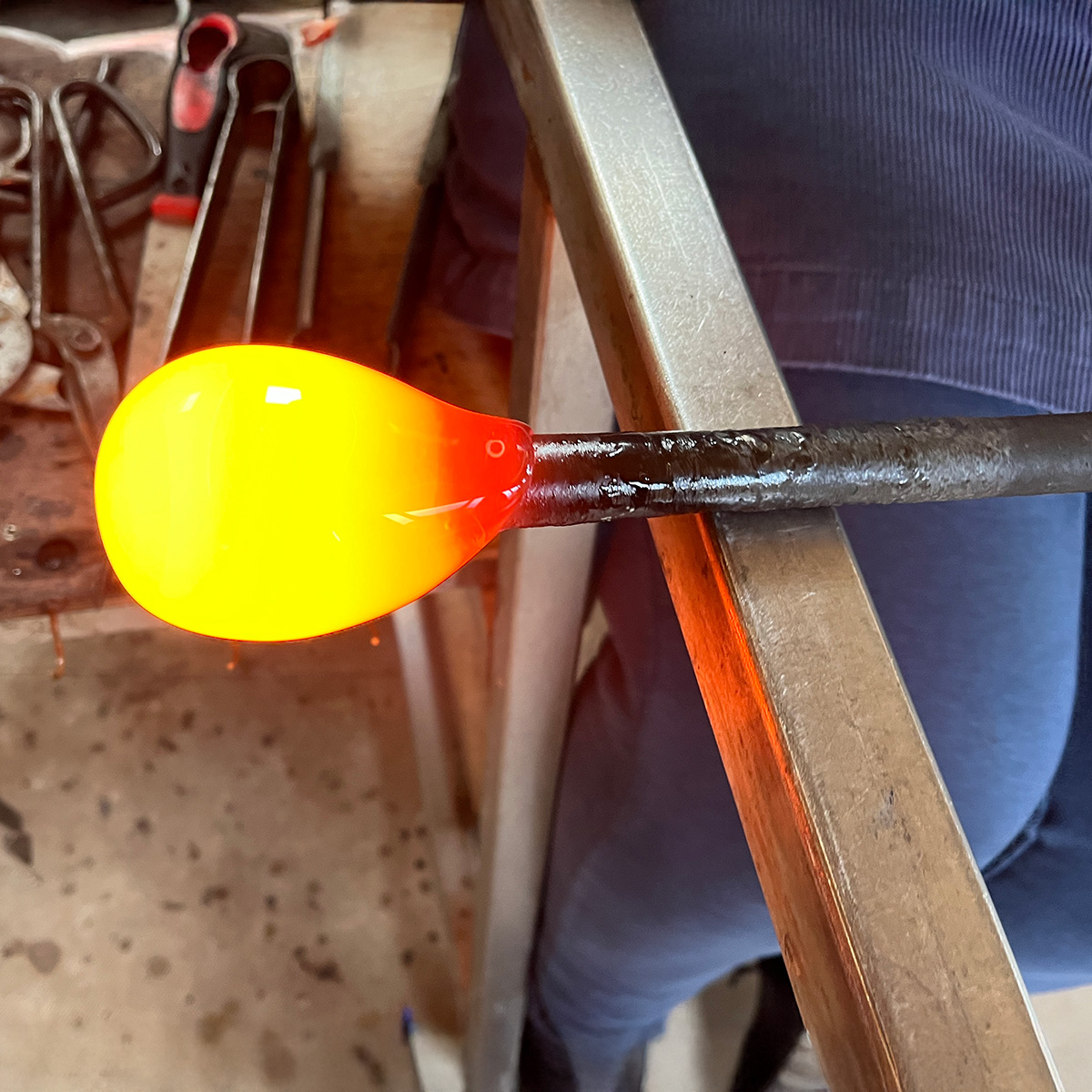
Hot Glass
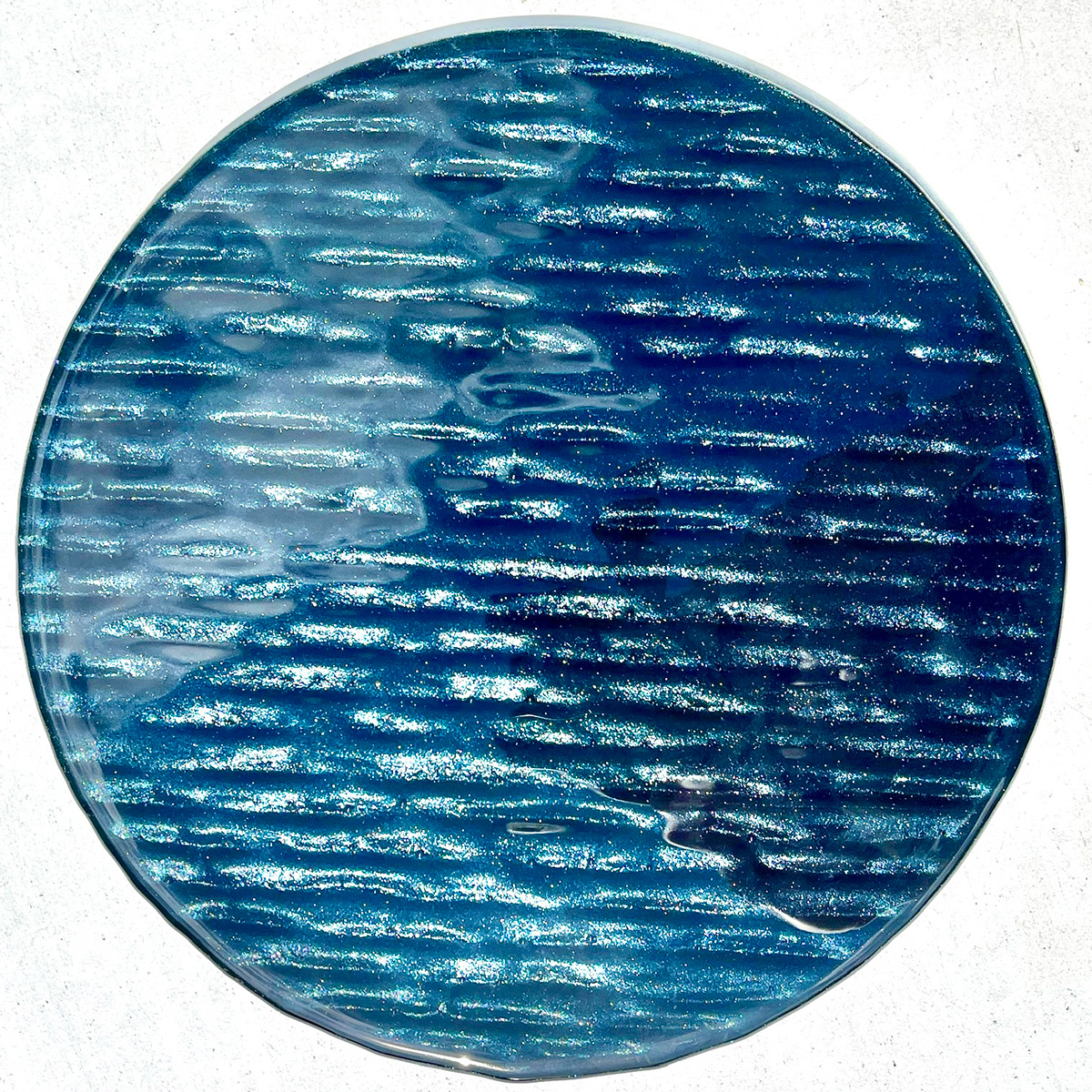
Warm Glass
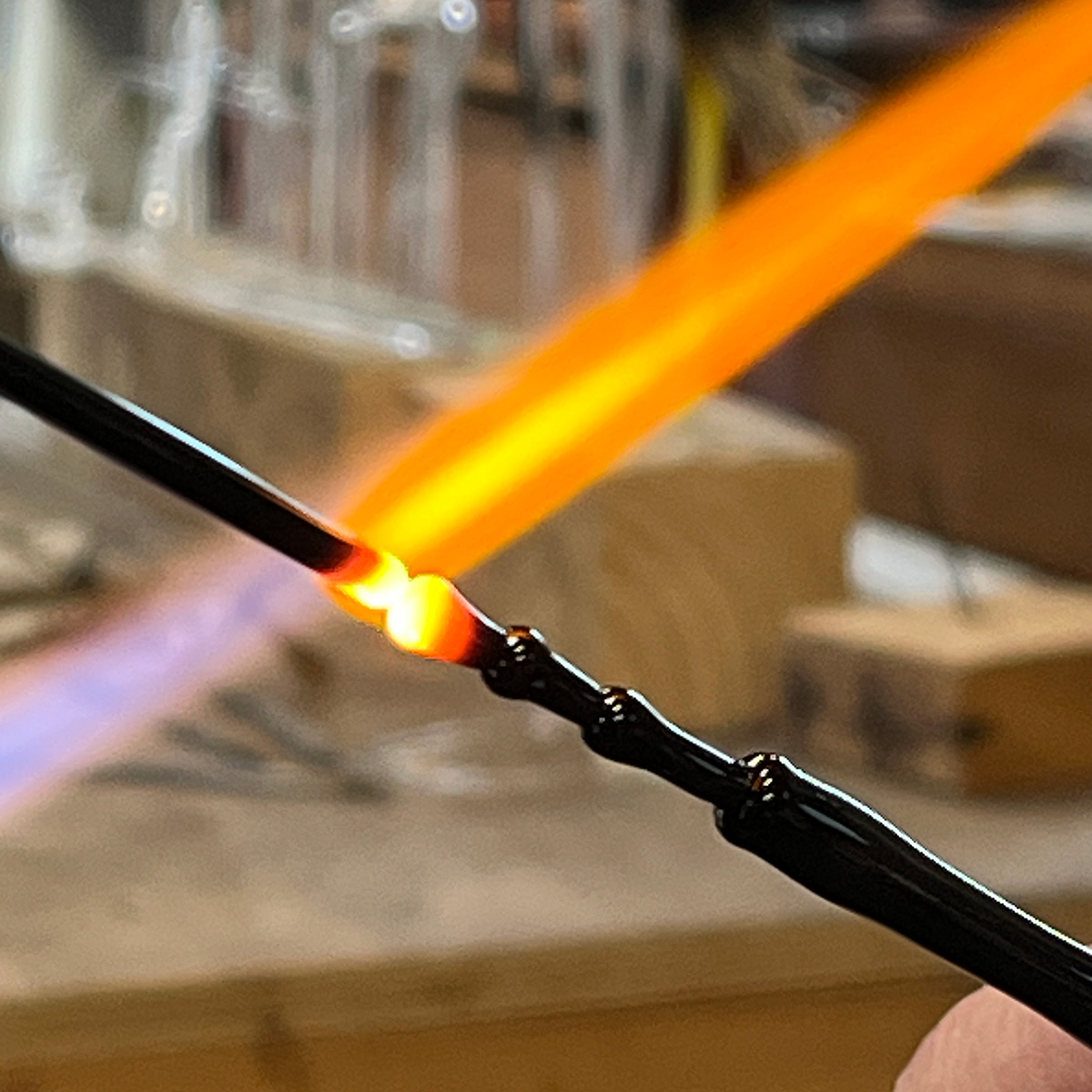
Flameworking
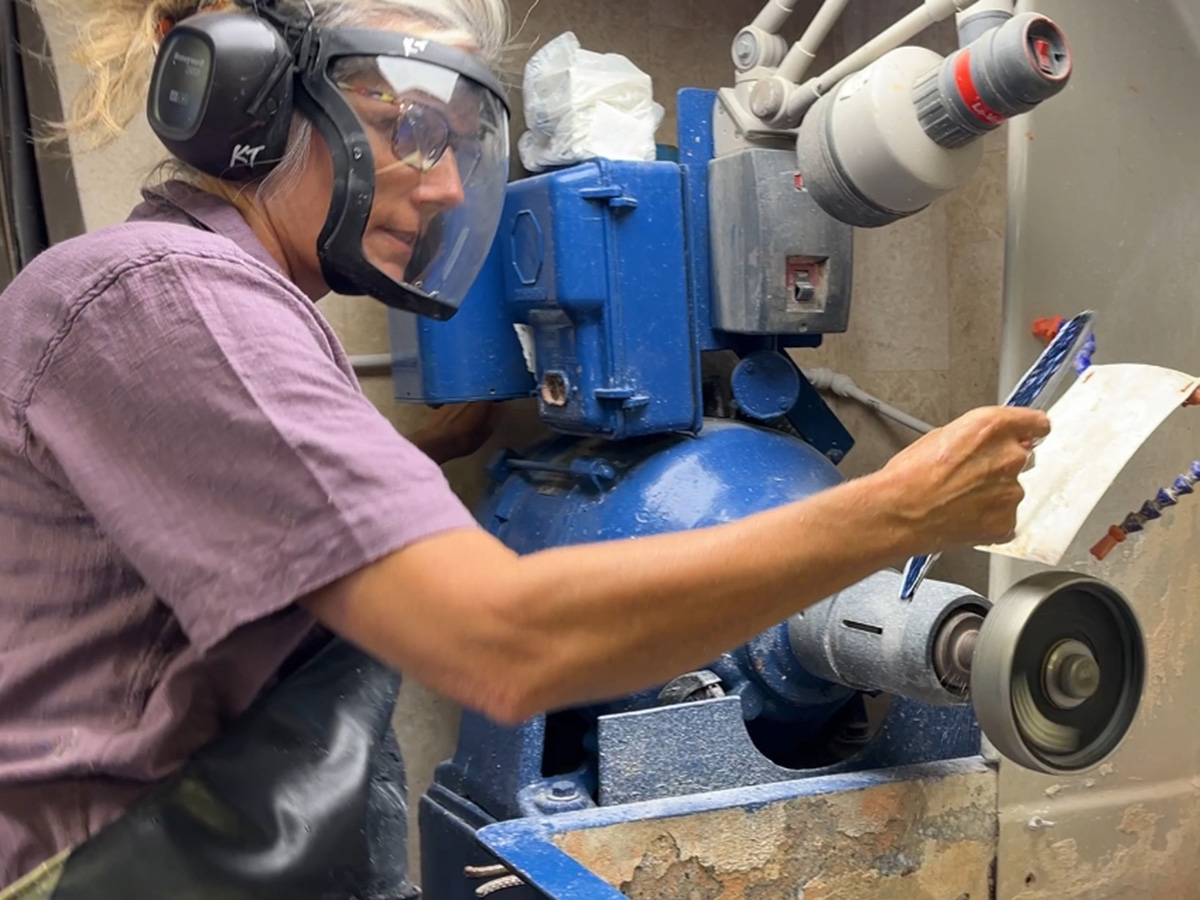
Coldworking
Each method reveals a different side of glass — fluid yet fragile, powerful yet delicate — a material that continues to inspire, challenge, and transform.
The possibilities — the allure, the fascination (and yes, the frequent frustration!) — mean that we will never get bored of glass. There is always more to learn, and it’s the learning itself that helps inspire me.
Making something with your hands, with a material that exists in different states is the unique challenge of glass. The material of Glass is a succession of moments frozen in time. It’s a physical process with a tangible result — whether it’s a wine glass or a beetle. Often, the process of making means more than the final object. And yes, both can end up smashed on the floor, yet both can leave you with a sense of joy and adrenaline like nothing else.
Glassblowing (hot glass), where I’ve spent most of my career, lies somewhere between sport, choreography, and craft. After teaching for thirty years, and making equipment that allows me to blow glass, I still feel the same excitement and passion I did when I began — it is a reward unlike any other. I’m so grateful to have found my material.
Why a Glass Insect?
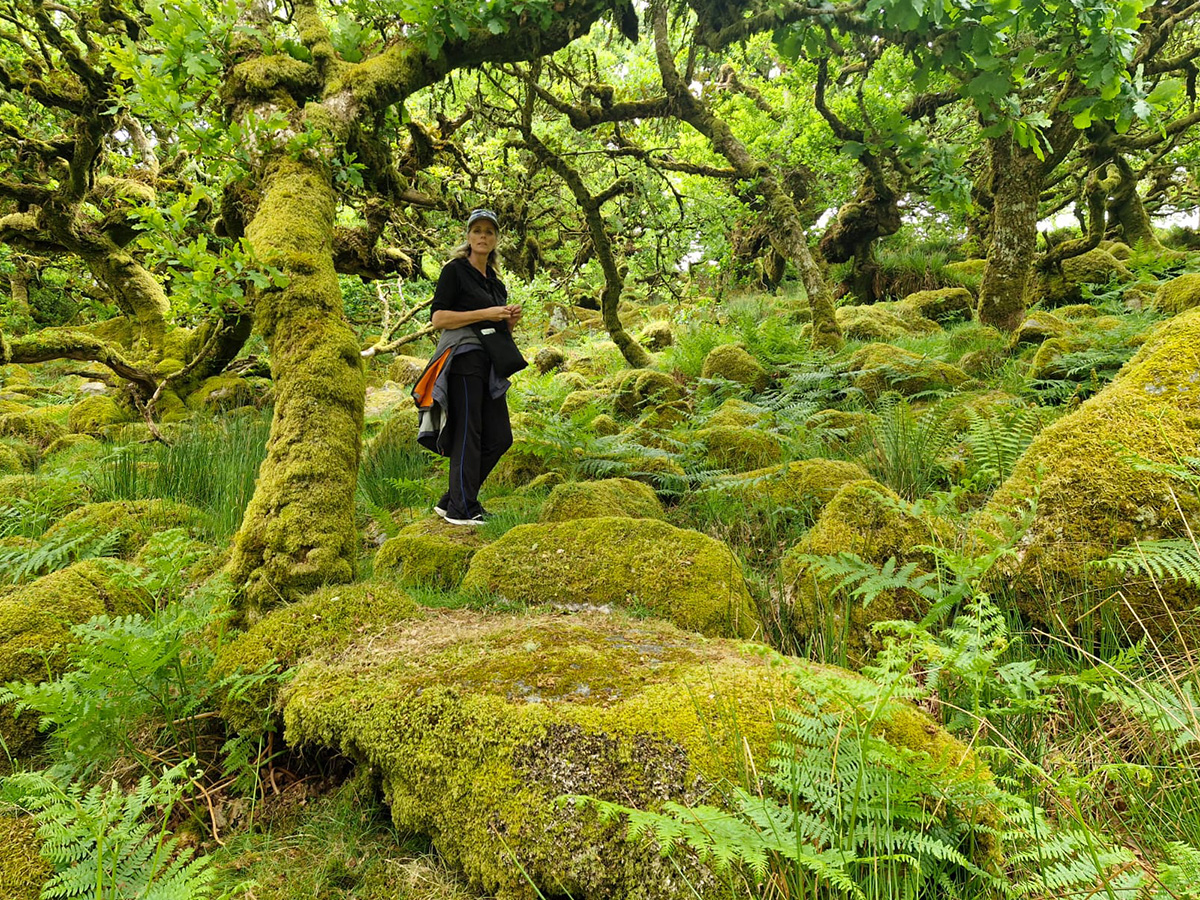
I have always been fascinated by insects, a curiosity that began in my childhood spent crawling through the forest moss of the Scottish Highlands, desperate to find a shiny beetle. My father was a forester, and from a young age, there was so much to see on my explorations — and being closer to the ground gave me a perspective few others had!
Fifteen years later, at art school, during my glass degree, I began combining glass and insects, creating them entirely in hot glass. This medium, however, limits refinement of the appendages — legs, antennae, palps and mandibles. For the next twenty-five years, my glass journey took me in other directions, but still I pondered how to bring this minute world into a scale that everyone could see, appreciate, and marvel at.
In 2023, I applied for funding, and now this vision has become a reality.
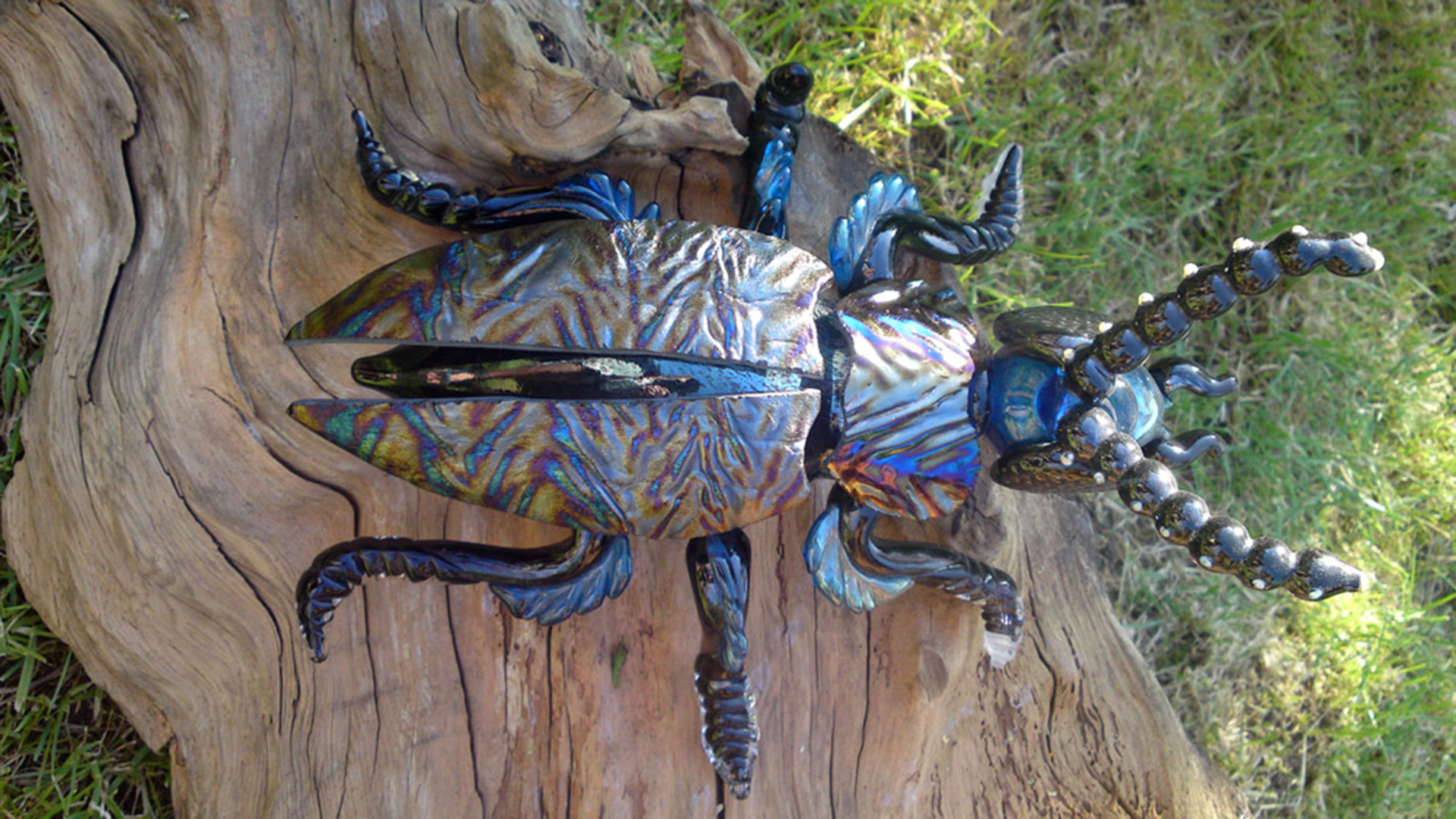
Why This Beetle?
I had to choose one — and there were so many to choose from. With over 4,000 beetle species in the UK alone, it was no easy task. Beetles and ants have always been my favourite insects, and I wanted to focus on a British species that reflects my strong commitment to conservation and the prevention of species extinction.
My goal was to take this minute creature and enlarge it to a grand scale, allowing people to appreciate its beauty, form and significance in ecosystems — to see what I see through a microscope, without needing one.
One of my favourite species, the Blue Ground Beetle, is found within two hours of my home and is the rarest and largest ground beetle in the UK. My Qest project objective was to train in the skills required and produce a work of “rarity” suitable for museums or gallery spaces. Incredibly fragile, complex, and challenging to make, the Blue Ground Beetle felt like the perfect choice.
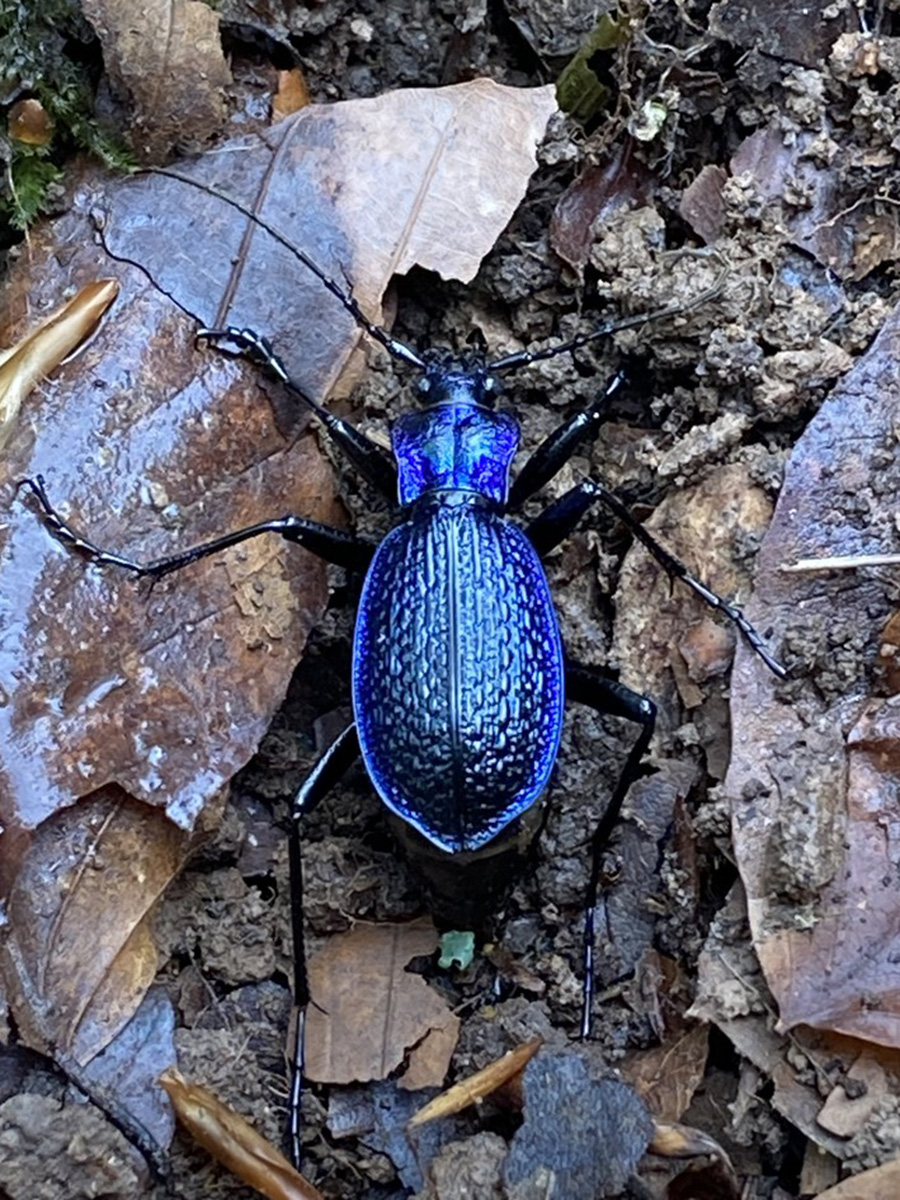
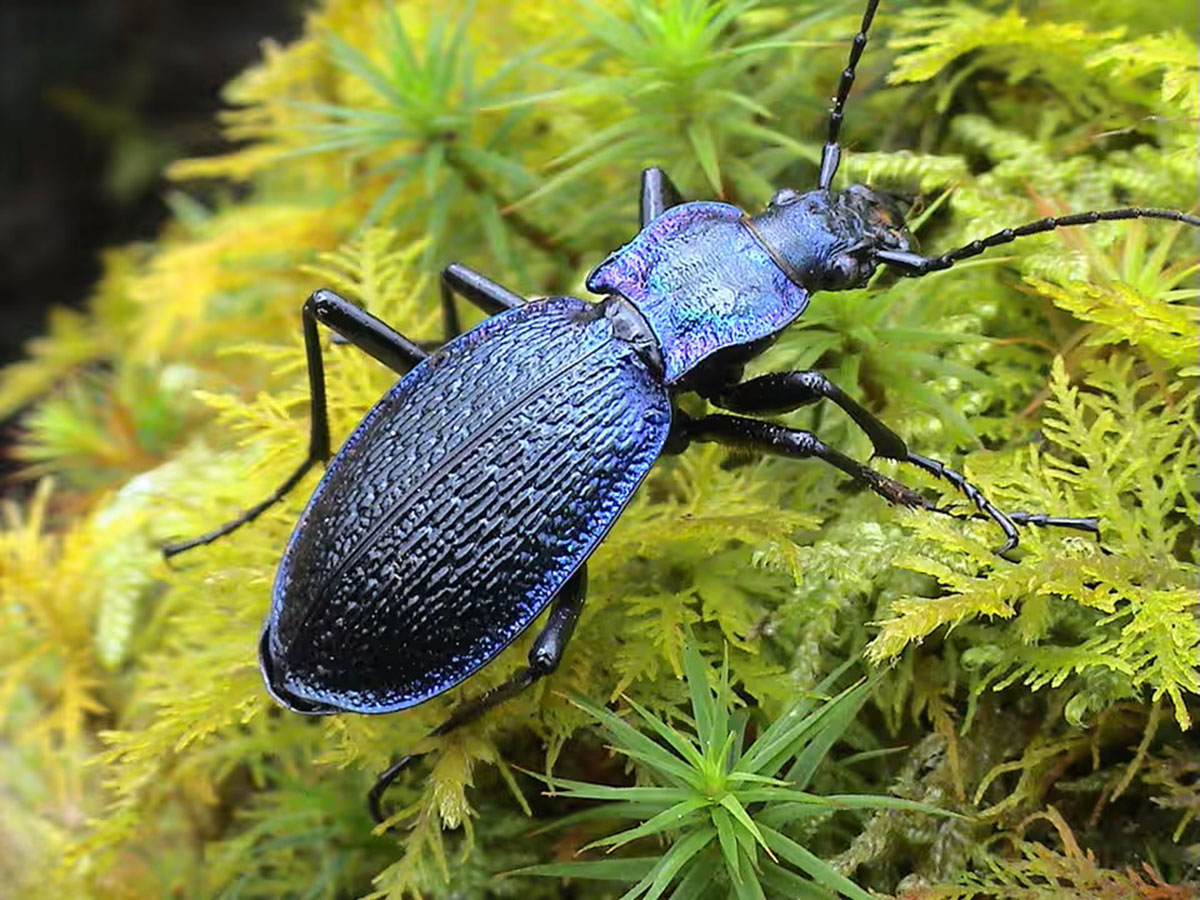
The Blue Ground Beetle
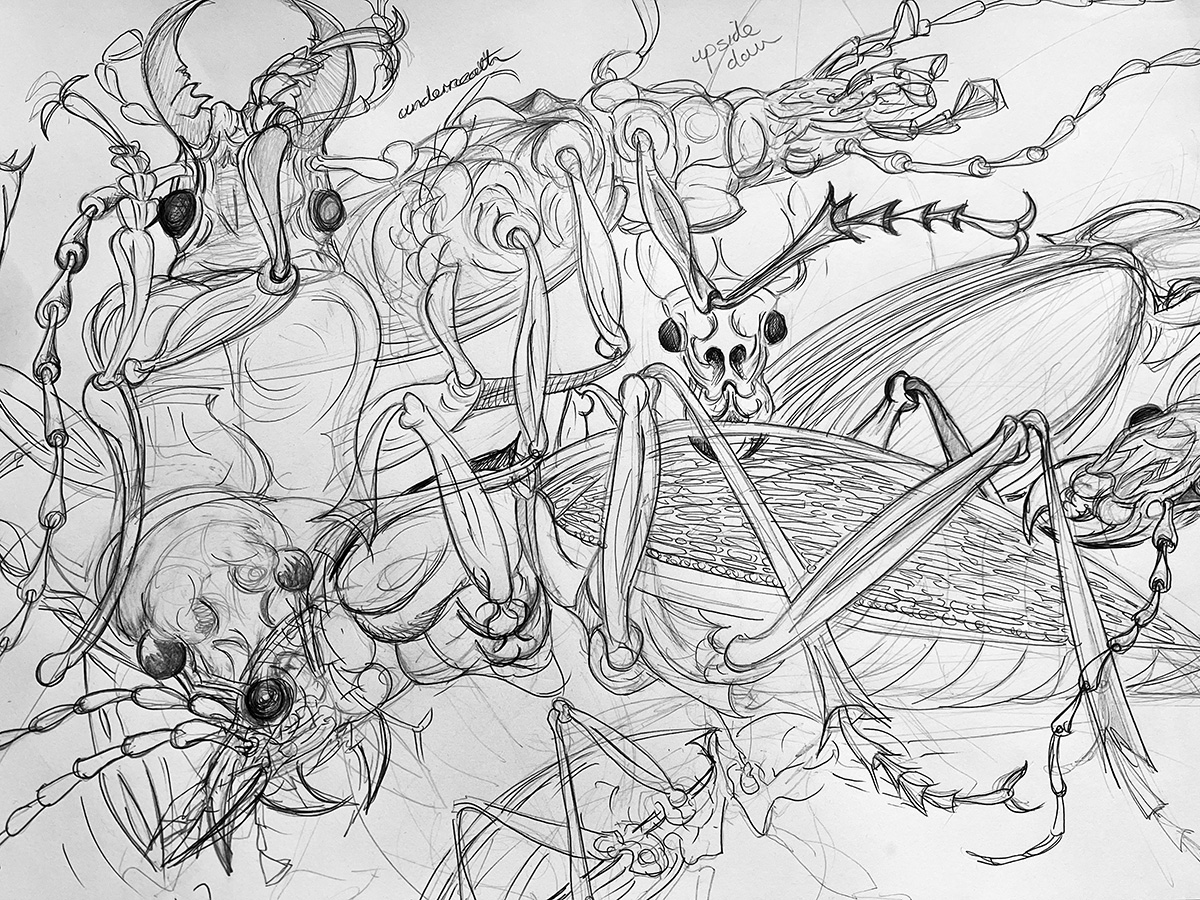
Blue Ground Beetle - First Sketch
Found only in the South West of England and South Wales, these incredible beetles are flightless. Their wing cases have evolved to remain closed, so instead of flying, they climb trees to hunt their prey, staying close to the area where they were born. They use bark and moss to hide and are notoriously elusive — I have yet to find one in the wild, despite many searches.
Their primary prey is the Ash Black Slug — the world’s largest slug, which can grow up to 20 cm long- hence the need for the beetle’s long, spiky legs and formidable mandibles. The Blue Ground Beetle itself can grow up to 38 mm; a petrifying predator (if you’re a slug) and an extraordinarily beautiful warrior. It can defend itself with a sharp nip or a jet of lethal toxic liquid if threatened — by birds, foxes, badgers, artists, or entomologists alike!
Despite its relatively large size for a UK beetle, it is still too small to fully appreciate visually. With a perfect combination of beauty and intricacy, this is precisely why I chose the Blue Ground Beetle for my glass project.
A Bit about the Blue Ground Beetle
The Blue Ground Beetle (Carabus Intricatus) was once thought to be extinct in the UK, until it was rediscovered on Dartmoor in 1994. Thanks to on-going preservation efforts, its conservation status is now “Near Threatened.”
For me, The Blue Ground Beetle is arguably one of the most exquisite and sculptural beetles in the UK. Its metallic wing cases, which shift between blue, purple, and turquoise, are memorising, a wonder of nature. Its long, hooked, barbed legs and ferocious, piercing mandibles allow it to catch prey with precision, injecting it to liquefy the slug’s viscera — which it then ingests, its body expanding like an accordion. Totally alien!
Nocturnal, the beetle is mostly found in ancient oak and beech woodlands — the UK’s temperate rainforests — highlighting the critical importance of preserving these incredible ecosystems.
https://cdn.buglife.org.uk/downloads/Species-Management Blue-ground-beetle-ENGLISH-v3.pdf
https://www.woodlandtrust.org.uk/trees-woods-and-wildlife/animals/beetles/blue-ground-beetle/
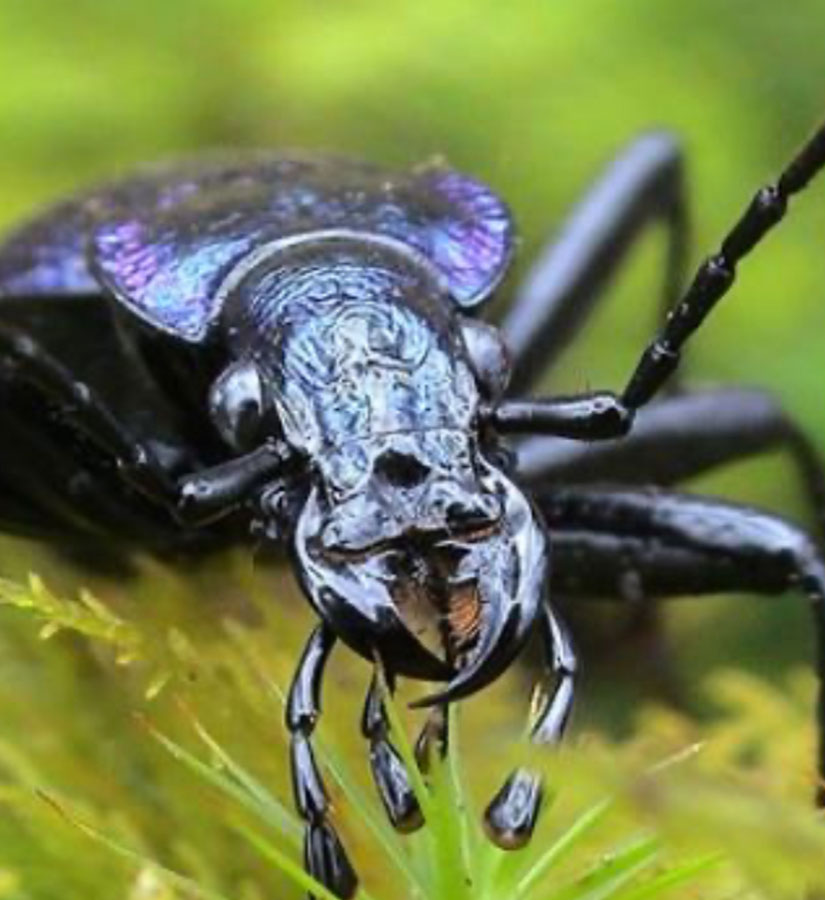
The Blue Ground Beetle, with its captivating dichroic colours and contrasts of beauty, strength, and fragility, stands as a testament to nature’s ingenuity. In the shadowy realms of the forest floor, these nocturnal hunters play a vital role in maintaining the delicate balance of their ecosystem. Visually, the Blue Ground Beetle seemed the perfect insect for me to take from the microscopic to the monumental. Its sculptural form, vibrant hues, and potential for glassy construction made me certain this was “my beetle.” Beetles often look like glass due to the structure of their external shell, called the cuticle, which reflects light to create a smooth, polished, and sometimes iridescent or metallic appearance.
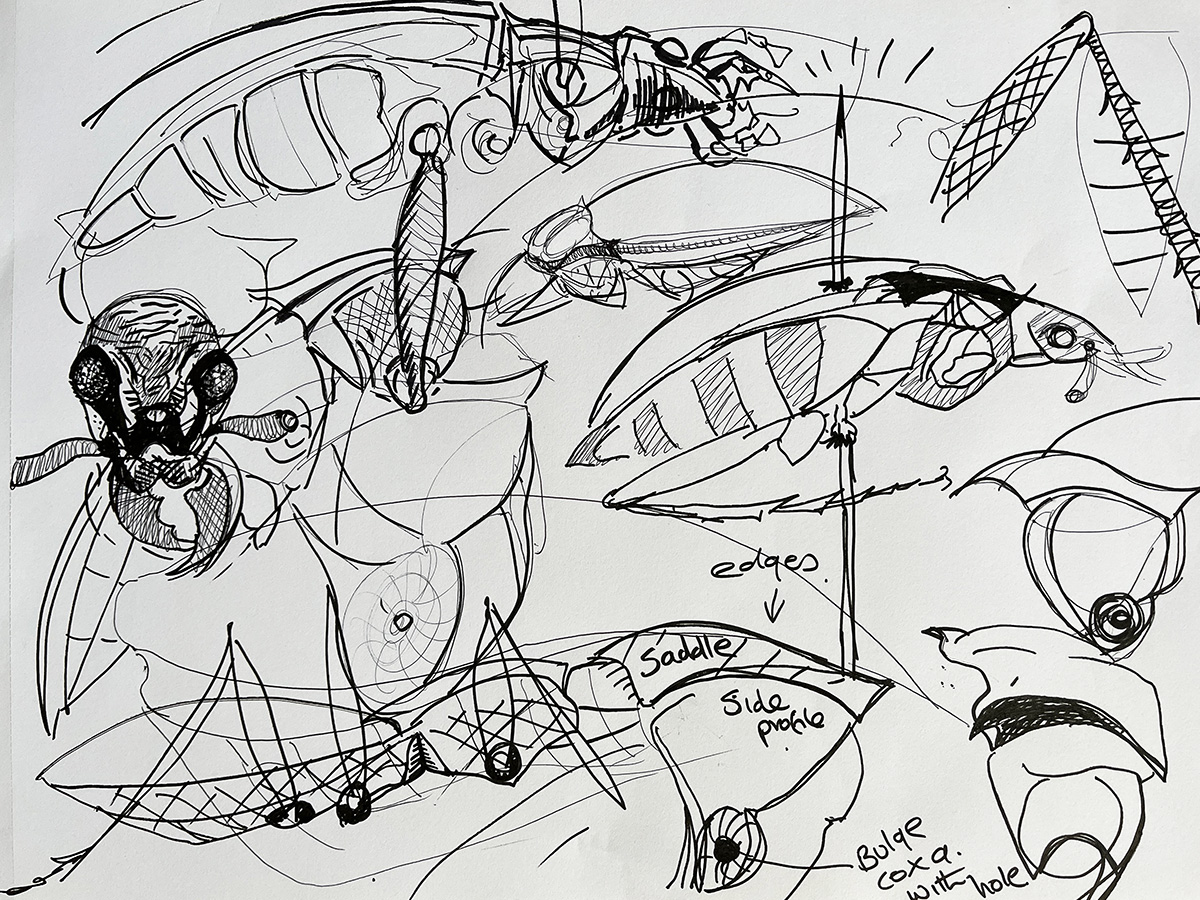
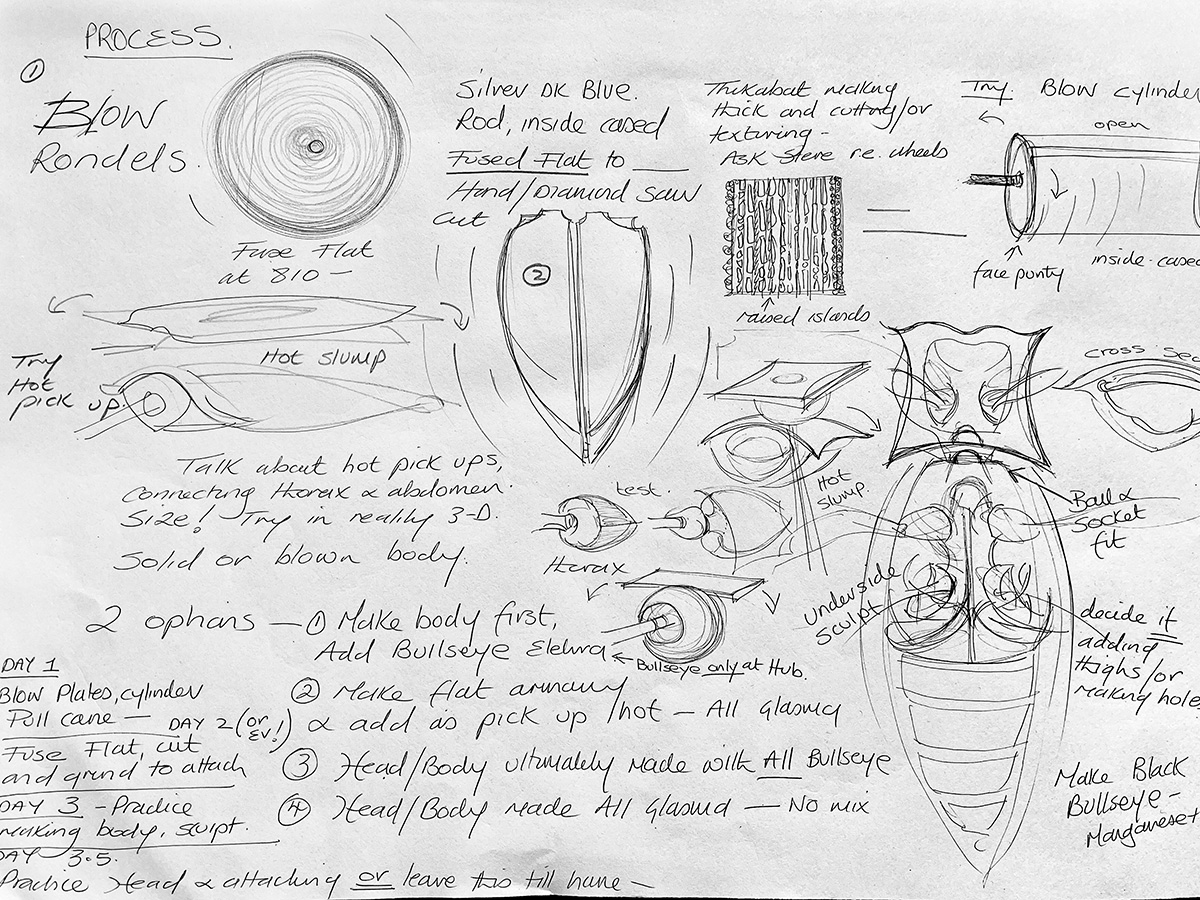
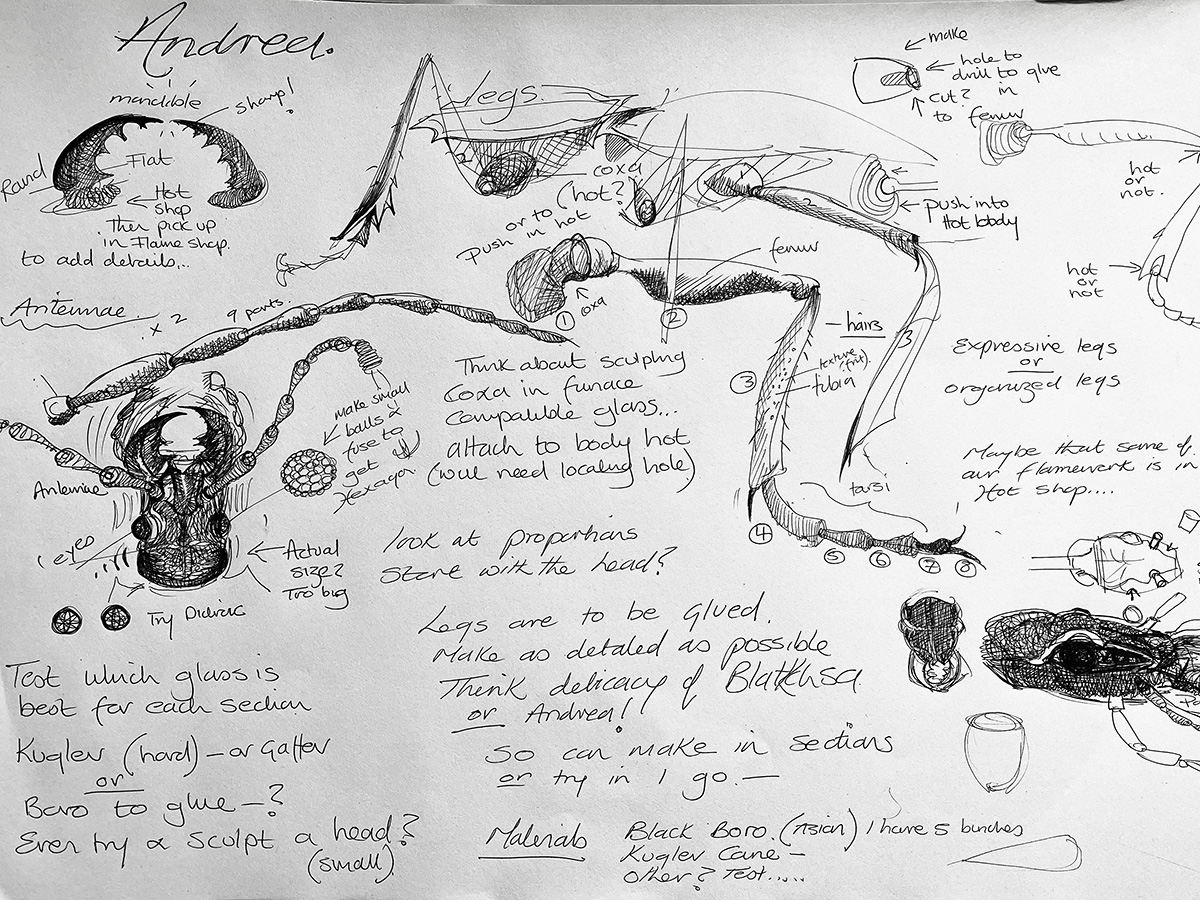
I began to imagine how it would look, and how important it was to bring this miniature wonder into a gallery or museum setting, enlarging it so that everyone could see and appreciate its extraordinary form. I used sketching as my primary method of visualization, allowing me to imagine both the finished object and the potential processes involved in its making.
Having considered what would be required to build a glass beetle, I began by writing a skills base that I would need, that would enable me to bring my vision to fruition. I needed to identify the best people suited to help me bring the project to life. At that stage, I was blissfully unaware of just how much I would have to learn — though I knew the journey would involve a great deal of experimentation, exploration, and a fair share of both disasters and successes. All in my spare time.
To make the most of the process and avoid some time lost to trial and error, I sought guidance from those who had already dedicated decades to mastering glass. I was fortunate to enlist the help of four glass masters, each bringing their own unique expertise to the project.
Where Do I Begin?
My fascination with the Blue Ground Beetle began the moment I saw it glimmering beneath the lens of a microscope. Magnified and alive with intricate detail, the beetle seemed less like an insect and more like a miniature dragon — its iridescent armour, elegant limbs, and sculptural form capturing my imagination completely.
Before starting this project, I regularly visited the Angela Marmont Centre for UK Biodiversity at the Natural History Museum in London, a place where public study and research are encouraged. There, I examined their single specimen using high-powered microscopes and image-stacking equipment to reveal its minute structures in 3D. Seeing the Blue Ground Beetle magnified in this way brought it to life before my eyes — its beauty, texture, and complexity felt almost mythical.
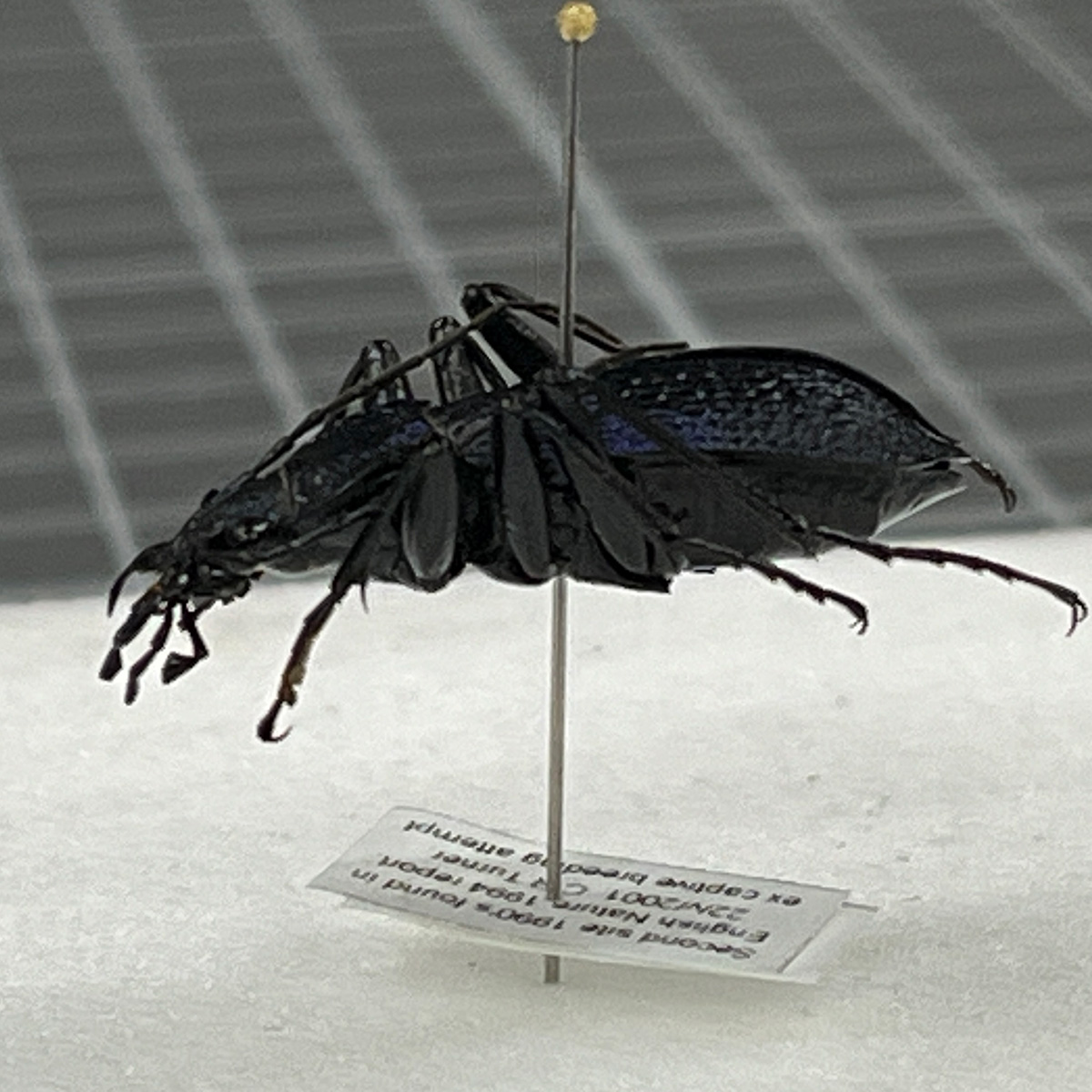
A specimen
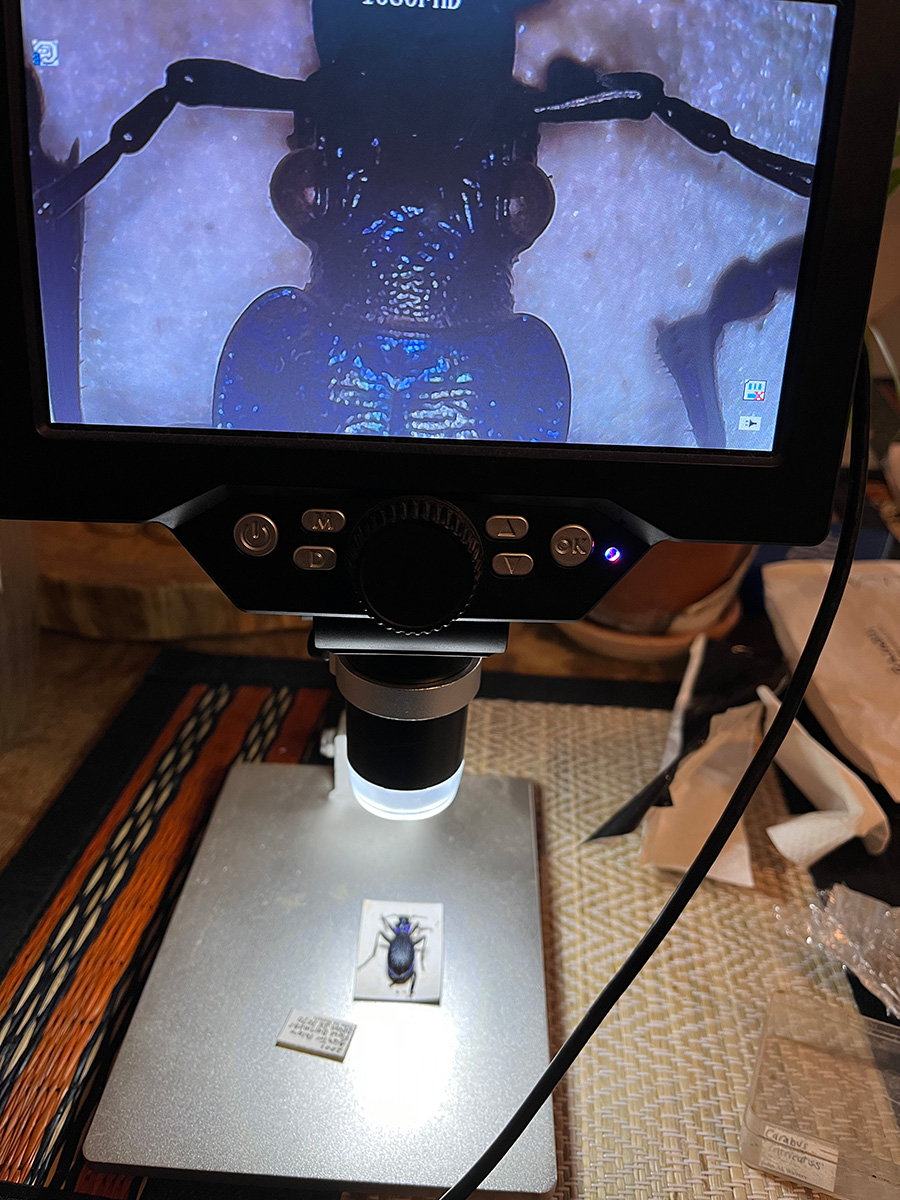
Blue Ground Beetle under the microscope
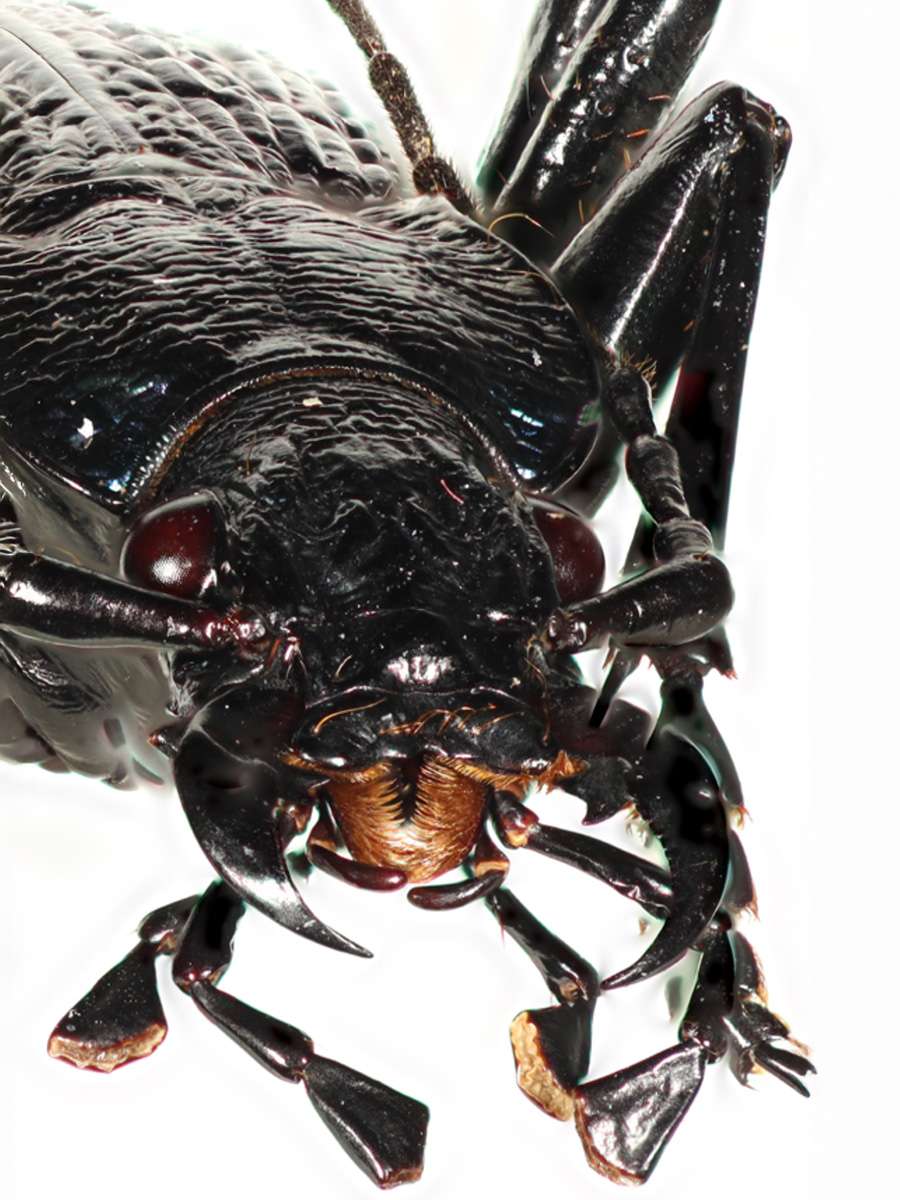
Image from Stacker
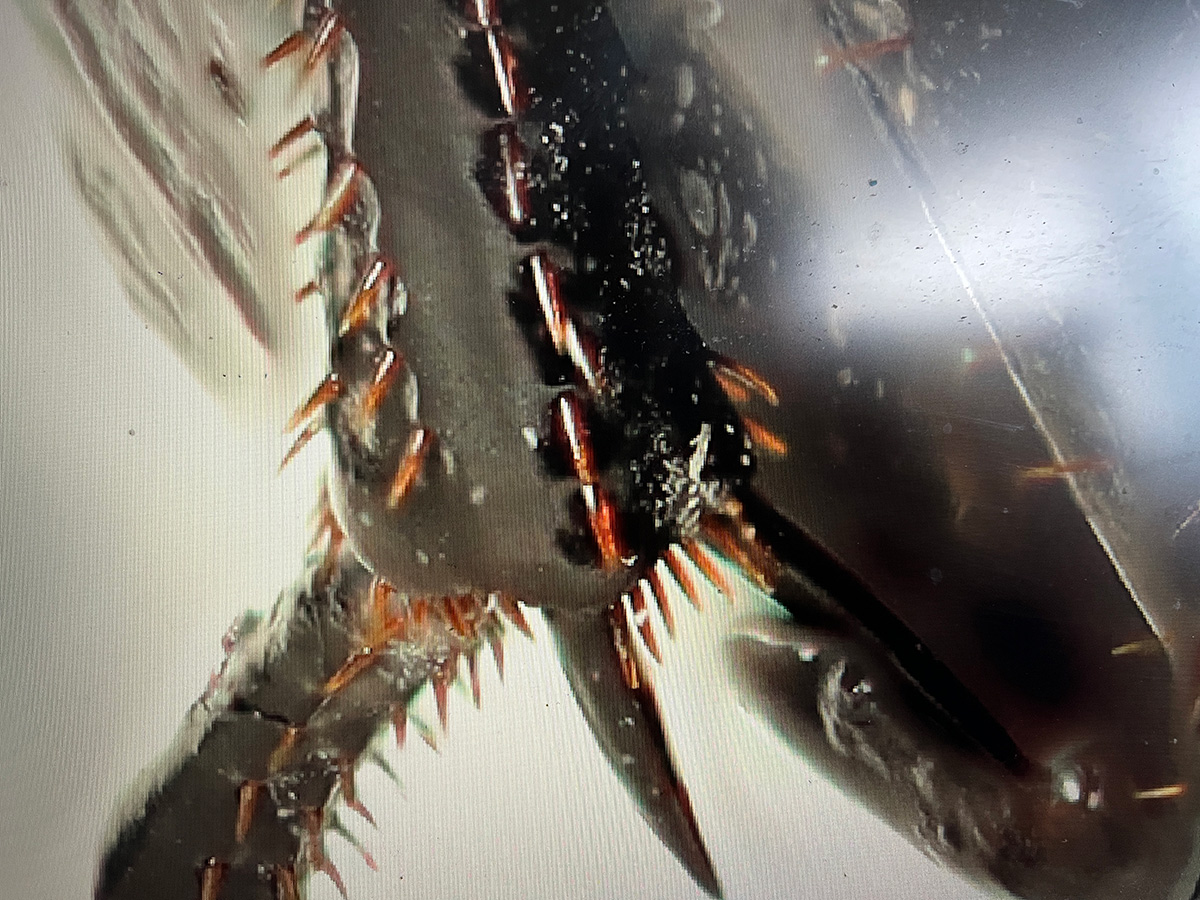
Image from a microscope
I later travelled to the Oxford University Museum of Natural History, which holds a further eight specimens, each offering new insight into the species’ form and variation. These visits deepened my understanding of the beetle’s anatomy and inspired me to explore ways of representing its delicate, otherworldly qualities.
Eventually, I managed to secure my own second-hand Leica microscope and even a preserved (dead) specimen of the Blue Ground Beetle. Since this project took place in my spare time from work, having my own setup at home revolutionised the process, freeing me from the need to travel to London or Oxford and allowing for far more sustained and intimate study.
John Walters
A key influence and source of knowledge throughout this journey has been John Walters, an entomologist from Dartmoor and one of the foremost experts on the Blue Ground Beetle. John generously shared a collection of his images and even sent me a rare specimen by post. His pioneering research, fieldwork, and paintings have been central to conservation efforts in the South West of England, and many of the most widely used images and videos of this rare beetle are his. His passion and expertise have profoundly shaped my own approach to studying and visualising the species.
https://johnwalters.co.uk/research/blue-ground-beetle.php
What began as a simple curiosity has grown into a deep engagement with the Blue Ground Beetle’s beauty and ecology — a process that continues to bridge science, art, and wonder.
Reimagining The Blue Ground Beetle
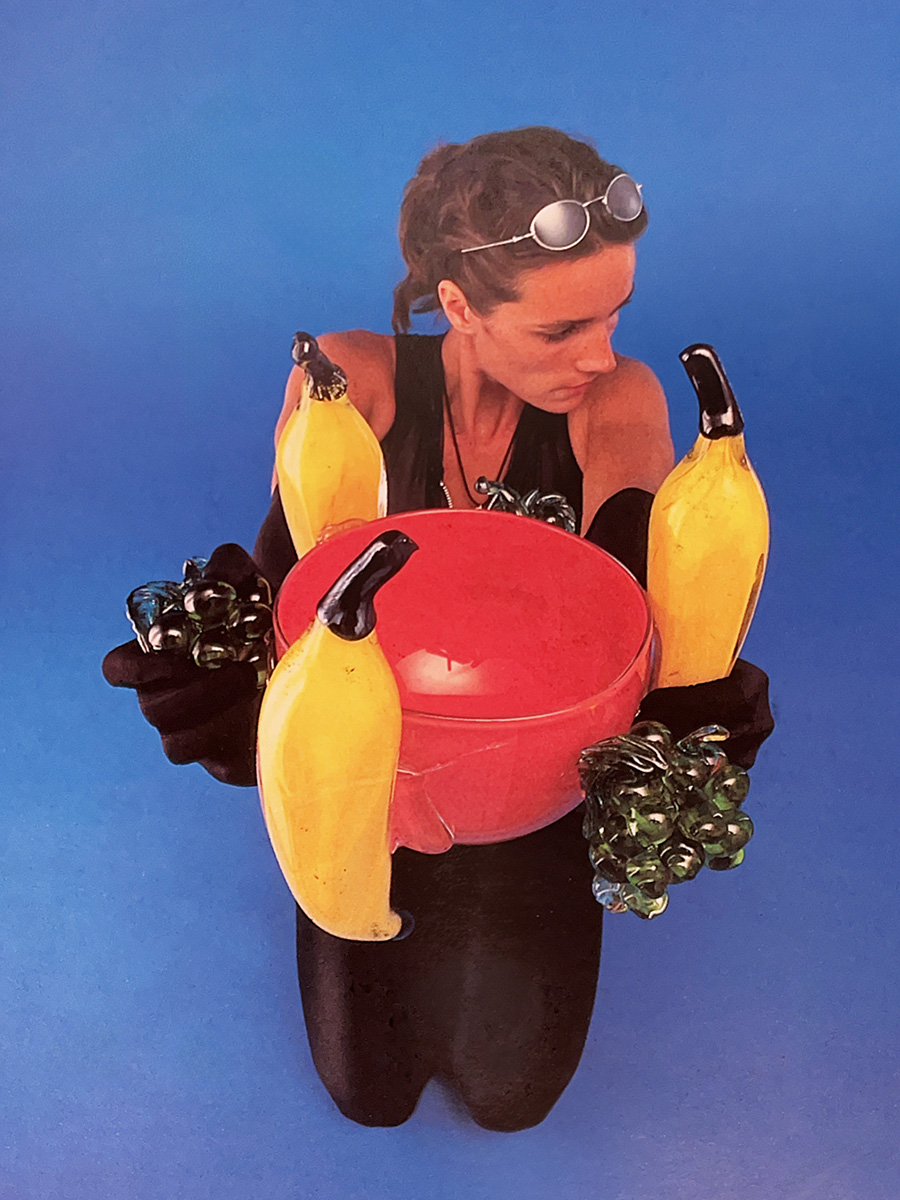
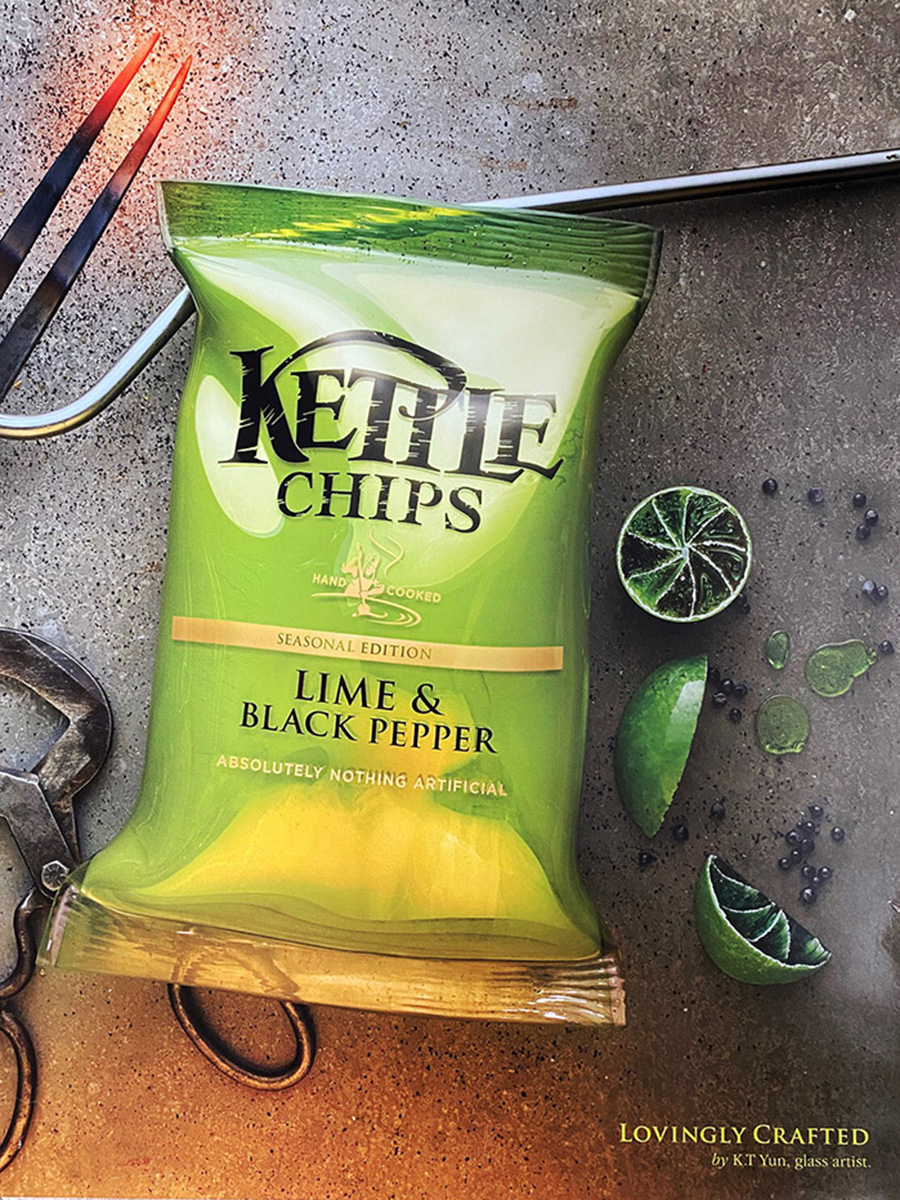
Like anything in life, the closer you look, the deeper you go — sometimes it feels endless, into infinity and beyond. With this project, I wanted to truly immerse myself, allowing it to unfold slowly so I could observe and study over time. In the past, my glasswork often carried a kitsch twist of humour or leaned toward semi-realism, sometimes blending with functional kitchenware or commissioned pieces based on realism. But nothing I’ve done before has ever felt this involved — or this deep.
My aim was not to achieve strict hyperrealism, but to remain grounded in observation while allowing my imagination to respond to what I found most striking. To record the intricate details revealed through my microscope studies, I began making drawings and plasticine models of the Blue Ground Beetle. Inevitably, I began to exaggerate the forms and features that felt most “significant” — the serrated limbs, the textured armour, and the luminous surfaces that seemed to shift between blue, purple, and turquoise.
These studies became a way of understanding the beetle through making — translating microscopic details into tactile form. Each model captured something different: not just how the beetle looks, but how it feels to encounter it magnified, alive with structure and pattern.
Given more time, I would love to extend this exploration to represent the beetle’s entire life cycle. The metamorphosis of insects remains one of nature’s most extraordinary and overlooked processes — from a small white egg to a large, black, ferocious larva; then to a silent, pale pupa; and finally, to a newly emerged white beetle that, overnight, transforms into its brilliant dichroic armour of blue, purple, and turquoise.
This process — of looking, making, and reimagining — continues to reveal just how much beauty and mystery can exist within a single small creature.