Warm glass training with Helga Watkins Baker
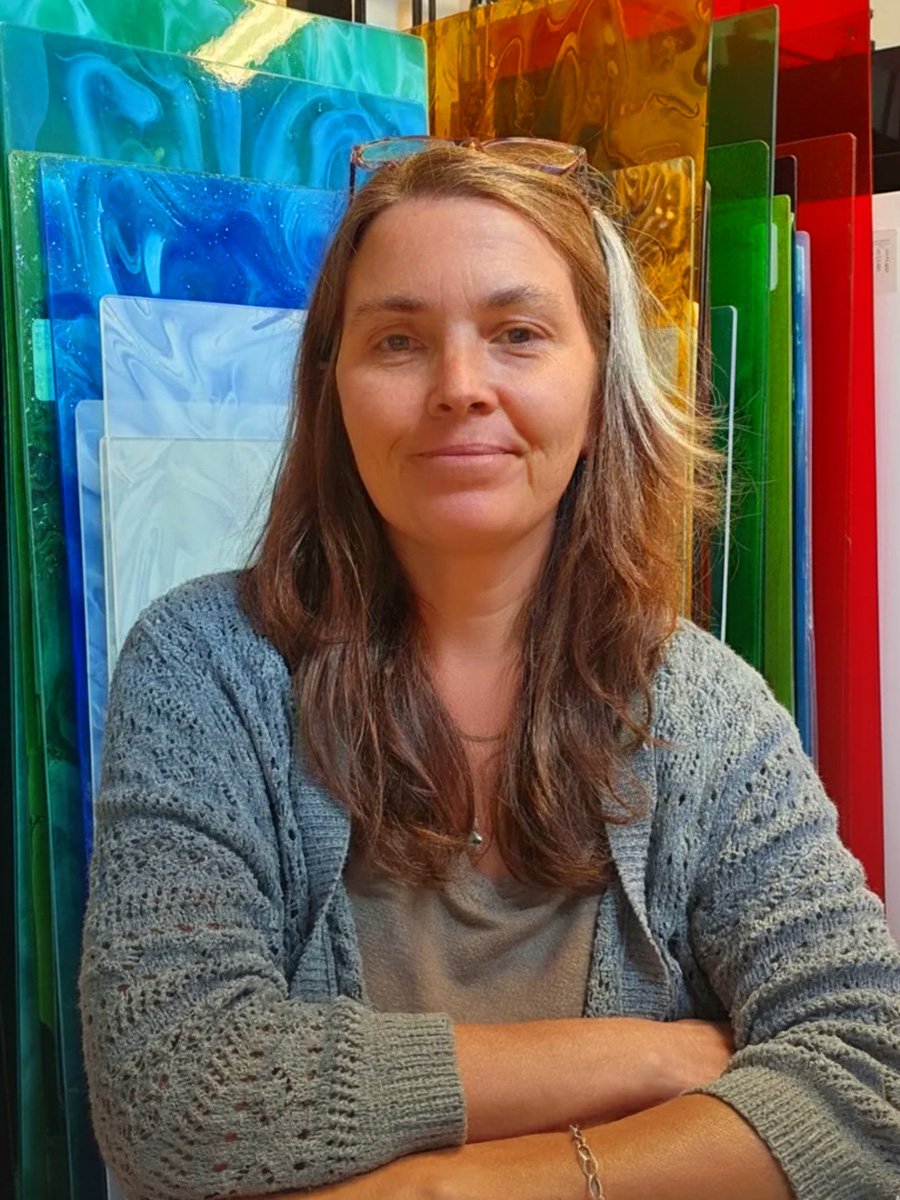
Helga Watkins-Baker
Fusing, slumping, casting, mould making, texturing, and colour work
Helga introduced me to the foundational processes of warm glass. Under her guidance, I learned how to fuse, slump, and cast glass elements — developing the forms and textures that would later define the beetle’s body. Her teaching was instrumental in helping me understand how colour and heat interact to produce subtle surface effects reminiscent of the beetle’s natural iridescence.
At The Glass Hub (https://theglasshub.com/staff-member/helga-watkins-baker)
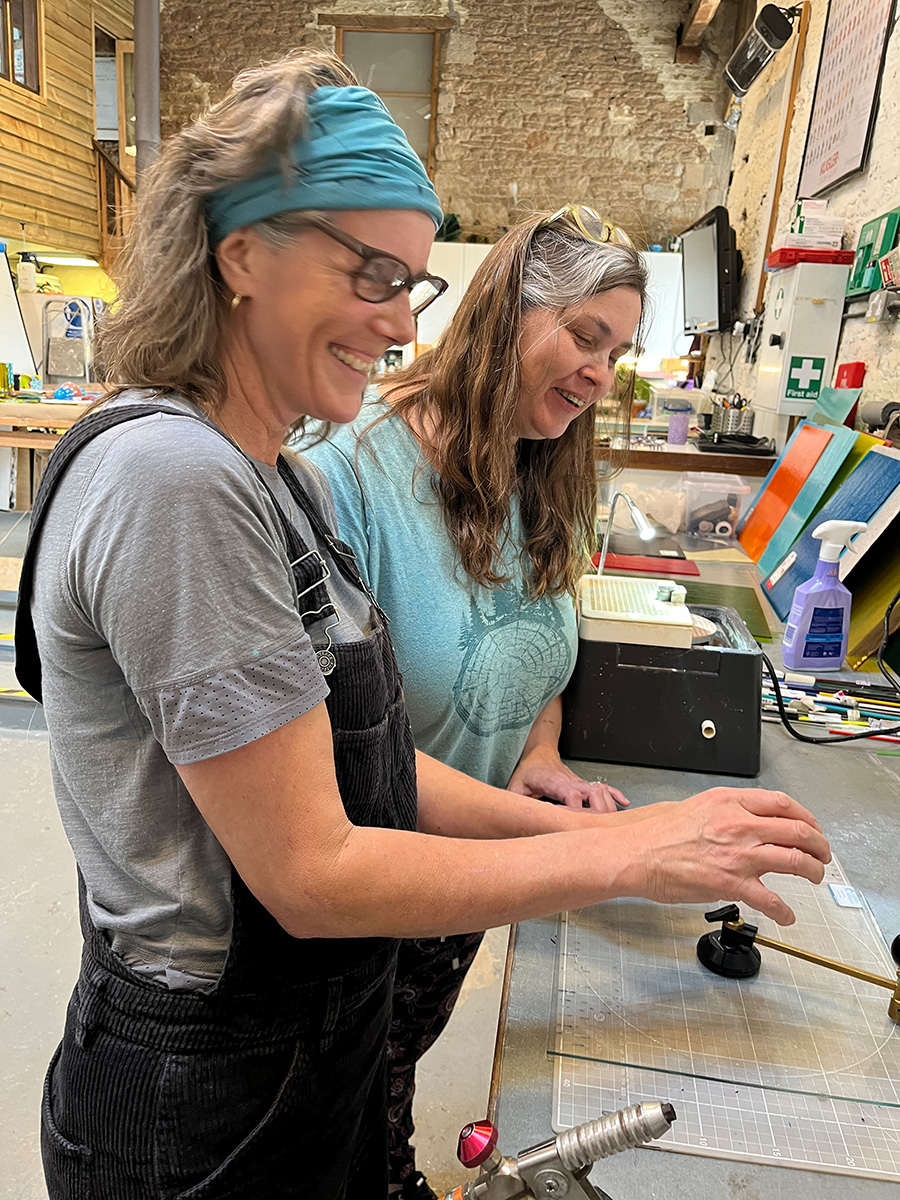
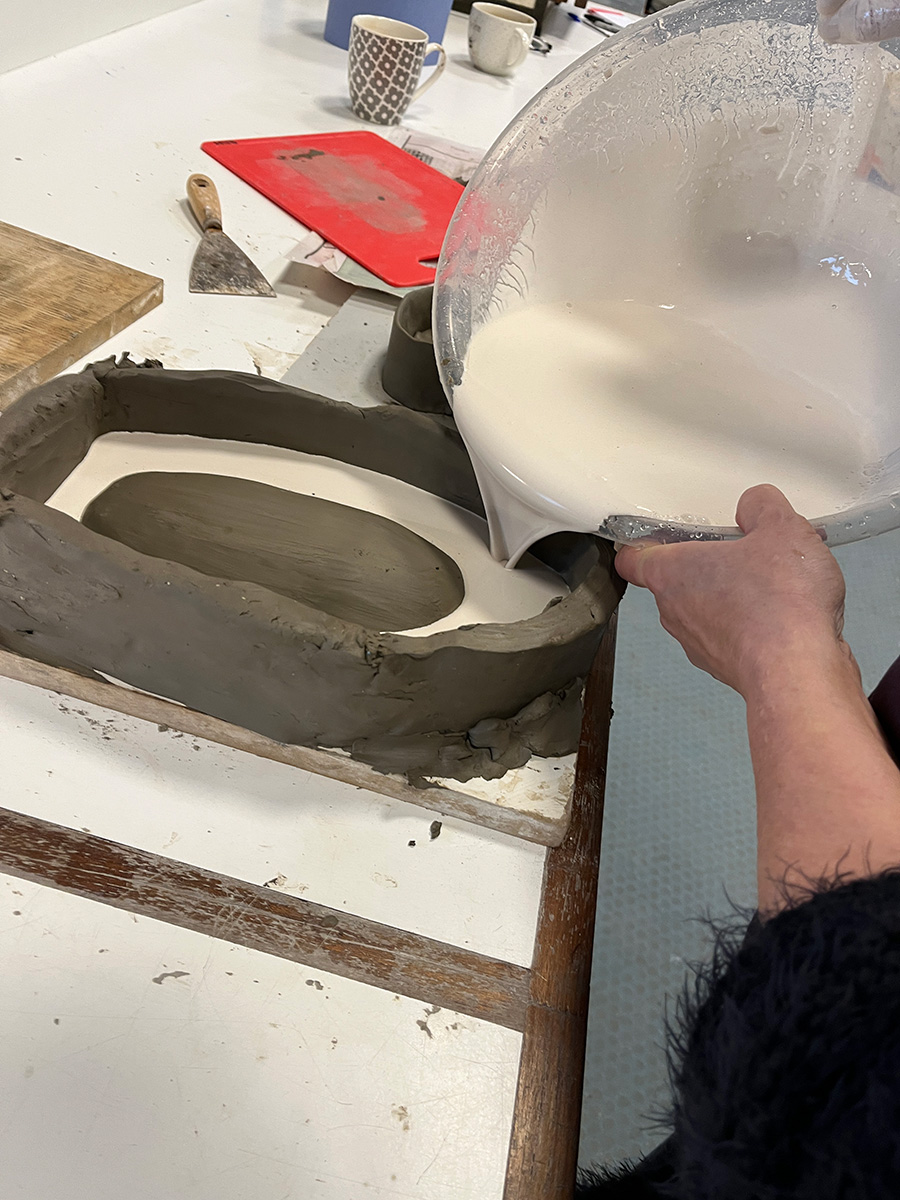
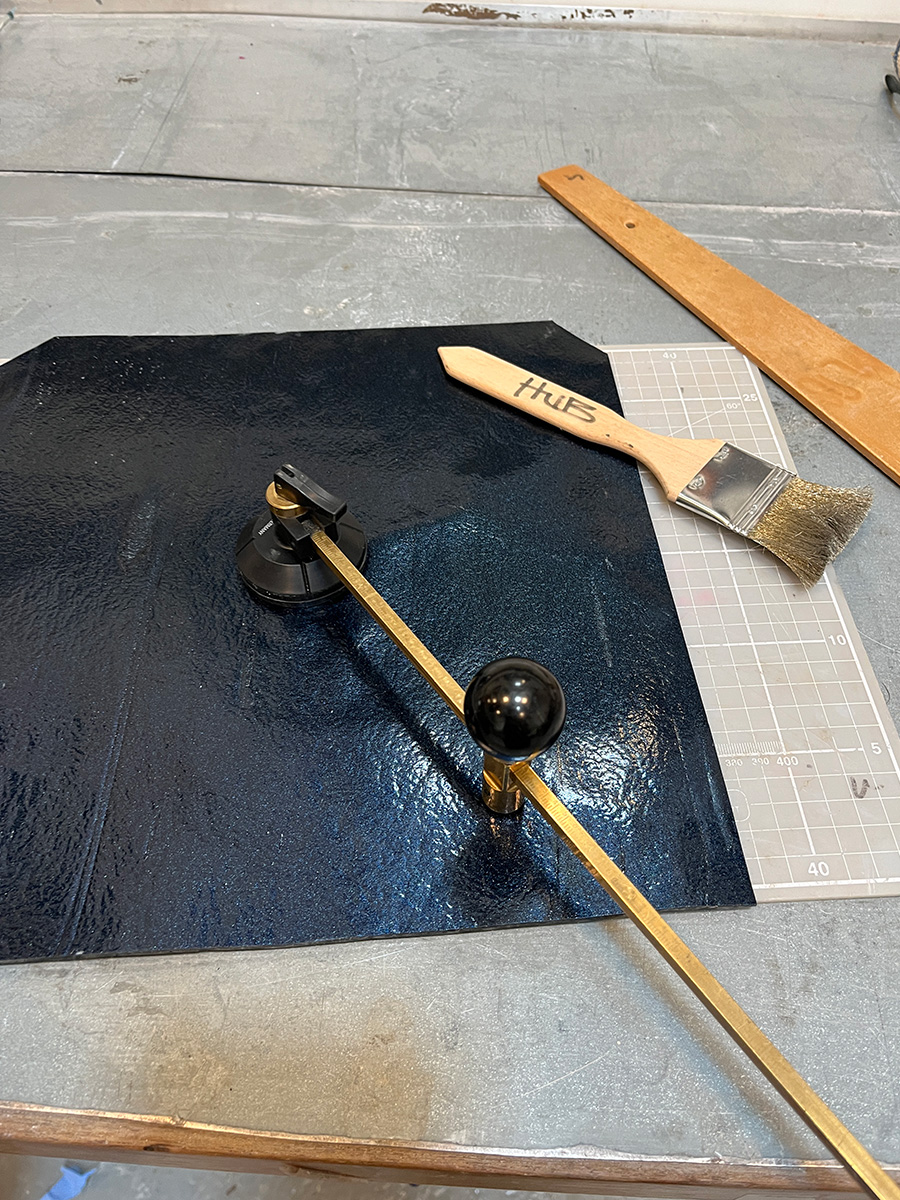
My first sessions with Helga Watkins-Baker, my business partner and co-founder of The Glass Hub (www.theglasshub.co.uk), focused on warm glass processes, starting with researching glass colours and compatibility — a critical foundation for my Blue Ground Beetle project.
For this sculpture, the beetle’s armoured exoskeleton needed to be made from sheet glass. While there are countless colour options from different manufacturers, even glasses with the same COE (Coefficient of Expansion) can behave differently due to their unique ingredients. Through testing with clear and strain viewers, I learned that keeping to a single brand is often the safest choice for colour and compatibility.
My project involved “mixing” processes, such as placing a fused, textured wing case onto a hot-sculpted abdomen. This required extensive experimentation: testing brands, colours, temperatures, and various mould-making methods to explore all the possibilities of the warm glass workshop.
Helga guided me through fusing and casting techniques that could replace hot shop processes if necessary. In one exercise, we took a hot-sculpted abdomen into the casting shop, made moulds, and slumped the shell over the back — evaluating whether this approach offered a better result than working entirely in hot glass. Deliberating over so many options opened my eyes to the flexibility and creative potential of kiln-formed glass.
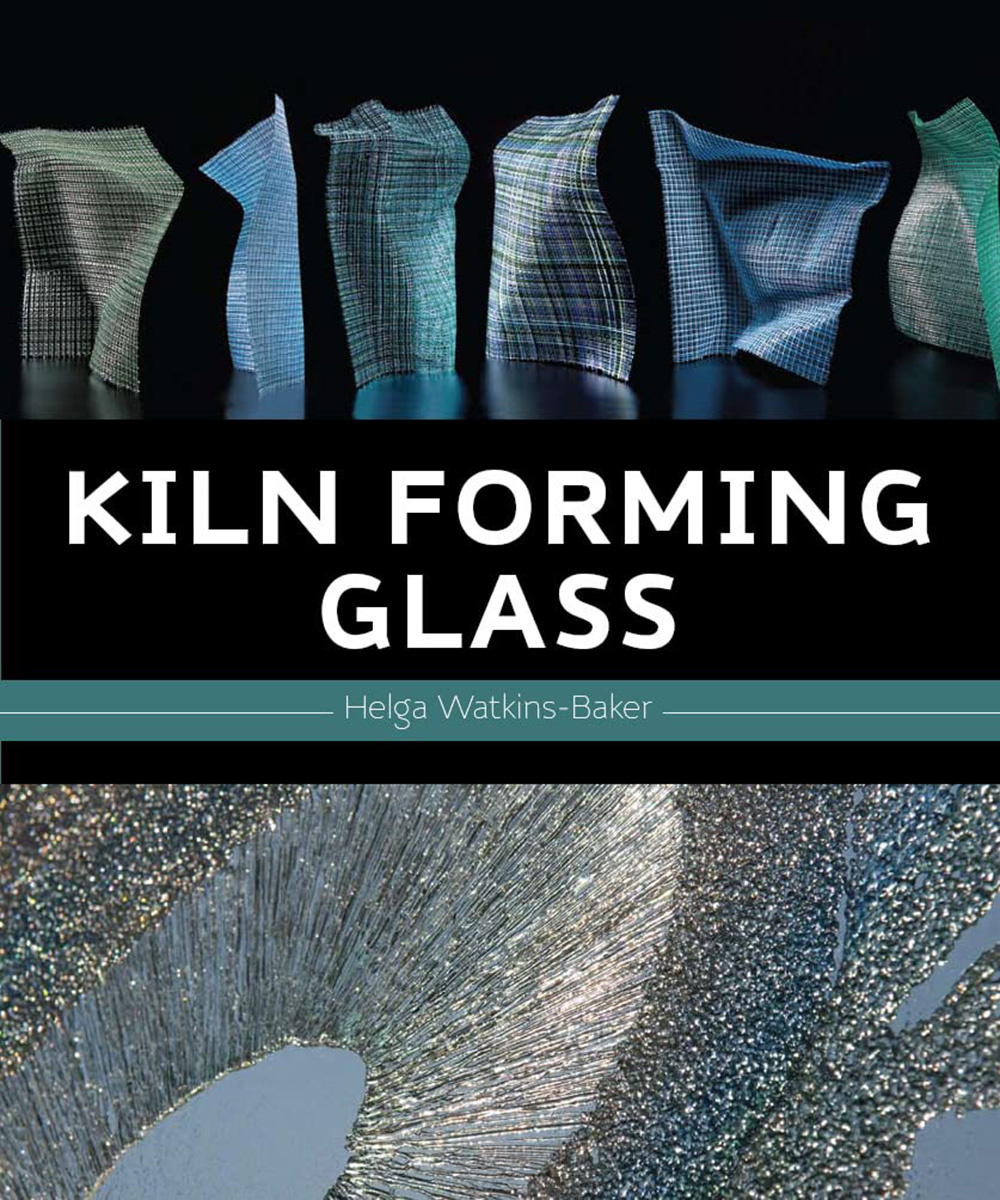
Helga’s mastery of warm glass, temperatures, and kiln techniques is exceptional. She has shared her knowledge widely, including in her book ‘Kiln Forming Glass’, which has been an invaluable reference throughout my project.
Colours
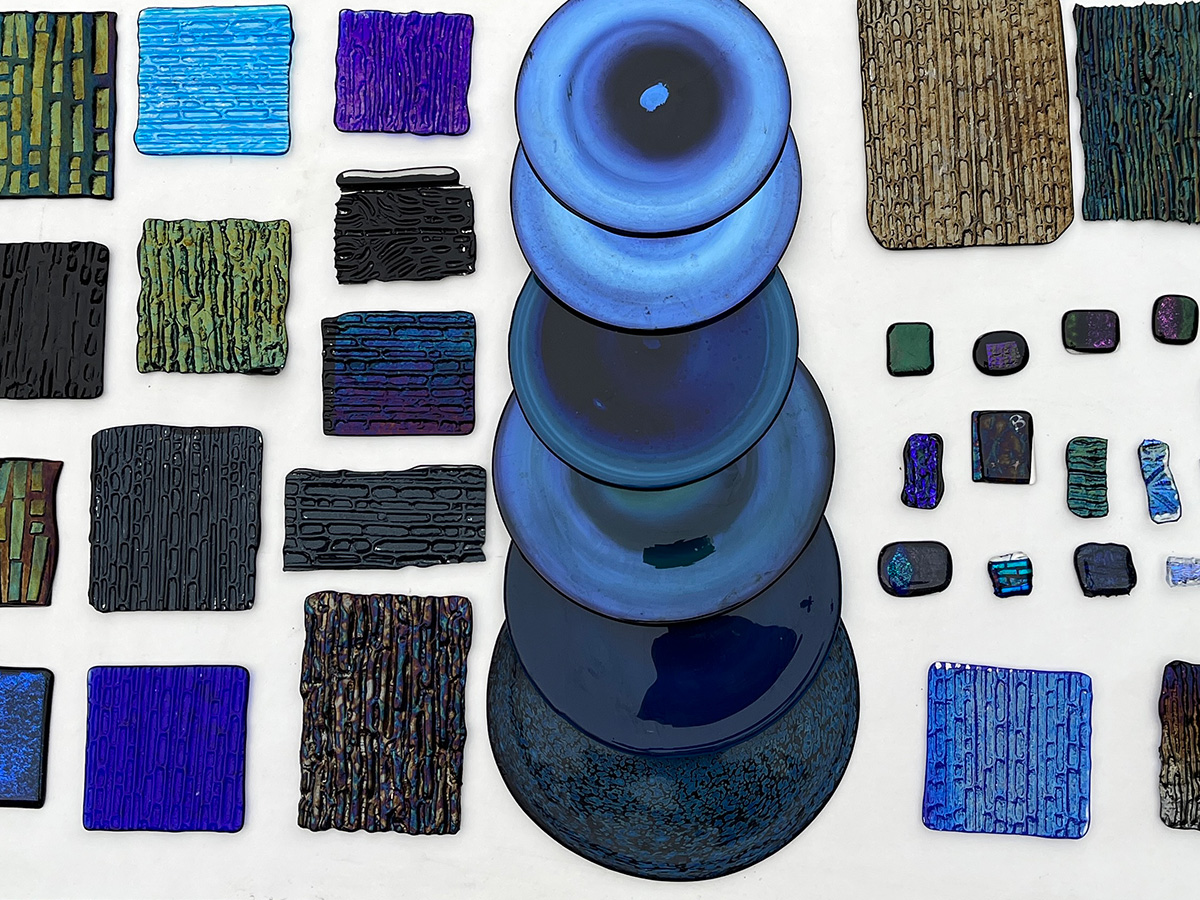
The gorgeous metallic blue hues of the Blue Ground Beetle’s exoskeleton are its most striking feature, and replicating this in glass was a central focus of my project. My first considerations were whether to use iridescent, Aventurine, or dichroic glass.
Initially, I fell in love with Oceanside’s Aventurine Blue, which contains small reflective copper crystals, giving the glass a glittering effect reminiscent of Aventurine quartz. However, it ultimately did not shimmer enough to capture the beetle’s dynamic surface. I also experimented with a section of Bullseye’s Iridescent Rainbow Ripple on black, which almost achieved the desired effect. The limitation was that only the blue/green section of the sheet could be used, making it prohibitively expensive. (Iridescent glass is created by applying a vaporized metallic compound, such as stannous chloride, to the surface of hot glass. This reaction forms a thin, multi-layered oxide film that refracts light, producing the characteristic shimmering rainbow effect.)
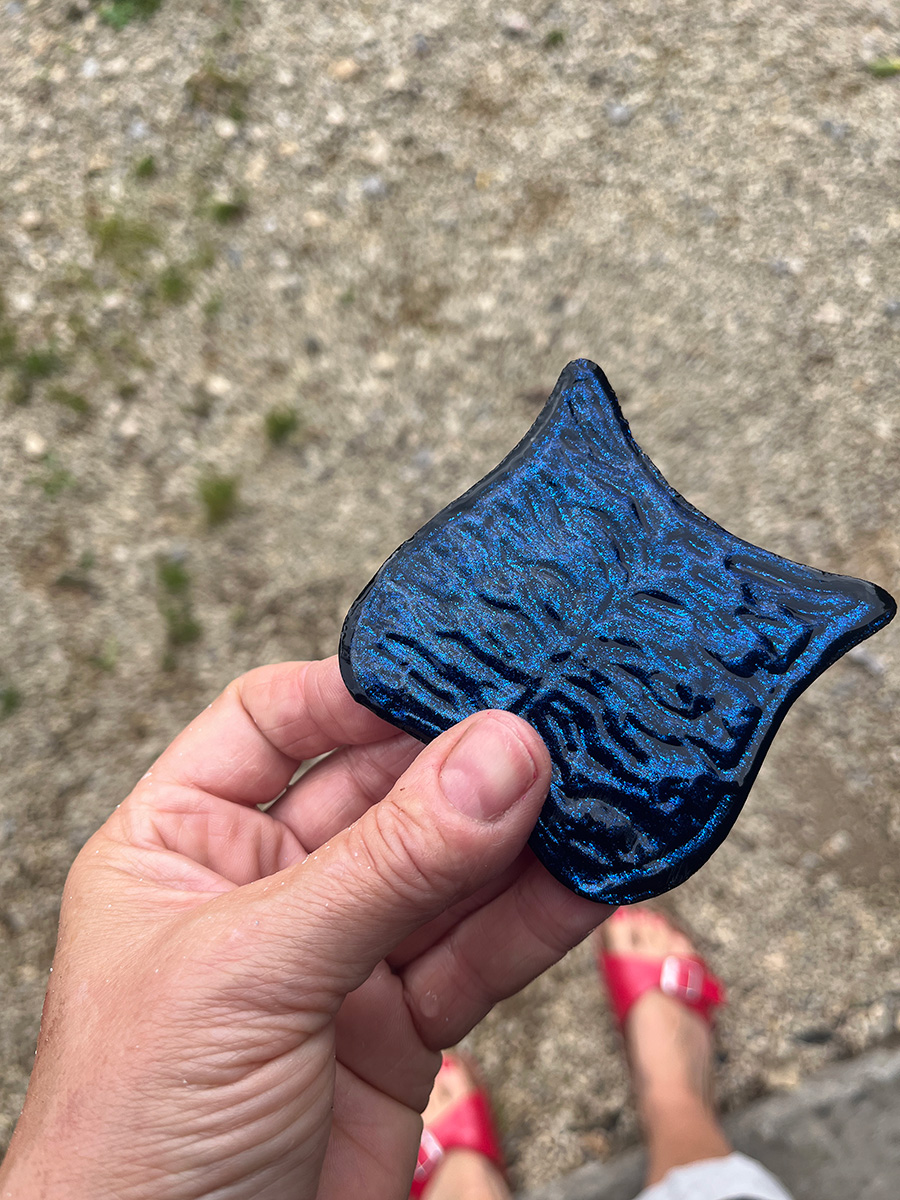
The breakthrough came when I discovered Dichroic Extract — a game changer for achieving the beetle’s luminous, multi-hued finish. After extensive testing, I decided to make my own sheet glass by blowing black rondels and then colouring them with the blue/yellow Dichroic extract from CBS (cbsdichroic.com).
Dichroic glass features a thin, multi-layered metallic coating applied through a vacuum deposition process, causing it to change colour depending on the angle of light and view. The term “dichroic,” from the Greek for “two-coloured,” describes how the microscopic metal oxide and quartz layers simultaneously reflect one colour and transmit another. This effect creates the dynamic, iridescent sheen that perfectly mirrors the beetle’s natural exoskeleton. Although the extract is extremely costly — more expensive than gold — a tiny jar is sufficient for multiple applications.

Bullseye strips
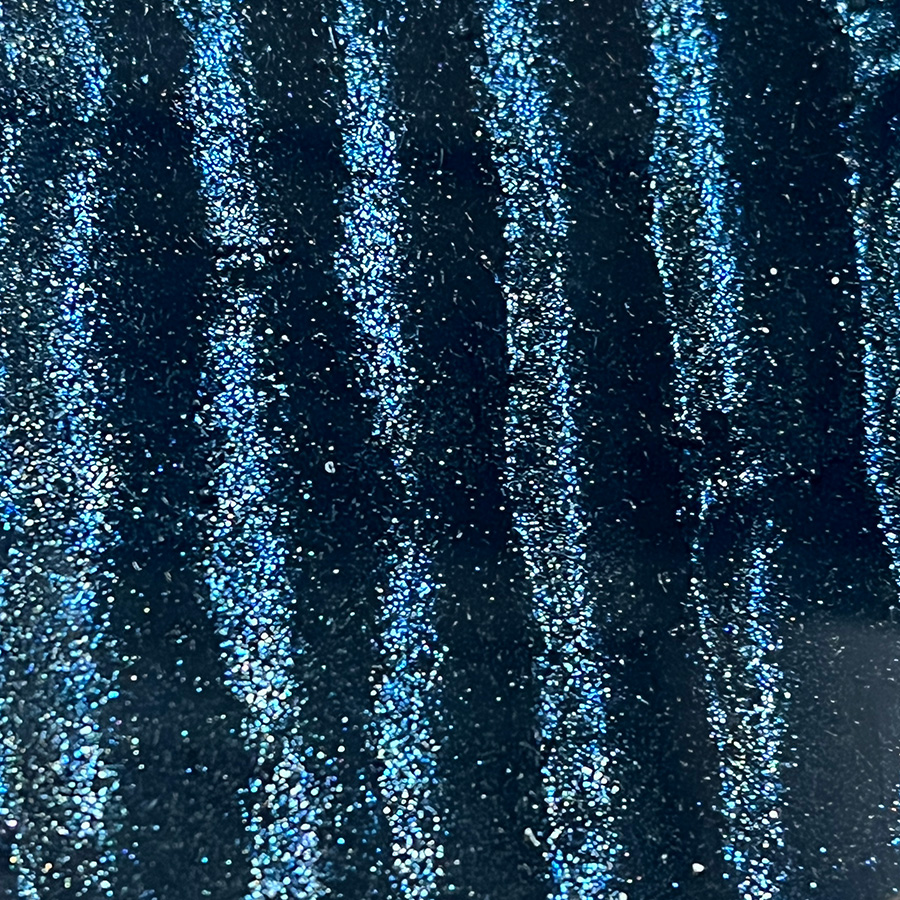
Oceanside Aventurine Blue
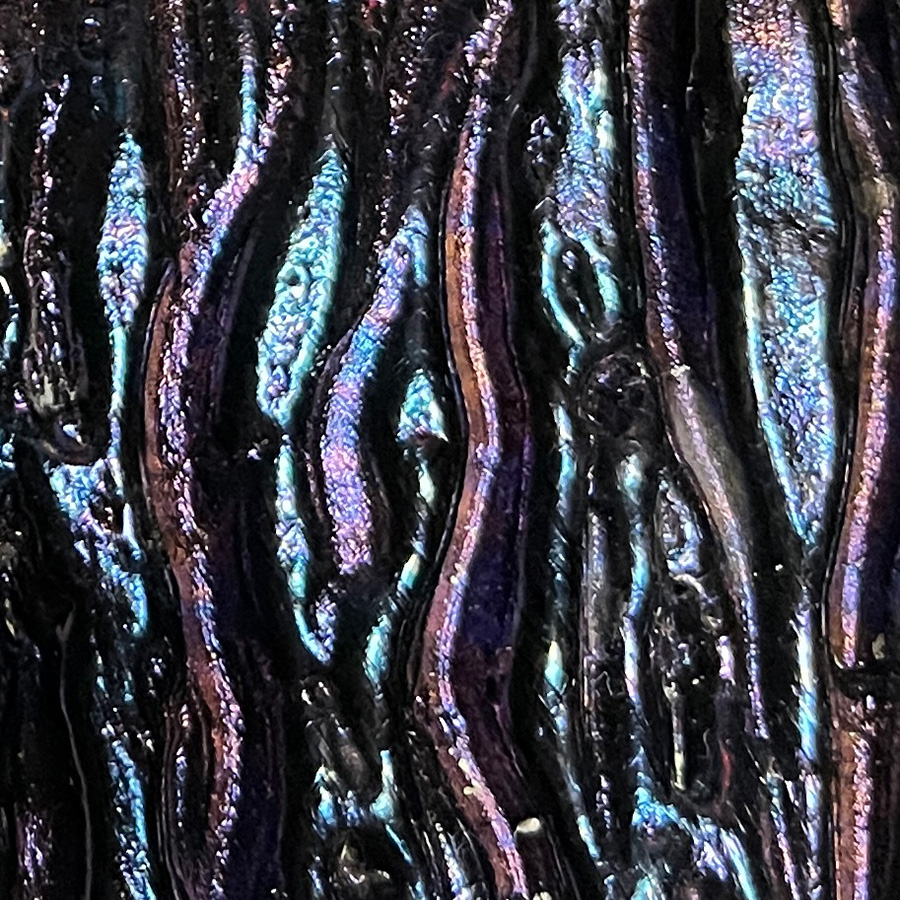
Textured Bullseye

Rainbow Bullseye
Interestingly, dichroic glass technology has practical applications beyond art. It is used in spacecraft instruments to shield against cosmic radiation and in eyewear to protect human vision from unfiltered sunlight, demonstrating how scientific innovation can inspire and inform artistic practice.
A Bit About Glass – Compatibility and Stress
Glass is beautiful, magical, mesmerising — and highly addictive, yet it is also a tricky and unpredictable material, willing to crack at the slightest provocation. Unlike most materials, the molecules in glass are arranged randomly rather than in an ordered structure, which means it is never entirely stress-free, even after careful annealing.
Annealing is the controlled heating and cooling of glass to relieve internal tension. Despite popular myths, windows do not “move” over time, nor is glass a super cooled liquid; it simply has a chaotic internal structure. Different types of glass expand and contract at different rates when heated and even slight mismatches can create stress.
For example, fusing two glasses that behave differently in the kiln can result in internal friction. This stress may cause fractures — sometimes immediately, sometimes days, weeks, or even months later. Some particularly thick pieces of glass are annealed for months or even years to ensure stability.
I learned this first hand during my project when a piece of iridescent glass fused with clear cracked unexpectedly, despite careful preparation. This experience highlighted the importance of compatibility testing and reinforced the need for meticulous planning in every stage of working with glass. In this case the glass was compatible, but a tiny bit of moisture in the mould created stress and an almighty crack!
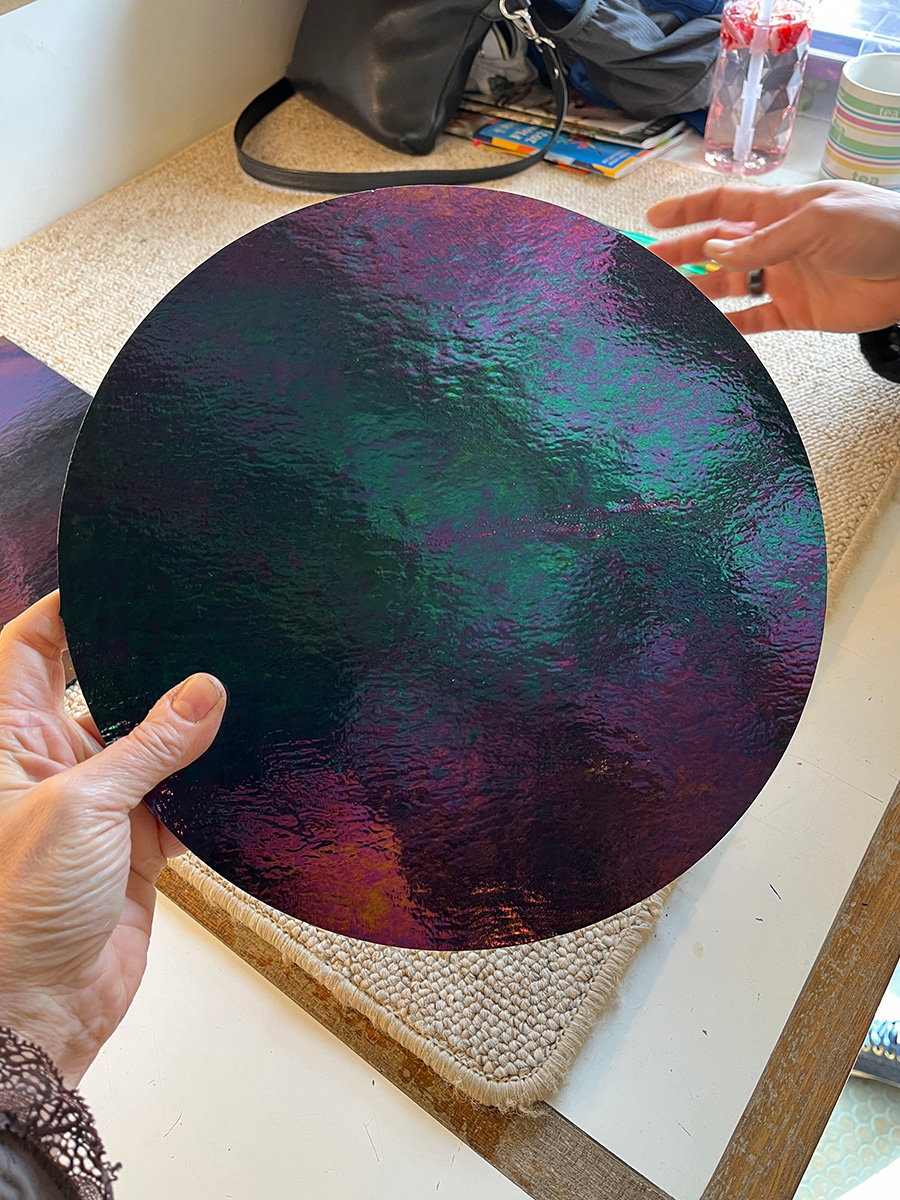
Cut glass ready for the kiln
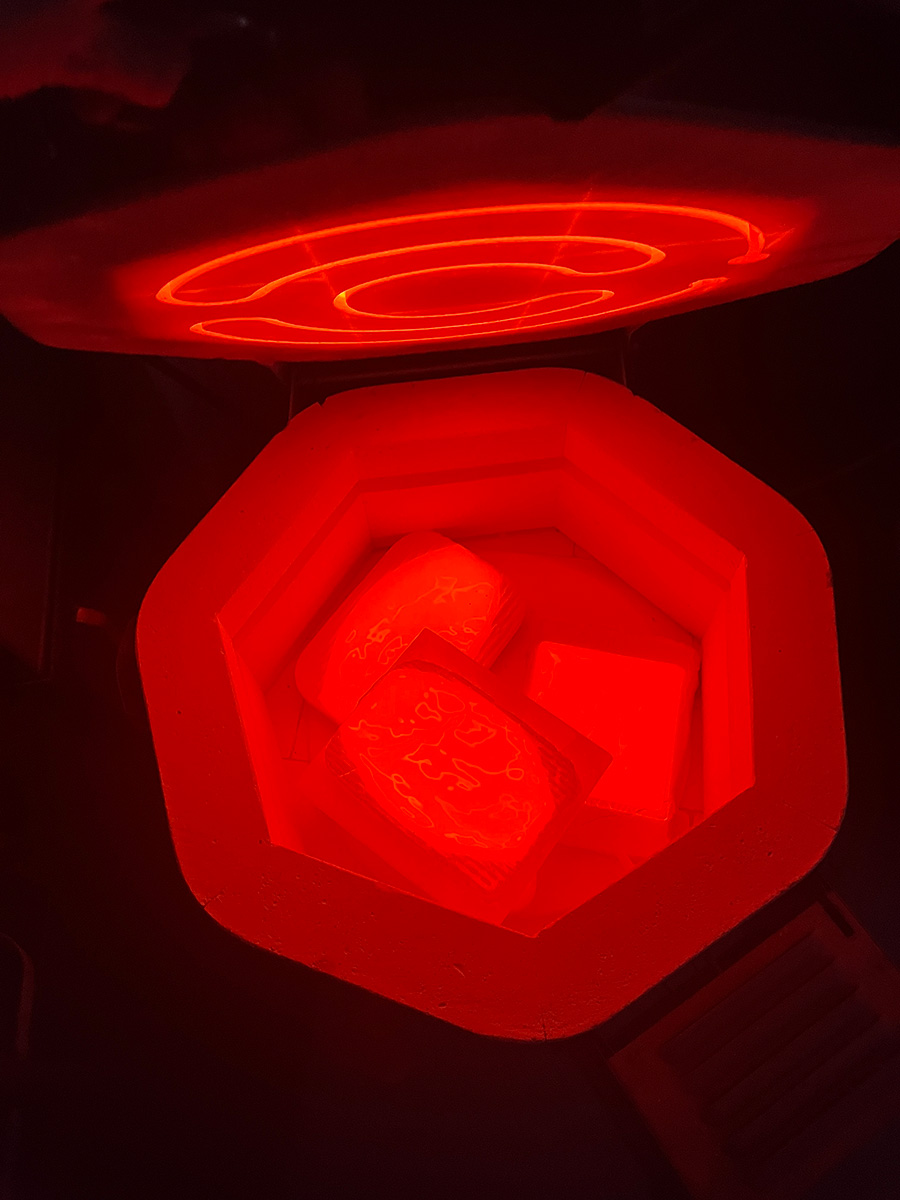
Hot kiln
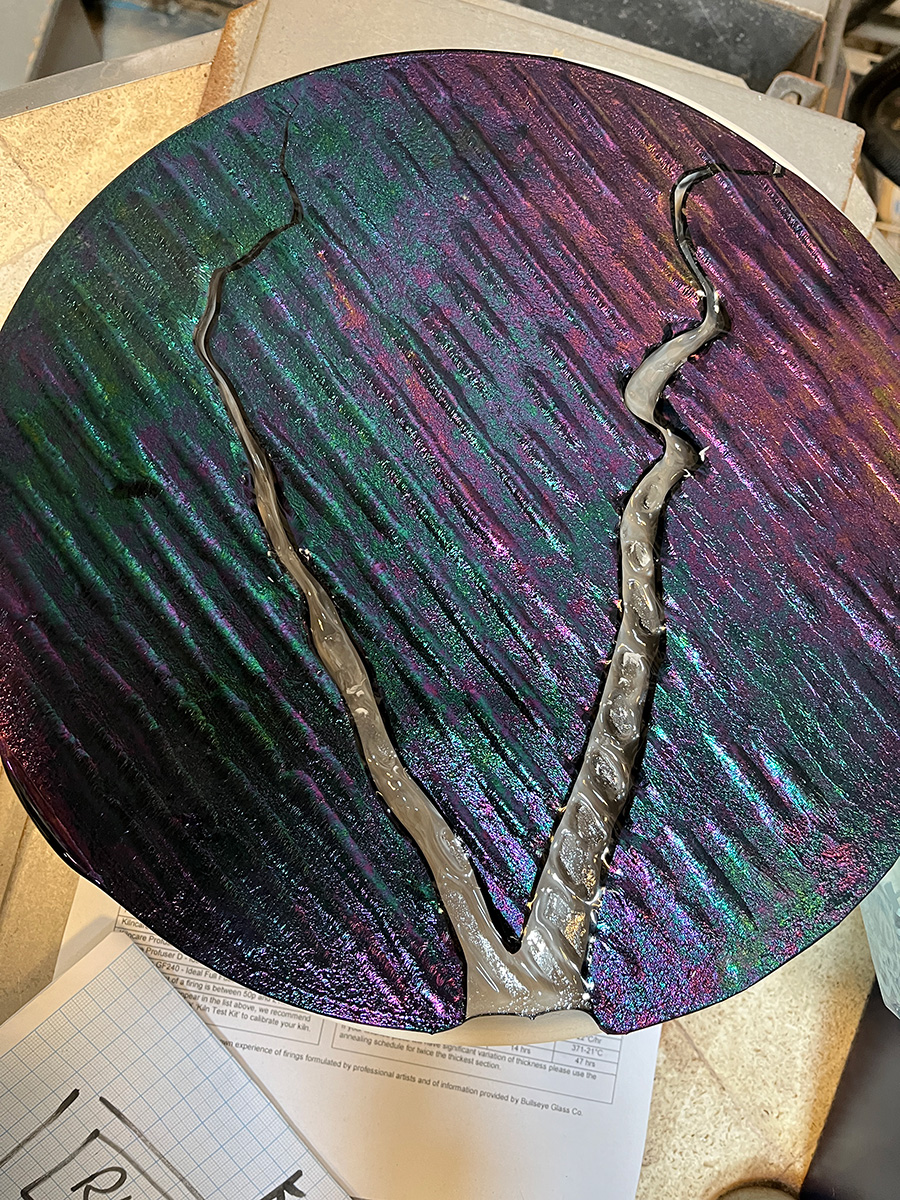
Stress fracture
Textures of the Beetle
One of the most captivating aspects of the Blue Ground Beetle is the texture of its body, each surface uniquely sculpted and intricately patterned. To recreate these details in glass, I focused closely on two main features — the pronotum and the elytra — studying them under magnification and translating their tactile qualities into sculptural form.
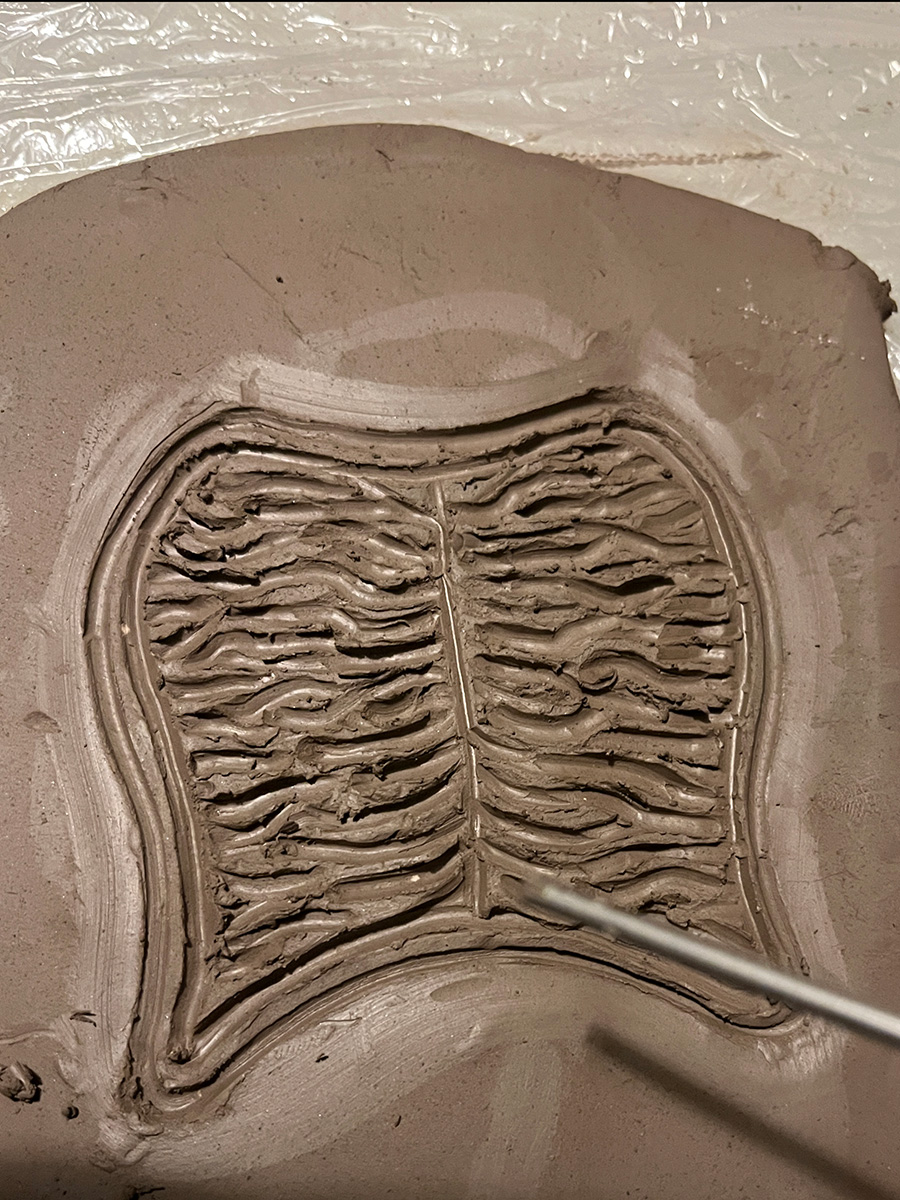
The pronotum is the dorsal (top) plate that covers the front part of the beetle’s thorax — I often refer to this covering as the “saddle.” It features a beautifully furrowed and creased texture with a distinct central parting that accentuates the humped shoulder muscles beneath. This subtle yet powerful form gives the beetle its characteristic stance and sense of strength.
Sitting over the abdomen, the elytra, or wing cases, have a texture more akin to walnut shell, edged with a fine pattern of tiny pinpricks. These overlapping, almond-shaped wing covers are undeniably distinctive of this species, creating protective armour that glows with iridescent blue when seen in the right light.
Attempting to reproduce such textures in hot glass would not have achieved the same level of definition. Not the exact running lines and definitive furrows I was after. Instead, I decided to learn how to texture in the warm glass workshop, developing a process that balanced precision and flexibility.
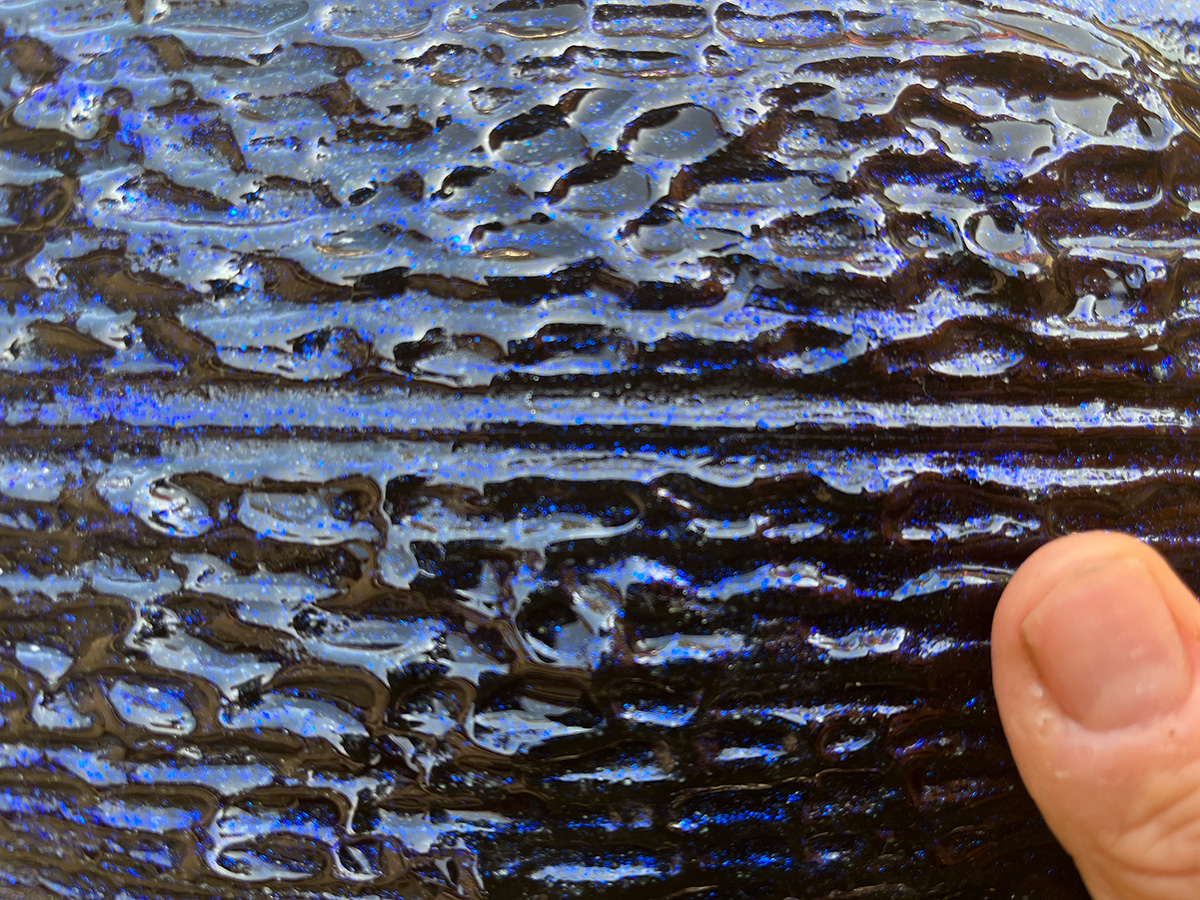
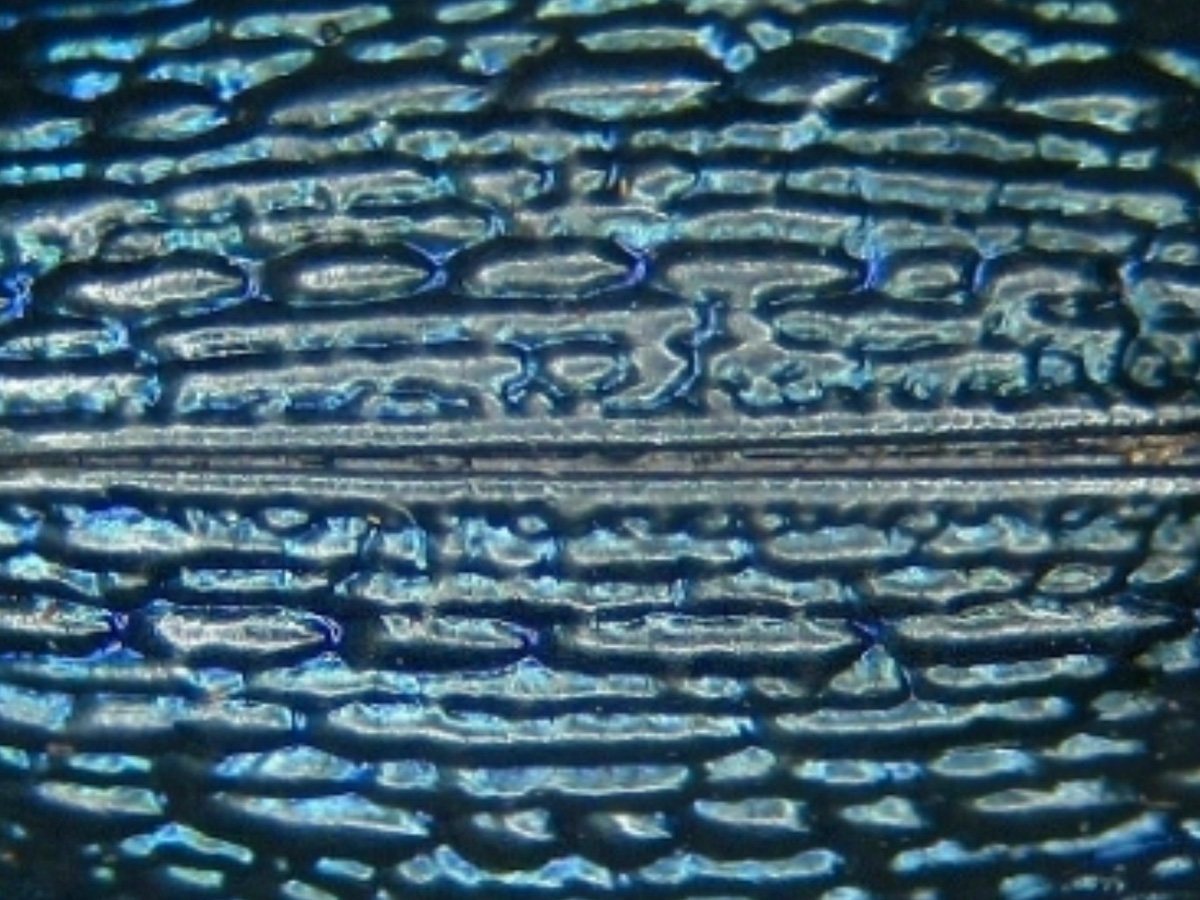
I began by sculpting the desired surface patterns in clay, then taking casts using a refractory plaster mix. These moulds allowed me to slump sheets of base glass into the textured surfaces, faithfully capturing the intricate ridges and grooves of the beetle’s body. This process gave me the control I needed to mirror nature’s complexity in glass — a combination of craft, experimentation, and deep observation.
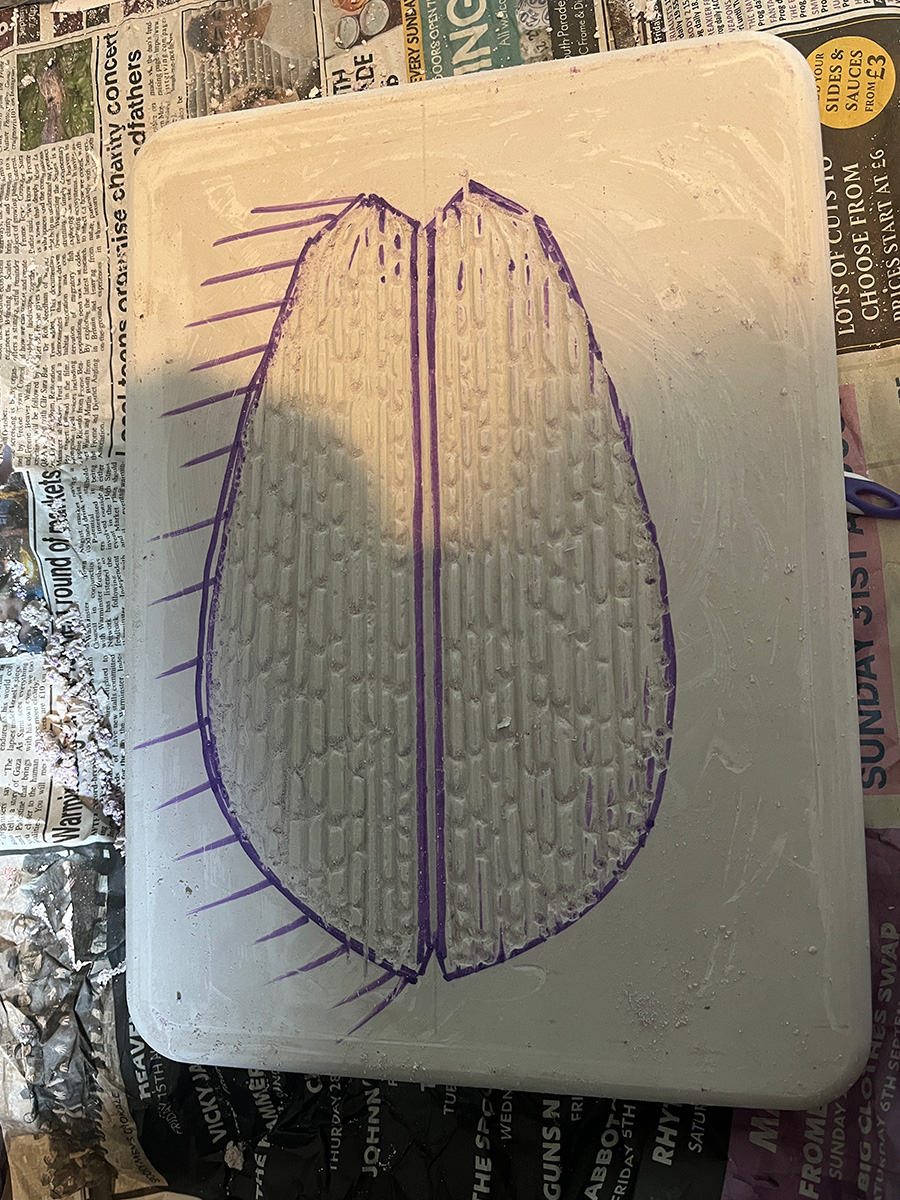
Sketch of the beetle's body texture
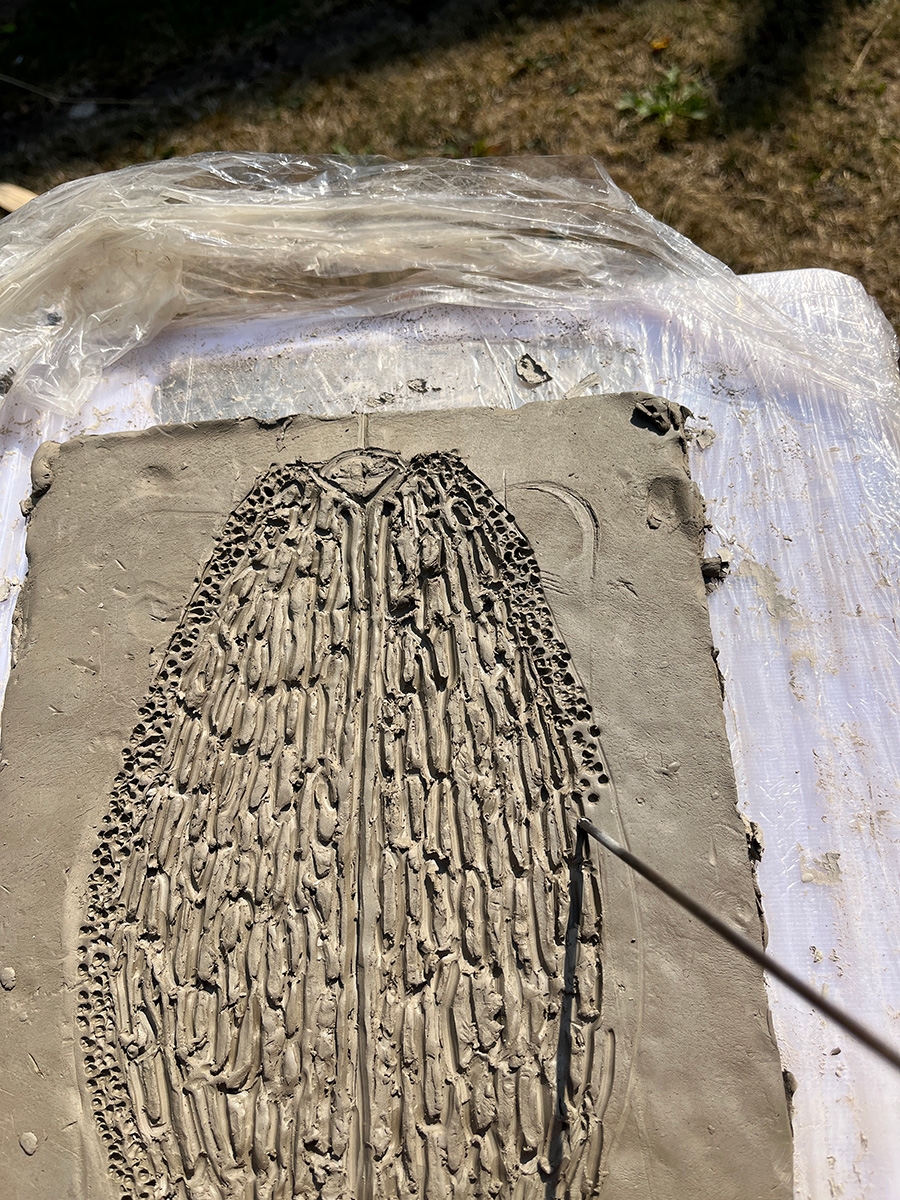
Sculpting the clay
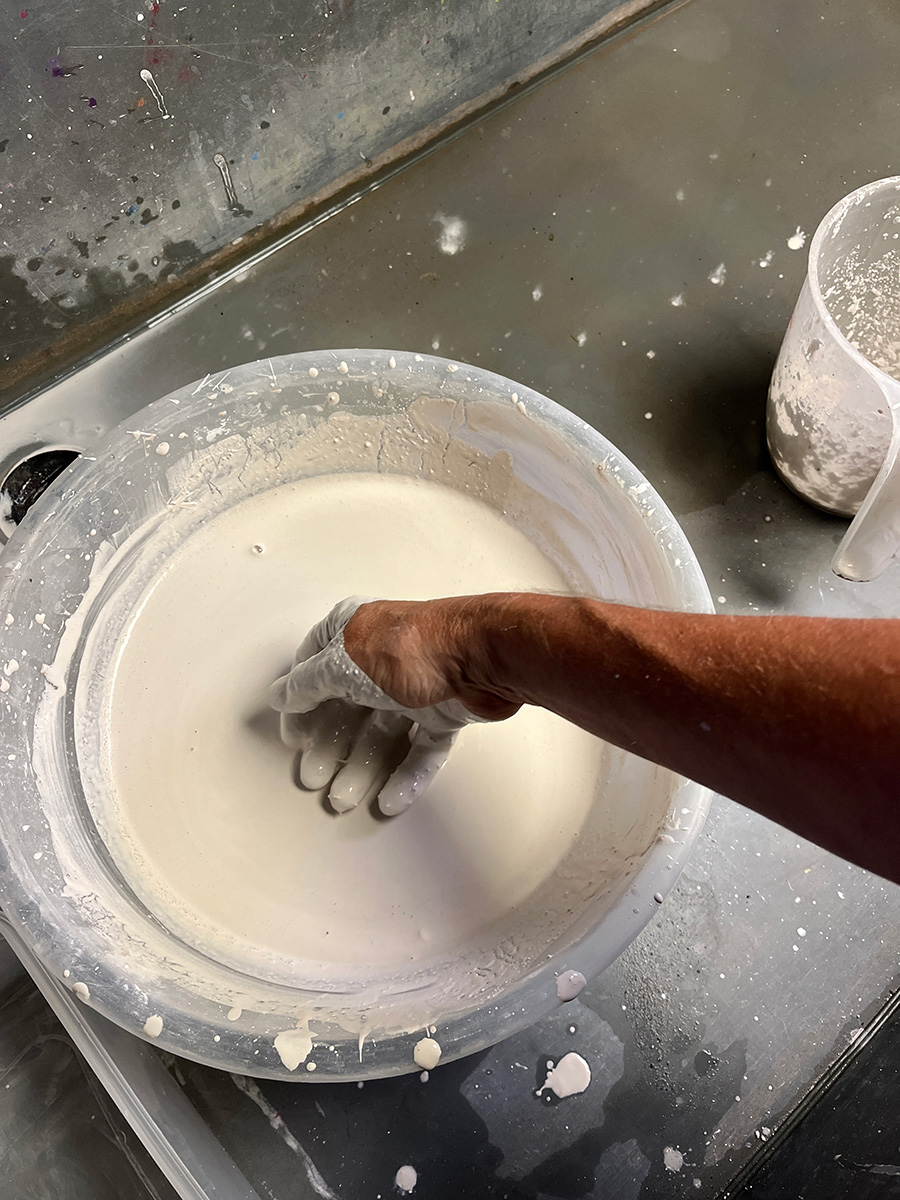
Preparing the mould
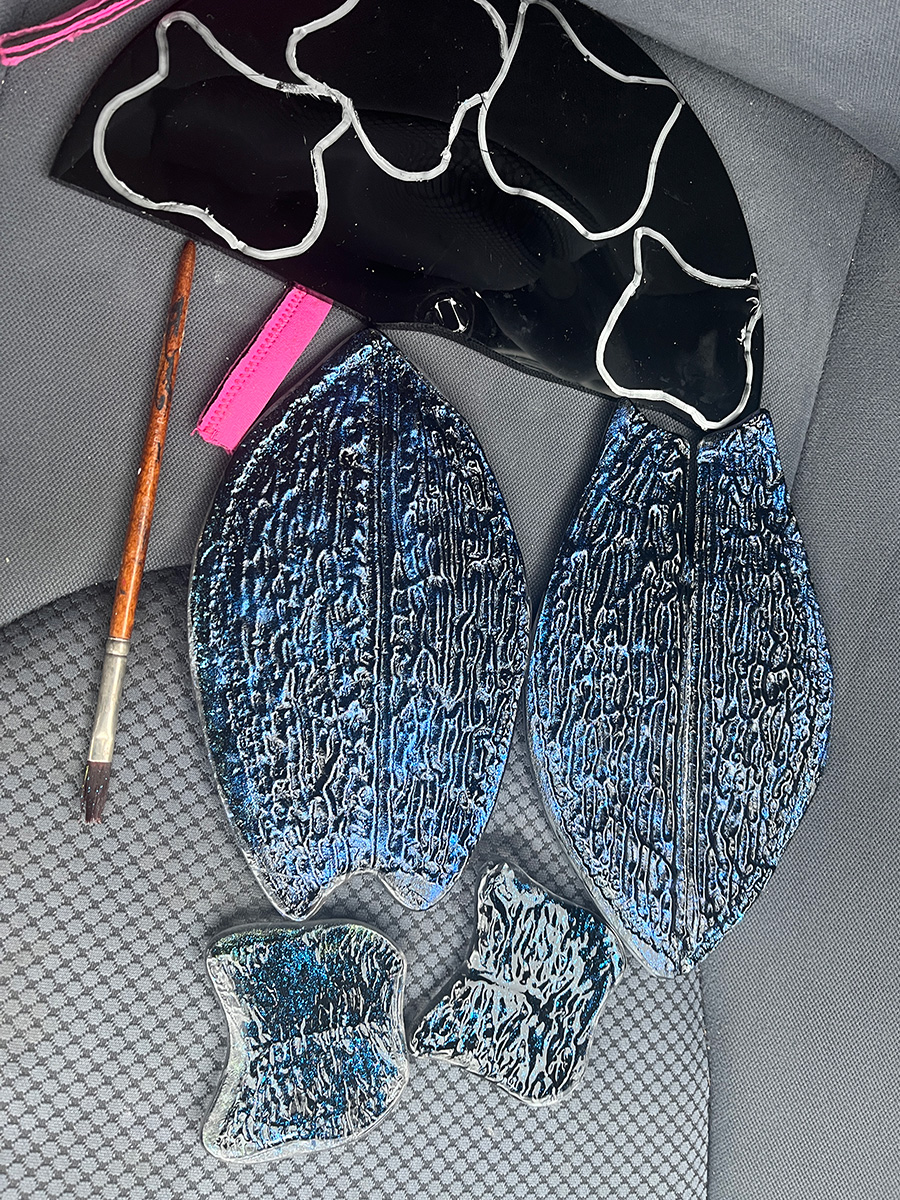
Textured kiln-formed beetle elements